Backpack Guide for Men Over 6ft 4: Torso Length, Volume and What Actually Fits
Forget height and buy on torso length. Most men at 6ft 4 measure 51-57 cm from the C7 vertebra to the iliac crest, while the majority of mainstream backpacks are drawn for 43-48 cm and even most large sizes stop at 53 cm. The practical rule is simple: buy the pack whose stated harness range covers your torso with 2-3 cm to spare, then check hip belt height and strap tail length separately.
This guide covers exactly where tall builds run out of adjustment, why the hip belt usually ends up above the hip bones, how much extra webbing and frame length is needed, and how volume choices change once you are carrying a long back. It is written for very tall UK buyers and for teams specifying tall-fit ranges through QUANZHOU JUNYUAN BAGS, established in 2014, whose colleagues coordinate production across 7 production lines.
Measure the Torso, Not the Height
Height is a poor predictor because two men of identical stature can differ by 8 cm in torso length, and that difference decides everything about harness fit. Tilt the head forward to bring out the C7 vertebra at the base of the neck, run a soft tape down the spine to the imaginary line across the tops of the hip bones, and read the figure in centimetres. Take it twice; single readings are frequently 2 cm out. Rest your hands on your hips to locate the crest accurately before reading the tape. A couple of centimetres is the difference between a comfortable pack and one returned unused.
Once measured, compare the number against the manufacturer's stated harness range rather than any small, medium or large label, since those labels are not standardised between brands and often describe panel length rather than adjustment travel. Leave 2-3 cm of headroom at both ends of the range so the pack can be set higher for road walking and lower for scrambling, or simply to wear over a heavy winter coat. A second reading taken a week later is a surprisingly useful check against measurement error. Re-measure if your weight changes by more than a few kilograms, since posture alters with it.
- Typical torso at 6ft 4: 51-57 cm, occasionally up to 60 cm
- Common mainstream harness range: 43-48 cm with large sizes to 53 cm
- Leave 2-3 cm of spare travel within the stated range
- Ignore size labels and read published torso figures instead
Where Mainstream Packs Run Out of Adjustment
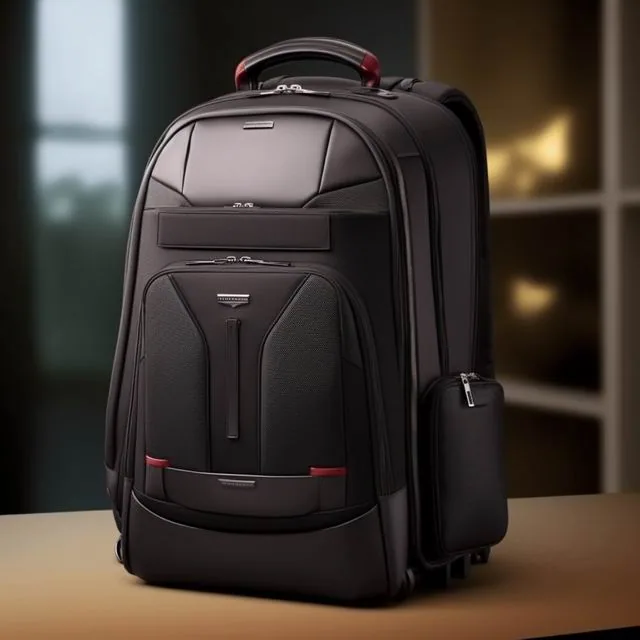
The failure point is predictable. A typical one-size panel accommodates torsos of 43-48 cm, which means the harness sits several centimetres too low on a very tall man: the yoke ends up across the shoulder blades rather than at shoulder level, and the whole pack hangs off the back. Large sizes usually extend to 53 cm, and genuinely tall-fitting XL harnesses, covering 53-58 cm and beyond, are found mainly in outdoor rather than office ranges. The consequence is not merely discomfort: the load line moves several centimetres behind you. Ask the retailer for the figure in writing before committing.
| Harness class | Torso covered | Result at 55 cm torso | Buy it? |
|---|---|---|---|
| One size (city packs) | 43-48 cm | Yoke 5-7 cm too low, heavy pull on shoulders | No, not for loaded use |
| Regular or large (travel packs) | 46-53 cm | Acceptable only at the top of adjustment | Only if you sit under 53 cm |
| Long or XL (outdoor) | 53-58 cm | Two to three centimetres of usable headroom | Yes |
| Adjustable systems | 46-58 cm | Depends on where the ladder actually ends | Check the top limit, not the label |
Note the trap in the final row. Adjustable harness mechanisms are described as covering wide ranges, but what matters is where the shortest and longest positions sit relative to your own number. A system advertised as 46-58 cm that only reaches 55 cm in practice will fit worse than a fixed XL harness built precisely for a long back, so always check customer reviews from buyers of similar height. These ranges describe harness geometry rather than the size of the bag itself, which is why a huge pack can still fit badly.
Harness Drop, the Yoke and Real Adjustment Travel
Harness drop is the vertical distance from where the shoulder straps attach at the top of the panel down to the pack body's centre line. Tall users need a greater drop, and simply lengthening the shoulder straps does not create it: if the yoke is too low, the straps have to travel outward around the shoulders before they can carry weight, which feels like the pack perpetually sliding backwards no matter how much you tighten. Extension this generous is rarely found outside dedicated walking ranges. Ask for the figure in writing where it is not published.
Look for yokes mounted high on the panel, ideally with the strap roots leaving within 3-5 cm of the panel top edge, and an adjustment range that extends the torso by 8-12 cm rather than the 6-8 cm typical of city designs. Manufacturers rarely publish drop figures, so estimate it in photographs: compare the strap root position against the top edge of the panel, and against the pack's overall height. Compare two packs side by side where possible, since the difference is obvious once you look for it. A few millimetres here changes how the whole load sits behind you.
Hip Belt Height: The Most Common Tall-Man Failure
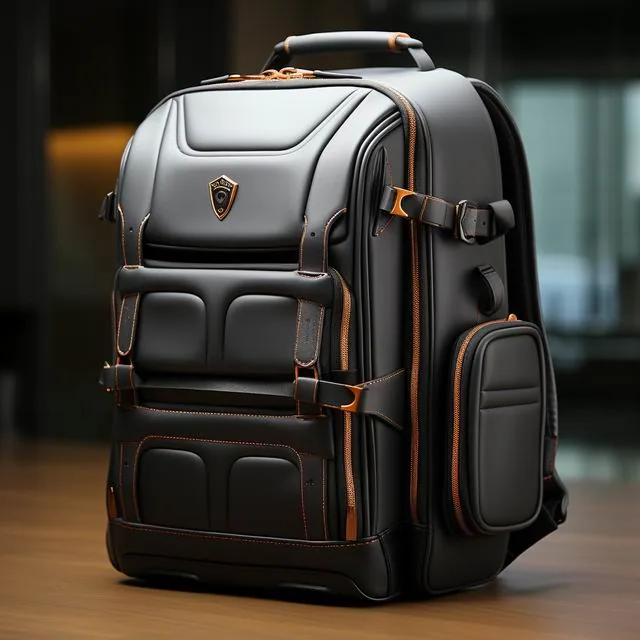
Even when the shoulder harness is long enough, the hip belt frequently lands 4-6 cm too high, resting on the waist rather than the iliac crest. The reason is that the belt is mounted relative to the base of the pack body, which sits higher on the back when the torso is long. The result is a belt that digs into soft tissue, transfers nothing to the skeleton and gets unclipped within twenty minutes. Soft tissue here compresses rather than supports, so the belt gradually works its way upward again.
Check it loaded, standing, with the belt settled after a few paces: the padding should be centred on the hip bones with roughly half its length in contact. Where it cannot be, look for packs whose belt is mounted on a separate extending tab, or products with 2-3 positions for the belt anchor. A cheap workaround is a slightly longer panel body, which drops the belt by a centimetre or two without changing anything else. Minor discounts and seasonal offers are not worth trading away ten centimetres of adjustment for.
Shoulder Strap Length and What to Do With the Tails
A man of 193 cm typically needs 8-12 cm more effective strap length than one of 178 cm, mostly at the tail rather than across the top of the shoulder. Standard blanks are cut for shorter bodies, so many tall users find that even at maximum extension the webbing is taut with nothing left to manage. Check the free tail: at least 12-15 cm should remain below the adjuster when fully loosened for winter layers. Measure tail remaining below the buckle, not the total length printed on a label. Loops sewn 8-10 cm above the buckle work best.
What happens to the surplus matters more than its existence. Tails that flap catch on train doors, office chair backs and car headrests, and they collect grit. Look for elastic keepers sewn into the strap, or a rolled and stitched loop further down; where neither exists, a short length of hook-and-loop tape is a five-minute fix. The webbing itself should be tested for abrasion to ISO 12947, since keepers rub it thousands of times a season. webbing that stiffens in cold weather is more prone to cracking at these keepers.
Frame Sheet Length and Panel Height
A long torso also means a long lever between the shoulder harness and the hip belt, and that region is what the frame sheet has to bridge. Sheets shorter than the torso support only part of that span, so the unsupported portion rounds outwards under load. As a rule the stiffener should run from around the yoke down to at least 2-3 cm below the hip belt centreline, typically 55-65 cm for torsos above 52 cm. Thicker is not automatically better: excessive stiffness stops the panel following a curved long back. Aluminium stays also return to true after being bent, which matters over a long lifetime of use.
Twin alloy stays behave better in this respect than a single sheet, because they can be shaped to follow a long back radius and still return to true. Check that whichever stiffener is used does not stop level with the belt; anything that ends above it leaves a hinge point in the middle of your spine. Panel height should follow the same logic, with the load sitting below the shoulder line rather than spread upward. A stay roundly narrower than the buckle line tends to twist under diagonal loads. Check where the stiffener terminates rather than assuming it runs to full length.
Centre of Gravity and How Volume Should Be Chosen
Tall men often buy capacity they do not need, on the assumption that bigger packs fit bigger bodies. Volume is three-dimensional while torso length is one, so the two are only loosely related. What matters more is where the mass sits: taller backs benefit from packs whose internal volume is taller than average and shallower front to back, keeping the centre of gravity within 8-10 cm of the spine instead of bulging away from it. Weight carried high behaves like a longer pendulum every time you step off a kerb.
Practical consequence: a 30-35 litre pack loaded to 9 kg will feel better than a 45 litre pack carrying the same weight loosely, because the taller, slimmer body keeps dense items close in. Load heavy items low and central, use internal compression to pull the top forward, and avoid piling clothing above shoulder height where every kilogram acts on a longer lever arm through your back. Packing cubes help here, since they stop small dense items drifting upward through the day. Weighing packed kit occasionally is a cheap way of keeping yourself honest.
Testing the Fit at 193 cm Before You Buy
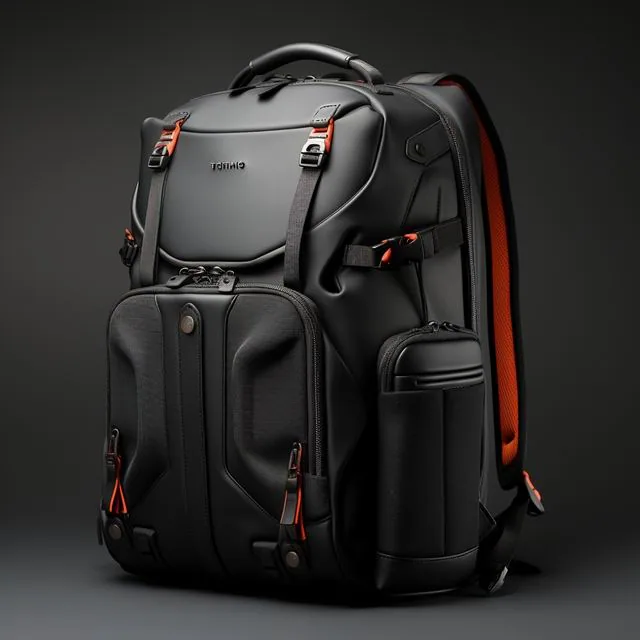
Fitting at this height rewards patience. Bring your real load rather than trying the pack empty, since harness geometry only settles under weight, and wear the jacket you commute in. Work through the check sequence below slowly, taking photographs from the side, because camera views reveal issues that mirrors hide, particularly regarding how far down your back the yoke is sitting. Travel shops with staff who have done this before are worth the extra pounds, and a fitting session should take at least fifteen minutes rather than the usual hurried ninety seconds.
- Set the harness to maximum extension and check the yoke sits level with your shoulders, not across your shoulder blades
- Clip the hip belt and confirm the padding is centred on the iliac crest, not the waist
- Check that the shoulder straps have 12-15 cm of free tail below each adjuster
- Walk 200 paces, then re-check that nothing has migrated downwards
- Photograph from the side at arm's length and compare the load line against your spine
Failures are usually obvious once the pack is loaded. If the yoke still sits below the shoulder line at full extension, the pack is simply too short and no adjustment will rescue it. If the hip belt cannot reach the crest, look for a longer body elsewhere in the range rather than accepting it. Anything passing all five checks will almost certainly be comfortable for a full working day. Photographs are also useful when writing to a retailer about a return, since they show the problem rather than describing it.
Categories That Generally Work, and Two Workarounds
In practice three categories serve very tall men better than the rest. Expedition and long-distance walking packs almost always offer genuine XL harness sizes with published torso ranges. Duty and outdoor brands that list separate short, regular and long back systems tend to build each size on its own panel rather than stretching one pattern. A third option is made-to-measure harness sizing, still offered by a few specialist makers. Duty-grade ranges tend to publish the most useful sizing information of all. Their sizing charts also tend to be measured rather than aspirational.
Two workarounds deserve mention for everyone else. Extending tabs, small webbing extensions that add 5-8 cm to the shoulder system, solve low-fit harnesses cheaply and are widely available as aftermarket parts. The second is choosing a taller, narrower body: moving to 38-42 litres with a slim profile often lifts the harness into the right place simply because the panel is physically longer than the squat commuter equivalent most people buy. Both options cost far less than replacing a pack bought in a hurry, and both are reversible if the experiment fails.
Specifying a Tall Fit in a Production Run
Building a long-back variant means dimensioning rather than restyling. Specify the torso range covered, the yoke position measured from the panel top edge, drop travel in centimetres, belt anchor options, strap blank length including tail, stiffener length and where it terminates relative to the belt. Each of these is a separate line on the tech pack, and together they cost very little compared with re-cutting patterns after a poor first sample. Sample the long and short backs together, since side-by-side comparison exposes the difference immediately. Record each measurement on the gold seal report so later runs can be audited. Every build runs to documented quality procedures under the management systems maintained since 2014, with 137 colleagues working a 4,950 m² SGS-verified production floor space.
Volume and colour variants then have to be planned around the same thresholds. Minimum quantity remains 500 pcs per style and colourway, so a tall variant is committed as a full line, not a test quantity. Prototypes take 6-10 working days and 12-15 where moulded backs or bonded panels feature; bulk occupies 35-50 days. Inspection follows AQL 2.5 under ISO 2859-1, shipment is FOB Xiamen, payment is T/T 30/70, and every build across the 7 production lines is documented to ISO 9001. Back length belongs on every listing, stated to the nearest centimetre.
Frequently Asked Questions
What torso length does a man of 6ft 4 usually have?
Most men at 193 cm measure 51-57 cm from the C7 vertebra to the iliac crest, with a few reaching 60 cm. That matters because mainstream one-size packs cover 43-48 cm and many large sizes stop at 53 cm. Measure yourself twice with a soft tape and buy against the published harness range, leaving 2-3 cm of spare travel at each end for winter layers and different loads.
Is a 40 litre backpack big enough for a tall man?
Usually yes, and often preferable to something larger. Torso length and volume are only loosely connected, and extra litres tend to add depth rather than height, pushing the load away from your spine. A 30-42 litre pack with a tall, slim profile and an XL harness will generally carry 9 kg more comfortably than a squat 45 litre model carrying the same weight.
Why does my hip belt sit too high on my back?
Because the belt is positioned relative to the pack body rather than to your shoulders. With a long torso the body sits higher, so padding designed to land on the iliac crest ends up 4-6 cm above it, pressing into soft tissue and transferring nothing to the skeleton. Look for extendable belt anchors, a longer body panel, or a separate long-back size rather than simply loosening the shoulder straps.
How much spare shoulder strap tail should I have?
Aim for 12-15 cm of free webbing below each adjuster when fully loosened, which leaves room for a winter coat and keeps the buckle away from your ribs. Tall men frequently run out because strap blanks are cut for shorter bodies. Look for elastic keepers or rolled loops to manage the surplus, since flapping tails catch on train doors, chair backs and car headrests.
Do adjustable backpack harnesses solve fit problems for tall men?
Sometimes, but check the actual top limit rather than the label. Many systems advertised as covering 46-58 cm reach less in practice, often around 55 cm, so a man measuring 56 cm still cannot extend far enough. A fixed XL harness drawn specifically for a long back will usually beat a poorly positioned adjustable system, however wide the claimed range on the hangtag looks.
How long should the frame sheet be for a long back?
The stiffener should span from roughly the yoke down to 2-3 cm below the hip belt centreline, typically 55-65 cm for torsos above 52 cm. Anything ending level with, or above, the belt creates a hinge point in the middle of the spine and lets the panel round outwards under load. Twin alloy stays generally outperform a single flat sheet over that distance.
Should tall men choose a larger volume backpack?
Not automatically. Capacity and torso length are different dimensions, and bigger packs often add depth that moves mass away from the spine, which is precisely what a tall back does not need. Choose the harness size first, then select volume from how much you actually carry. Check that internal volume is distributed taller rather than deeper, keeping dense items within 8-10 cm of your back.
What are extending tabs and do they work?
They are short webbing extensions, usually 5-8 cm, that increase the effective length of a shoulder harness on packs whose yoke sits too low. They work well as a cheap fix where only a couple of centimetres are missing, though they add a join that can creak and they do nothing for hip belt position. Try them before replacing a pack that is otherwise comfortable.
Which backpanel size should I choose if I am between sizes?
Take the larger torso size whenever you sit at the top of a range, provided the hip belt can still reach your iliac crest. Running out of harness length leaves the yoke across the shoulder blades and the load hanging off your back, which no amount of strap adjustment recovers. The belt is easier to correct later than a yoke that simply will not reach the shoulders.
How do I know whether a backpack will fit before ordering online?
Look for three published figures: torso range, hip belt circumference and overall back length. If a listing gives only litres, ask the retailer directly before buying. Compare those figures against your own measurements, then order from a retailer with a straightforward returns policy and re-test with your real load indoors, keeping tags attached until you have walked with it loaded for twenty minutes.
Can a brand commission a genuine XL harness run?
Yes, though it should be planned as a full line. Minimum quantity is 500 pcs per style and colourway, so a tall variant is committed rather than trialled. Specify torso coverage, yoke position, drop travel, belt anchor options, strap length and stiffener length up front. Sampling then takes 6-10 working days, with 12-15 where moulded backs are involved, and bulk runs 35-50 days.
Publish the torso range and half the returns disappear
Tall-fit complaints almost never concern quality; they concern the absence of a published back length. Adding a stated torso range to the product page costs nothing and is usually more persuasive than any comfort claim.
QUANZHOU JUNYUAN BAGS develops long-back harness variants with UK buying teams from the tech pack onwards, at 500 pcs per style and colourway, with samples in 6-10 working days and bulk shipping on FOB Xiamen, T/T 30/70 terms.
Email: service@junyuanbags.com
WhatsApp: +86 177 5002 0688