Embroidery vs Woven Label Branding for Backpacks: Perforation, Cost and Durability
The choice between embroidery and a woven label on a backpack is usually presented as a style decision, and it is not: it is a waterproofing decision. An embroidered logo on a 40 mm by 40 mm badge at typical density carries somewhere between 8,000 and 18,000 stitches, and every one of those stitches is a needle hole through the shell. On a PU-coated commuter bag that is a water path. A woven label sewn into an existing seam adds no new perforation on the face of the bag at all.
This guide compares the two on the criteria that decide it in practice: how each interacts with coated fabric and seam sealing, what each costs per unit, how each survives abrasion and washing, and what each means for labelling compliance. As a sourcing and programme-management company, QUANZHOU JUNYUAN BAGS specifies branding alongside the shell construction rather than at the end of it. Branding programmes run at 500 pcs per style and colourway, with sampling in 6-10 working days and bulk in 35-50 days, inspected at AQL 2.5 and shipped FOB Xiamen.
The Decision in One Place
Choose embroidery when the bag is made from an uncoated or naturally breathable cloth such as canvas, cotton or heavy polyester, when the brand wants a tactile premium badge, and when water resistance on that panel is not critical. Choose a woven label when the shell is coated or laminated, when the bag carries a water-resistance claim, or when the logo has fine detail or small type that embroidery at production density cannot hold. Where a programme genuinely wants both, the usual compromise is a woven label on the shell and embroidery on a canvas or lining panel. Cost, abrasion resistance and labelling all follow from that first choice, so it should be documented rather than left to the sample stage.
Cost runs the other way from intuition. Embroidery has no tooling but a high per-unit cost driven by stitch count and machine time, and it rises steeply with size. A woven label has a one-off loom set-up and a very low unit cost, so it wins decisively above a few hundred pieces. The crossover on a 40 mm badge is typically somewhere around 300 to 500 units, which is why most branded bag programmes land on woven labels. Programme size therefore decides the method as often as design intent does, and it should be settled before artwork is commissioned. Perforation on a coated shell is the fourth criterion and the one most often overlooked until the bag is actually tested.
- Embroidery: uncoated cloth, premium handle, no water-resistance claim.
- Woven label: coated or laminated shells, fine detail, volume programmes.
- Embroidery cost scales with stitch count; woven cost scales little.
- Crossover on a 40 mm badge is typically around 300 to 500 units.
Perforation: What Embroidery Does to a Coated Shell
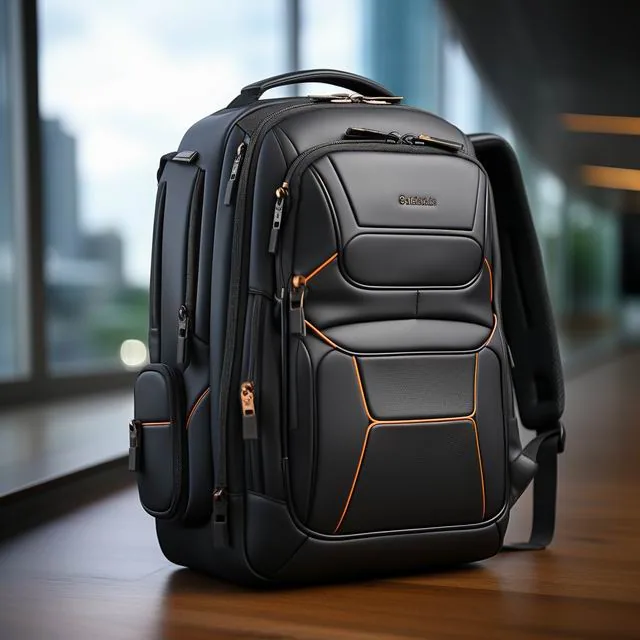
A needle passing through a PU-coated 600D polyester panel punches a hole of roughly 0.6 to 0.9 mm depending on needle size and thread. At 8,000 to 18,000 stitches across a logo, that is 8,000 to 18,000 holes in an area that was previously continuous coating, and the stitch thread itself is a wick. On a bag with a hydrostatic head of 3,000 mm on the shell, the embroidered area effectively becomes unsealed, and water enters there first. The wicking effect is worse than the hole count suggests, because polyester thread carries water into the padding behind the shell. A stitched logo on the front panel is therefore a design decision with a measurable effect on any water-resistance claim.
Three mitigations exist, and each has a cost. The first is to place the embroidery on a panel that is not exposed, such as a lining flap or a padded back panel. The second is to apply a heat-activated sealing patch behind the embroidered area, which restores most of the barrier at the price of stiffness and a visible outline. The third is to reduce stitch count with a simpler, larger design, typically a satin-stitch border with a sparse fill rather than a dense fill. Any bag that carries a water-resistance claim should have its branded panel included in the finished-bag shower test, not excluded from it.
- A needle hole measures roughly 0.6 to 0.9 mm in coated 600D polyester.
- 8,000 to 18,000 stitches means 8,000 to 18,000 water paths.
- Mitigation one: move the logo to an unexposed panel.
- Mitigation two: sealing patch behind, at the cost of stiffness.
- Mitigation three: lower stitch count with a simpler design.
Embroidery Construction: Stitch Count, Thread and Backing
Stitch count is the cost driver and the quality driver. A 40 mm badge in dense fill satin stitch runs 8,000 to 18,000 stitches; a 70 mm badge can exceed 30,000. Machine time at typical production speeds puts a 12,000-stitch badge at well under a minute of run time per head, but the cost is quoted per thousand stitches and accumulates quickly across a 500-piece programme. Ask the digitising bureau to report the stitch count and the thread colours as a schedule, so that cost and perforation can be judged together. Machine time per badge is short, but hooping, trimming and set-up dominate on small orders and set the price floor.
Thread choice is between rayon and polyester. Rayon has the sheen that retail buyers prefer and a slightly softer handle, but it loses strength under ultraviolet exposure and in repeated washing. Polyester holds colour and strength far better and is the correct choice for bags used outdoors. Backing matters just as much: a cut-away backing of 40 to 60 g/m² stabilises the stitch field on a woven shell, while a tear-away is only suitable for stable, tightly woven cloth. Under-stabilised embroidery on a stretch shell puckers, and puckering is the defect customers notice before anything else. A water-soluble topping film also helps on pile or textured cloth, where stitches would otherwise sink out of sight.
| Parameter | Rayon | Polyester |
|---|---|---|
| Appearance | Higher sheen, softer handle | Slightly duller, cleaner over time |
| UV resistance | Poor; fades and weakens outdoors | Good; standard for outdoor product |
| Wash resistance | Moderate | Good at 40 °C cycles |
| Typical use | Indoor retail and fashion bags | Outdoor, work and school bags |
Woven Label Construction: Damask, Satin and Taffeta
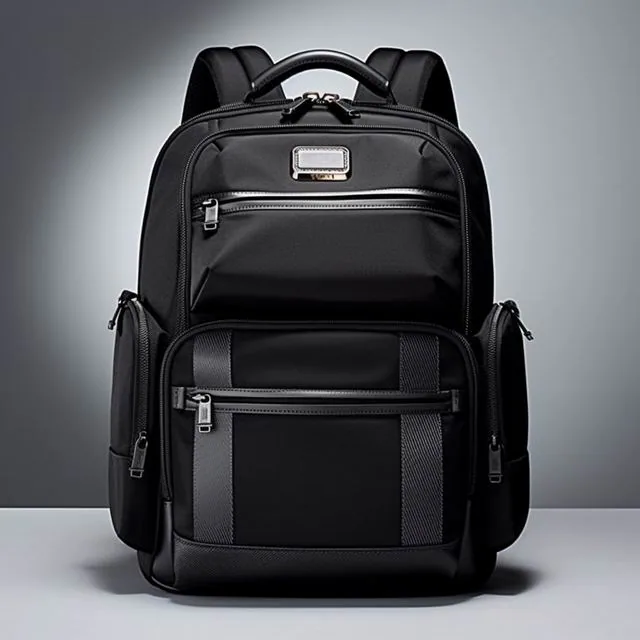
A woven label is made on a jacquard loom with polyester yarn, typically 100 to 150 denier warp, and the weave type decides what it can show. Damask is the standard for branding: a dense weave that holds fine detail and small down to roughly 1 mm in height, available in up to 12 colours. Satin has a lustrous, softer face and suits larger, simpler logos. Taffeta is the cheapest and coarsest and is normally reserved for care and content labels rather than for brand marks. Damask labels are also the thinnest of the three, which matters on a strap where any added bulk is felt immediately.
Because the design is woven rather than printed, colour matching is done against a yarn swatch rather than a Pantone reference, and that is a genuine constraint: exact corporate colours are approximated to the nearest yarn in the library. The advantage is permanence, since the colour is the yarn rather than something applied to it. Woven labels also hold detail far better than embroidery at the same size, which is why small type and thin rules survive on a 20 mm label and disappear in satin stitch. Ask for a physical woven proof rather than a digital mock-up, because loom resolution differs from what a screen suggests.
- Damask: dense, up to 12 colours, detail down to about 1 mm.
- Satin: lustrous and soft, best for larger simple marks.
- Taffeta: cheapest, used for care and content labels.
- Colour matched to yarn swatches, not to Pantone references.
Edge Finish and Fold Type
The edge finish decides whether a label frays and how it sits against the bag. Laser cut or ultrasonic cut edges seal the yarn ends and give a clean, non-fraying edge with no added bulk, which is the right choice for a small brand tab on a strap or a seam. A merrowed or overlocked edge wraps the border in thread, adds about 1 to 2 mm of bulk and gives a traditional soft finish that suits heritage and canvas product. Cut edges can feel slightly stiff against skin, so a merrowed edge is often preferred on a strap that sits against the neck.
Fold type decides how the label attaches. An end fold puts a turn-back at each end so the label can be sewn down flat on two short sides. A mitre fold turns the ends at 45 degrees for a cleaner corner on a strap. A centre fold makes a loop for insertion into a seam, which is the option that adds no new perforation to the face of the bag, because it is captured in a seam that was going to be sewn anyway. Confirm the fold before the loom is set up, because the fold determines the sewing method and cannot be changed afterwards.
| Feature | Option | Best for |
|---|---|---|
| Edge | Laser or ultrasonic cut | Small tabs; no fraying, no bulk |
| Edge | Merrowed border | Heritage and canvas bags; soft finish |
| Fold | End or mitre fold | Flat application on a panel face |
| Fold | Centre fold | Captured in a seam; no extra perforation |
Placement, Attachment and Keeping the Shell Intact
Placement is where the waterproofing argument is won or lost. A woven label captured in the side seam, in the top seam of a front pocket or under a webbing tail adds no new holes on an exposed face, because it shares perforation that already exists. An embroidered badge sewn flat onto the centre of a front panel adds its full stitch count of holes to the most exposed surface on the bag. A label sewn flat onto an exposed coated panel adds a new line of needle holes for no functional benefit at all. Where a panel logo is unavoidable, keep it small and keep it away from the base and the shoulder contact points.
There is a middle path that performs well and is under-used: a woven label on a small webbing tab, bar-tacked into a strap anchor or a haul handle. The tab is a separate component, so the shell is untouched, the logo sits at eye level on the strap, and the attachment is already reinforced for load. For programmes that want a premium look without perforating the shell, an embroidered patch applied to a separate panel and then welded on is the more expensive version of the same idea. The tab approach also survives a redesign better, because the tab can move between styles without altering the shell pattern.
- Capture the label in an existing seam wherever the design allows.
- Use a woven tab bar-tacked at a strap anchor or haul handle.
- Never embroider the centre of the most exposed panel on a coated shell.
- Where embroidery is essential, seal behind it and re-test the panel.
Durability: How Each Survives in Service
Both branding methods are abraded, washed and handled, and both can be tested the same way. Abrasion resistance of the branded area is measured with a Martindale-type machine, and ISO 12947 is the reference series for that method. A woven label on a bag strap should survive 20,000 rubs with no yarn breakage and no edge fraying; an embroidered badge should survive the same with no thread breakage or pilling. Run the abrasion test on the label as attached to the bag, since a loose swatch behaves very differently from a label sewn under tension. Record the number of rubs to first visible change rather than only a pass or fail, because the number tracks supplier drift.
Washing and rubbing matter for embroidered thread in particular. Polyester embroidery thread holds colour through repeated 40 °C cycles far better than rayon, and it resists the ultraviolet exposure that fades a bag carried daily. Colour transfer from a label or thread onto an adjacent light panel is checked by the same rubbing fastness method used for prints, ISO 105-X12, with grade 4 the usual pass. Snagging is the failure mode nobody tests for and customers notice most. A snag test on the label edge is worth adding for school and workwear programmes, where bags are dragged across rough surfaces daily.
- Abrasion to ISO 12947: 20,000 rubs with no breakage or fraying.
- Polyester thread for outdoor bags; rayon only for indoor retail.
- Rubbing fastness to ISO 105-X12 at grade 4 minimum.
- Check snagging, which no standard test currently grades well.
Labelling Compliance: What Has to Be on the Bag
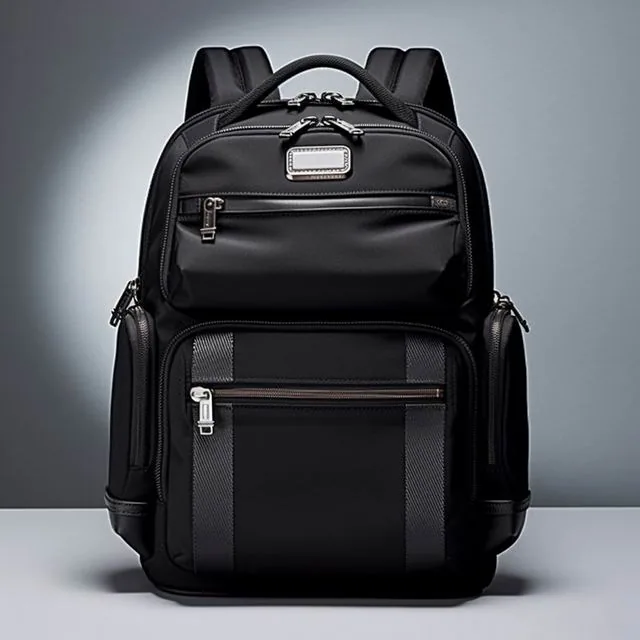
Branding labels and legal labels are different things, and confusing them causes delays at import. Textile products sold in the EU must carry fibre composition information under Regulation (EU) No 1007/2011, which sets out how fibre names and percentages are stated and requires the label to be durable and legible. A woven label is the usual vehicle, because it survives the life of the product better than a printed one. A woven label meets the durability requirement more reliably than a printed one, which is the practical reason it remains the default. Care symbols and fibre percentages must stay legible at the finished label size, which rules out very small brand tabs.
For goods placed on the Great Britain market, brands should check current product labelling and safety requirements against guidance published by the Office for Product Safety and Standards, which is the UK regulator for non-food consumer products. In practice that means the care and content label should be specified at the same time as the brand label, with its own placement, fold and edge finish, and with the text confirmed before the loom set-up is paid for, because a re-weave costs more than the labels do. Fix the text before paying for the loom set-up, because a re-weave costs more than the label run itself on most programmes.
Brand label: damask, up to 8 yarn colours, ultrasonic cut edge, centre fold captured in the side seam. Care and content label: taffeta, end fold, sewn into the lining seam. Both specified with size in millimetres, position tolerance plus or minus 2 mm, and a rubbing fastness pass at grade 4 to ISO 105-X12.
Cost and Lead Time Compared
Embroidery has no tooling and a unit cost quoted per thousand stitches, so a 12,000-stitch badge costs several times a 3,000-stitch one and the difference is visible on a 500-piece order. Woven labels carry a loom set-up charge, usually modest, and then a unit cost measured in pence that barely moves with quantity. Above roughly 500 units the woven label is almost always cheaper, and the gap widens with every additional piece. Additional yarn colours add a little to unit cost, but nothing like what additional embroidery colours add through stitch count. Embroidery also adds a per-bag machine operation, which matters more on a short lead time than the unit cost does.
Lead time is the other differentiator. A woven label needs a loom set-up before any bag can be assembled, which has to be ordered in parallel with the first samples or it becomes the critical path. Embroidery needs a digitised file and an approved stitch-out, and it can be produced on demand. Both fit inside a 6-10 working day sampling window if they are ordered early, and both push a programme to 12-15 working days if they are ordered after the first sample. A loom set-up typically takes one to two weeks before labels are in hand, which is why it should start with the first sample.
| Factor | Embroidery | Woven label |
|---|---|---|
| Set-up | Digitising file only | Loom set-up, modest charge |
| Unit cost driver | Stitch count per badge | Yarn colours and size |
| Cost below 500 units | Often comparable | Set-up amortised over a small run |
| Cost above 500 units | Scales linearly with stitches | Almost flat per unit |
| Critical path risk | Low | High if ordered after first sample |
Choosing by Programme Type
Corporate gifting and event programmes usually want the premium handle and often specify embroidery, because the bags are canvas or uncoated and the run is short. Retail and own-brand programmes with a water-resistance claim should specify woven labels captured in existing seams, because every perforation on a coated shell is a claim risk. Workwear and school programmes should specify polyester thread and woven labels, because abrasion and washing are severe and both methods must be tested to 20,000 rubs. Where a school or workwear programme wants embroidery for identity, place it on a canvas or uncoated panel and keep the shell intact.
At QUANZHOU JUNYUAN BAGS these decisions sit inside fixed commercial parameters so that programme planning is predictable: 500 pcs per style and colourway, sampling in 6-10 working days and 12-15 working days for complex builds, bulk in 35-50 days, inspection at AQL 2.5 under ISO 2859-1, FOB Xiamen and T/T 30/70. Ordering labels and digitised embroidery files in parallel with the first sample is the single change that most reliably keeps that schedule. Confirm the branding method at the same time as the fabric, because changing it later means re-testing the closure and the seams. Changing the branding after the shell is signed off means repeating the shower test, which is the expensive part.
- Corporate and event bags: embroidery on uncoated cloth, short runs.
- Retail own-brand: woven labels captured in seams on coated shells.
- Workwear and school: polyester thread and woven labels, abrasion tested.
- Order labels and embroidery files with the first sample, not after.
Frequently Asked Questions
Does embroidery make a backpack leak?
On a coated or laminated shell, yes, in practice. An embroidered badge of 8,000 to 18,000 stitches puts that many needle holes of roughly 0.6 to 0.9 mm through the coating, and the thread itself wicks water. The leak is local to the logo, so a bag can still shed light rain and fail in a sustained downpour. A sealing patch behind the badge restores most of the barrier.
How many stitches are in an embroidered backpack logo?
A 40 mm badge in dense fill satin stitch typically runs 8,000 to 18,000 stitches, and a 70 mm badge can exceed 30,000. Cost is quoted per thousand stitches, so simplifying the design or switching to a satin border with a sparse fill reduces both cost and perforation. Always ask the digitising bureau for the stitch count before approving artwork.
What is a damask woven label?
Damask is a dense jacquard weave used for most branded clothing and bag labels. It holds fine detail down to roughly 1 mm in height and supports up to about 12 yarn colours, which is far more detail than satin stitch embroidery can hold at the same size. Satin woven labels are softer and lustrous but suit larger, simpler marks; taffeta is used for care and content labels.
Can woven labels match exact Pantone brand colours?
Not exactly. Woven labels use polyester yarn from a fixed library, so colours are matched to the nearest yarn swatch rather than to a Pantone reference. Expect a small variance and approve against a physical woven sample before production. The trade-off is permanence: the colour is the yarn itself, so it does not fade or rub off the way an applied print can.
Which lasts longer on a backpack, embroidery or a woven label?
Both last the life of the bag if specified correctly. Tested to ISO 12947 abrasion at 20,000 rubs, a damask woven label should show no yarn breakage or edge fraying, and polyester embroidery should show no thread breakage or pilling. Embroidery in rayon thread fades and weakens under ultraviolet exposure, so polyester thread is the correct choice for any bag used outdoors.
How should a label be attached so it does not damage the shell?
Capture it in an existing seam. A centre-fold label inserted into a side seam or the top seam of a front pocket shares perforation that was going to be sewn anyway. A woven tab bar-tacked into a strap anchor or haul handle is another good option. Avoid sewing a label flat onto the centre of an exposed coated panel, which adds a new line of needle holes.
What is the difference between laser cut and merrowed label edges?
Laser or ultrasonic cutting seals the yarn ends, giving a clean, non-fraying edge with no added bulk, which suits small brand tabs and straps. A merrowed edge wraps the border in thread, adding about 1 to 2 mm of bulk and a softer, more traditional finish that suits heritage and canvas product. Merrowed edges can catch on webbing; cut edges do not.
Is a woven label cheaper than embroidery?
Above about 500 units, almost always. A woven label carries a modest loom set-up and then a unit cost measured in pence that barely moves with quantity. Embroidery has no set-up but is priced per thousand stitches, so a 12,000-stitch badge costs several times a 3,000-stitch one. On a 40 mm badge the crossover usually falls around 300 to 500 units.
Do backpacks need a fibre composition label in the UK?
Textile products sold in the EU must carry fibre composition information under Regulation (EU) No 1007/2011, stated in the approved fibre names and percentages on a durable, legible label. For goods placed on the Great Britain market, brands should check current requirements against guidance published by the Office for Product Safety and Standards, which is the UK regulator for non-food consumer products.
Can an embroidered badge be waterproofed afterwards?
Partly. A heat-activated sealing patch applied behind the embroidered area restores most of the barrier, but it adds stiffness and can show a visible outline through the shell. Reducing stitch count and moving the logo to a less exposed panel are more effective. Any mitigation should be re-tested, because the shell figure no longer applies to the branded area. Where the bag carries a water-resistance claim, include the branded panel in the finished-bag shower test.
How long does branding add to a bag sampling schedule?
Standard sampling runs 6-10 working days, and both methods fit inside that window if the woven label loom set-up and the digitised embroidery file are ordered with the first sample. Ordering them afterwards pushes sampling to 12-15 working days. After approval, bulk runs 35-50 days, shipped FOB Xiamen against T/T 30/70 terms and inspected at AQL 2.5. Approving the label weave and the stitch-out together is what keeps the window at the shorter end.
Deciding between embroidery and a woven label?
QUANZHOU JUNYUAN BAGS dates from 2014 and runs as a sourcing and programme-management company. Our production team specifies branding alongside shell construction, because on a coated or laminated fabric the branding method is part of the waterproofing decision rather than a finishing touch. Every programme carries a written branding schedule with method, placement, fold, edge finish and named durability tests.
Send artwork and the fabric specification, or a competitor sample, and the team will return a branding recommendation with stitch counts or label specifications, cost bands and test requirements, then quote against 500 pcs per style and colourway, sampling in 6-10 working days, bulk in 35-50 days, AQL 2.5, FOB Xiamen and T/T 30/70.
Email: service@junyuanbags.com
WhatsApp: +86 177 5002 0688