Detachable Daypack Travel Systems Explained: Attachment Types and Trade-Offs
A detachable daypack buys exactly one benefit: a small bag at the destination without carrying a second bag on the way there. It costs 180-350 g of hardware and fabric, adds between two and four new failure points, and usually means the daypack's harness is a compromise with thinner straps than a standalone bag would carry. Whether that trade is worth making depends on how often the small bag is actually used, and on whether the attachment survives a full trip.
This guide compares the four attachment architectures, sets out the weight arithmetic behind each one, and covers the airline and rail rules that decide whether the detached bag counts as a second item at the gate. Programmes developed under the QUANZHOU JUNYUAN BAGS name run from 500 pcs per style and colourway, with sampling in 6-10 working days and bulk production in 35-50 days, so attachment choice belongs in the tech pack rather than in a sample-room decision.
The Four Attachment Architectures
Every modular travel system on the market uses one of four approaches, and knowing which one you are looking at tells you most of what you need to know. A zip-off daypack is sewn to the main bag with one or two heavy zips and becomes a separate pack when unzipped. A buckle-on daypack attaches with four side-release buckles and two webbing stabilisers. A harness-share design bolts a small pack onto the shoulder straps and frame of the main bag, and a strap-on sling clips to compression straps or daisy chains. Everything else about a modular system follows from which of those four architectures it uses.
They differ in three measurable ways: how much weight the attachment adds to the empty pack, how many operations it survives before something wears out, and how long detachment takes on an airport floor with people behind you. Zip-off wins on speed at roughly 15 seconds. Buckle-on takes 30-45 seconds but the hardware is replaceable for a couple of pounds. Harness-share is the heaviest and the most awkward to split in public, and it is the design most often abandoned by travellers after a single trip. Detach time sounds trivial until the third airport of a trip, at which point it stops being trivial.
| Architecture | Added weight | Detach time | Weak point |
|---|---|---|---|
| Zip-off panel | 180-280 g | 15 seconds | Zip burst at the join |
| Buckle-on pack | 240-350 g | 30-45 seconds | Buckle racking and lost tension |
| Harness-share | 300-450 g | 60-90 seconds | Fit compromise on both bags |
| Strap-on sling | 90-160 g | 20 seconds | Swings under any real load |
Zip-Off Systems: Fast, Clean and Vulnerable at the Seam
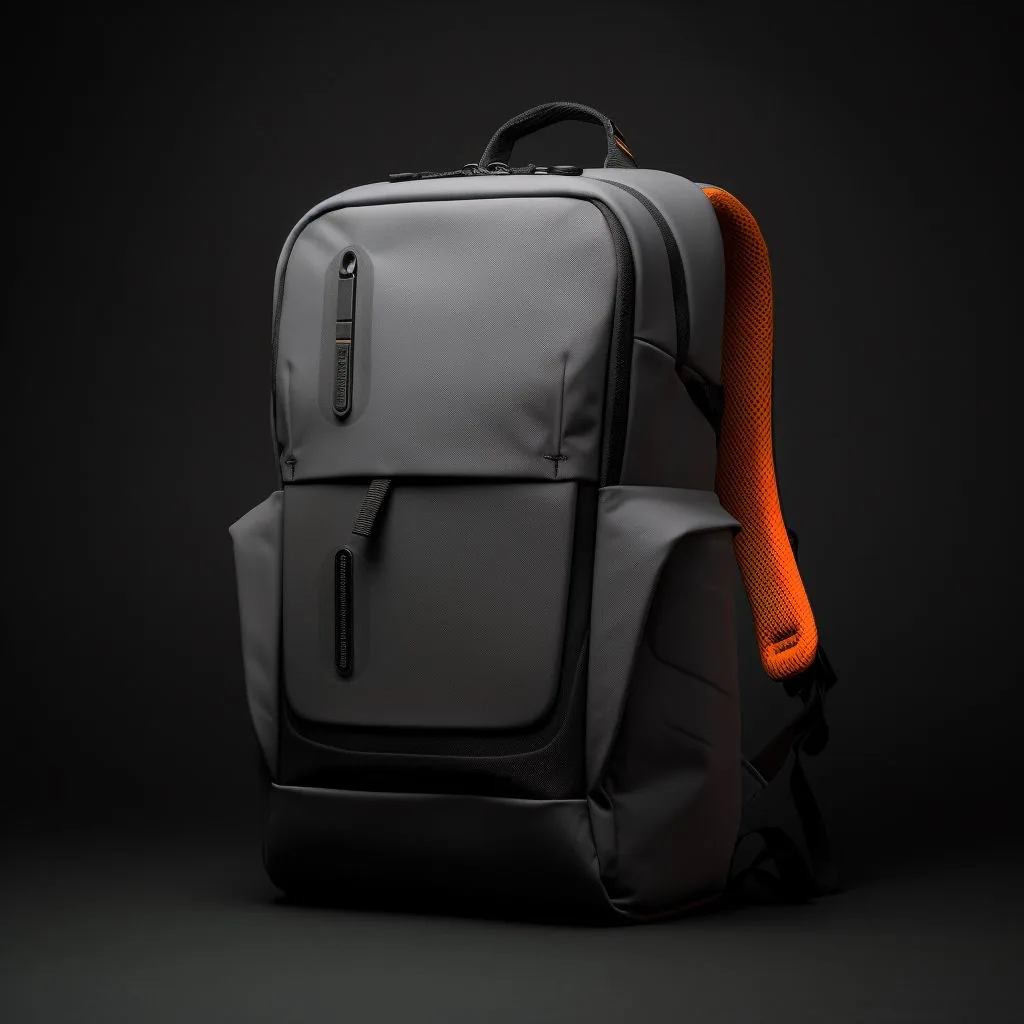
Zip-off is the neatest option, because the join disappears into the silhouette and the daypack usually reads as a deliberate product rather than as an accessory bolted on. The mechanics are simple: a number 8 or number 10 coil zip runs around the perimeter of the daypack face, and when it opens, the daypack separates complete with its own straps and back panel. Chain strength is measured under ASTM D2061, and a perimeter zip carrying the whole daypack load should be specified at number 10 rather than number 8. Number 8 is acceptable on a small daypack below 12 litres and nowhere else.
The failure mode is entirely predictable, and it is shearing rather than pulling. The zip carries the daypack's contents in shear, so a 6 kg daypack hanging from a 400 mm perimeter zip loads the chain unevenly, and the point nearest the top handle takes most of the force. Once the elements separate at that point the whole system is effectively scrap, since re-chaining a perimeter zip means opening the panel. Specify a storm flap over the join and a webbing safety loop that takes the load off the chain when the bag is full. A storm flap also hides the chain, which keeps the join looking tidy after a season of use.
Buckle-On Systems: Slower but Serviceable
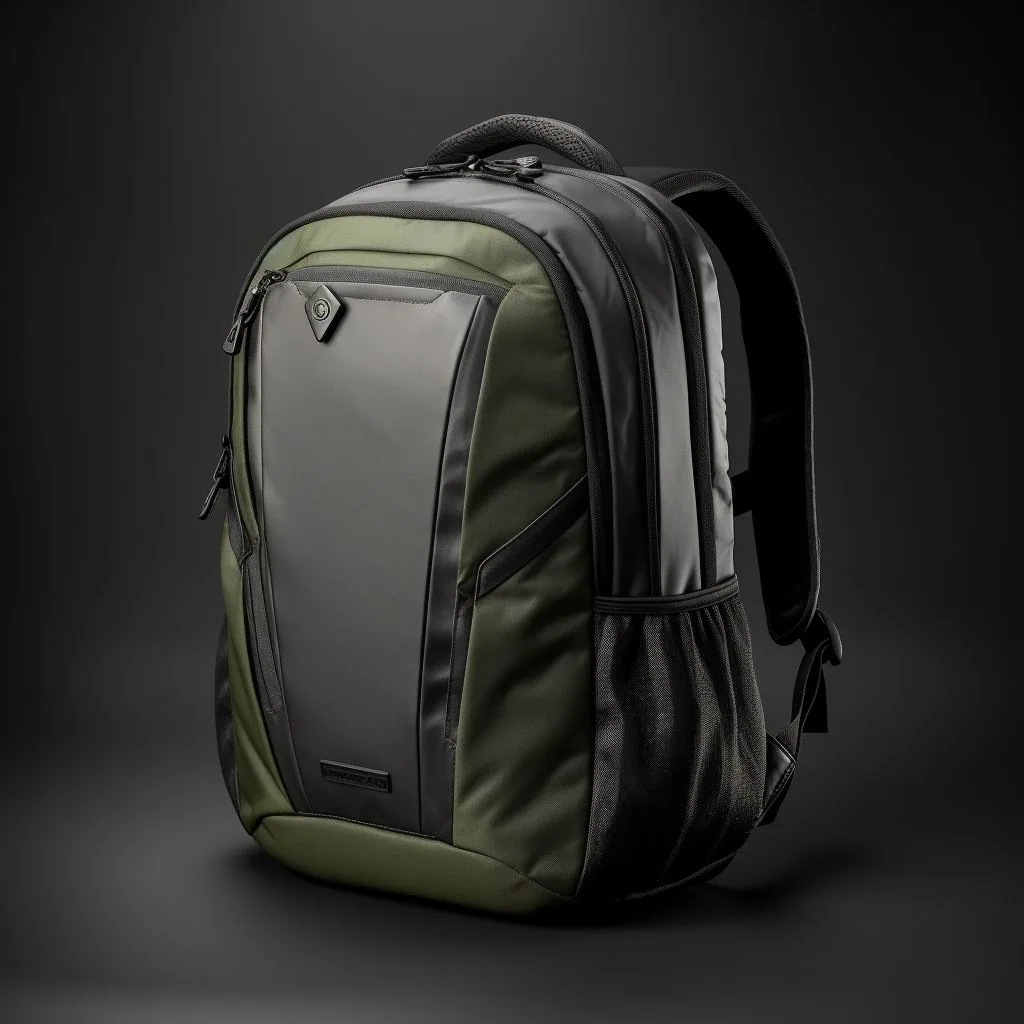
A buckle-on daypack attaches at four points, usually two at the top and two at the base, with 25 mm side-release buckles and a short webbing stabiliser on each side to stop the pack racking sideways under load. Because the load path runs through webbing rather than through a zip chain, this arrangement tolerates a heavier daypack: 8 kg is realistic where a zip-off design starts to complain at 6 kg. The hardware also costs under £2 a set to replace, which no zip-off system can match. Webbing also stretches slightly under load, which absorbs shock instead of transmitting it to a chain.
The trade is time and fiddle, and it is worse in the real world than in a showroom. Four buckles plus two stabilisers means 30-45 seconds on an airport floor, and if the buckles are not identical or colour-coded, at least one will be done up wrong on the first attempt. Two-point systems are quicker and lighter, but they let the pack swing away from the body, which is immediately obvious on stairs or when bending. For a bag sold to travellers who detach daily, four points with identical hardware is the better specification. Identical hardware sounds obvious and is frequently ignored in the rush to get a sample made.
- Four-point attachment: stable under load, 30-45 seconds to detach.
- Two-point attachment: 20 seconds, but the pack swings away from the body.
- Use 25 mm acetal side-release buckles, identical left and right, colour-coded if possible.
- Add a webbing stabiliser on each side so the daypack cannot rack sideways.
The Weight Arithmetic Nobody Prints
A modular system carries two back panels, two sets of strap anchors and one attachment mechanism, and all of that is dead weight on travel days. Compare it with a 60 litre travel pack plus a packable daypack: the travel pack at 1.9 kg and the packable at 160 g folded gives 2.06 kg in total. The equivalent modular system is typically 2.6-2.9 kg, because the daypack needs its own padded harness and the main bag needs reinforcement around the attachment. That is 500-800 g carried every day to save 160 g at the destination. Five hundred grams is roughly the weight of a packed lunch carried on every day of the trip.
The arithmetic only favours the modular system if the daypack is used often enough and loaded heavily enough that a packable sack would be genuinely uncomfortable. A 12-18 litre daypack with a padded harness carries a 2 kg camera body and a 1 litre bottle happily for a full day, where a 160 g packable sack with 15 mm webbing straps does not. Decide by counting days rather than by reading feature lists: below four day-trips per journey, packable wins on weight; above it, modular wins on comfort. Counting days is unglamorous, and it is the only method that reliably predicts satisfaction.
Modular systems carry 500-800 g more than a pack-plus-packable combination. The break-even point is roughly four full day-trips per journey, or any day load above 3 kg.
Airline and Rail Rules for a Bag That Splits
Splitting a bag does not create a free extra allowance, which is the assumption that catches travellers out at the gate. Most UK carriers charge for a second cabin item, and the practical position on hand luggage and screening is published on GOV.UK. A detached daypack is a bag in its own right the moment it comes off the main pack, and gate staff count bags rather than attachment systems or clever marketing. Budget carriers in particular price by the bag, and a detached daypack is very easy for gate staff to see, count and charge for, which is the moment most travellers discover the rule.
Rail is more forgiving, though not unlimited. European operators publish luggage conditions that generally cover a main bag plus a small personal item, and the European Commission summarises entitlements on rail passenger rights. The useful habit is to re-attach the daypack before boarding and split it at the seat, so the pair reads as one item on the platform, at the luggage rack and in front of a conductor. Conductors and platform staff respond to what they can see in front of them, so a joined bag reads as one item and a split pair reads as two, regardless of how the bag was sold.
- Airlines count bags, not systems: a detached daypack is a second item at the gate.
- Keep the daypack attached through check-in and security, then split at the seat.
- Rail operators generally allow a main bag plus a small personal item.
- Detached daypacks under 15 litres usually pass as a personal item; above 20 litres they rarely do.
The Harness Compromise in Every Modular Bag
A daypack that spends most of its life zipped to a larger bag tends to inherit a lighter harness than a standalone 15 litre pack would ever be given. Straps come in at 40-50 mm wide with 6-8 mm of foam, where a standalone daypack uses 55-65 mm straps with 10-12 mm of foam, and the back panel is often a simple foam sheet rather than a suspended mesh. That is perfectly acceptable for 3 kg carried for two hours, and uncomfortable for 6 kg carried all day. Strap width is the fastest way to judge whether a daypack harness has been taken seriously.
Torso length is the second compromise, and it affects both halves of the system. The daypack sits on the main bag's back panel, so its own strap geometry has to suit the same torso range, and a system sized for a 48 cm torso will not adjust down to 42 cm on either half. Buyers should check that both halves carry the same adjustment range, and product teams should specify the daypack harness as a real harness rather than as two webbing straps with a sleeve of foam. A shared torso range is also easier to sell, because one size then covers more customers.
Failure Modes and How to Test for Them
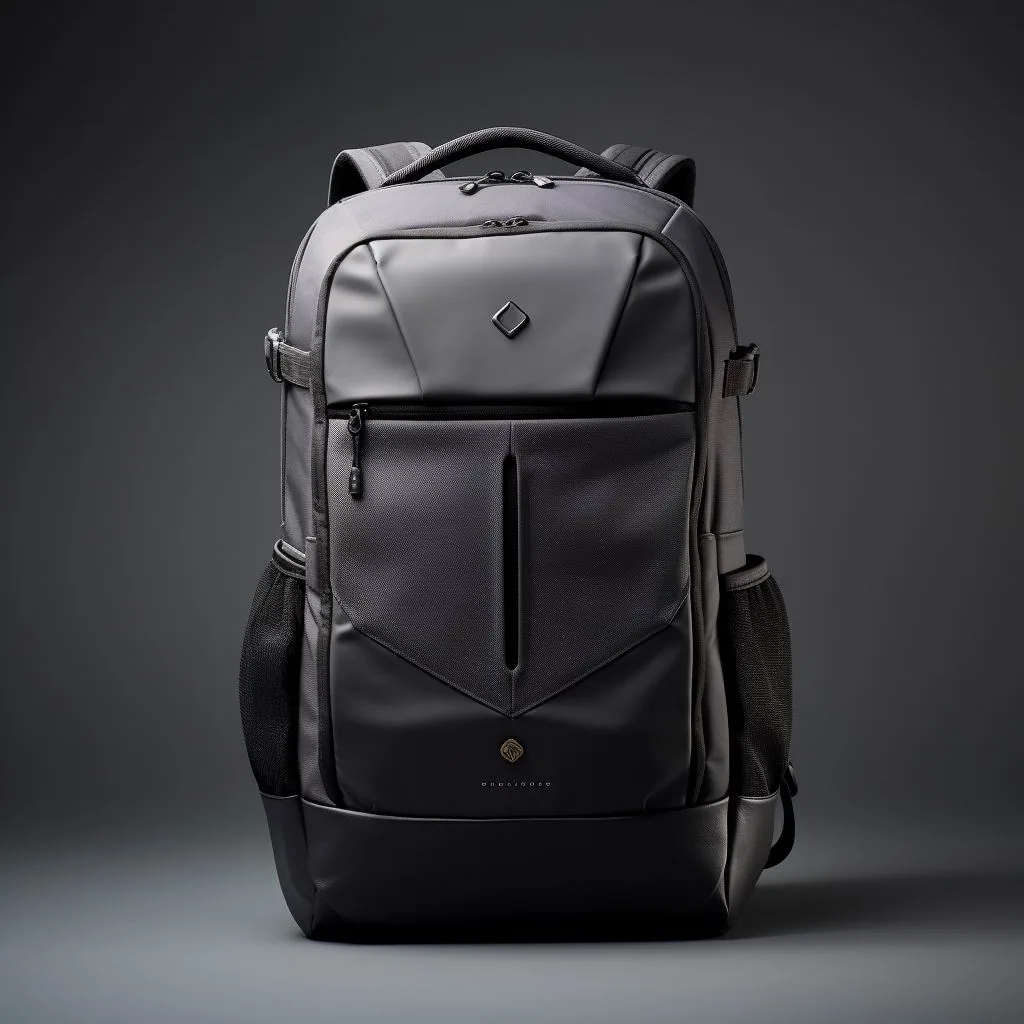
Three failures account for most returns, and none of them is mysterious. Zip-off systems burst at the perimeter chain under a heavy daypack, because the load is carried in shear rather than in tension. Buckle-on systems lose tension as the webbing creeps, so the daypack sits progressively lower over the course of a two-week trip. Harness-share systems wear the strap anchor where the small pack's weight pulls against the main bag's shoulder strap, and the anchor eventually tears out of the face fabric entirely. All three are visible on a returned bag, which is why they are worth designing out rather than covering under warranty.
All three are testable before shipment, and the tests cost almost nothing to run. A cycle test of 500 attach-and-detach operations catches zip and buckle wear, a 24 hour hanging test with 8 kg in the daypack catches webbing creep, and a 200 N pull on each anchor catches stitch failure. Goods are inspected to AQL 2.5 under ISO 2859-1, and all three checks belong on the critical defect list rather than the minor one. Cycle and hanging tests need only a hook, a weight and a tally counter, and they pay for themselves on the first bulk order that would otherwise have gone back.
- Cycle test: 500 attach-detach operations with no zip or buckle wear.
- Hanging test: 8 kg in the daypack for 24 hours with under 5 mm of creep.
- Anchor pull: 200 N per attachment point, recorded per batch.
- Reinforcement: 210D or 420D backing patch behind every anchor, not face fabric alone.
When a Packable Daypack Is the Better Answer
A packable sack weighs 120-200 g, folds to roughly 150 x 120 x 60 mm, and costs a fraction of a modular system. It is the right answer for city breaks, for travellers whose entire day load is a light jacket, a bottle and a paperback, and for anyone flying carriers with tight cabin allowances where a second bag is charged. Its weakness is the harness: 15 mm webbing straps and no back panel become uncomfortable above about 3 kg, and they cut into the shoulders. A packable also doubles as a laundry bag and as a beach bag, which modular systems rarely manage.
The honest comparison is by use case rather than by counting features on a hangtag. Four city days with a camera body, a lens, a 1 litre bottle and a waterproof shell justify a modular daypack with a real harness and a padded panel. Four city days with a notebook and a bottle do not, and the 500-800 g penalty of the modular system is dead weight for the entire journey. Travellers who sit between the two often carry a packable plus a small structured sling. Neither answer is wrong; the mistake is buying the modular system for a trip that never uses it.
| Scenario | Better choice | Reason |
|---|---|---|
| City break, light day load | Packable sack | Saves 500-800 g across the whole trip |
| Two-week trip, daily excursions | Modular daypack | Real harness matters after four days |
| Camera or laptop carried daily | Modular daypack | Load above 3 kg needs padding and structure |
| Strict cabin allowance | Packable sack | Detached daypacks count as a second bag |
Specifying a Modular System for Production
A modular travel system is two products sharing one interface, and the tech pack has to treat it that way rather than as a single bag with an extra pocket. State the attachment type, the zip gauge or buckle size, the number of attachment points, the reinforcement behind each anchor, the daypack volume both attached and detached, and the harness specification on each half. Add a cycle test figure, because an interface that has never been cycled 500 times has been drawn, not designed. Two products sharing one interface need two defect lists, or faults get logged against the wrong half.
Volume claims need care as well, since they are the source of most complaints. A daypack sold as 15 litres detached often measures closer to 12 litres once the attachment panels are folded and stowed, and UK buyers are sensitive to that gap. QUANZHOU JUNYUAN BAGS develops modular travel programmes from 500 pcs per style and colourway, with a 6-10 working day sampling window that extends to 12-15 working days where a moulded attachment plate or reinforced interface panel forms part of the build. Publishing the detached figure rather than the attached one is the honest approach and prevents the complaint entirely.
Number 10 coil perimeter zip or four 25 mm acetal buckles, 210D backing patch behind every anchor, 500-cycle detach test, 8 kg 24 hour hanging test with under 5 mm creep, 200 N anchor pull recorded per batch.
Frequently Asked Questions
What is a detachable daypack on a travel backpack?
It is a small pack, usually 12-20 litres, that attaches to the front or back of a larger travel bag by zip, buckles or a shared harness, and comes off for day trips. The benefit is one bag on travel days and two at the destination. The cost is 180-350 g of extra hardware plus several new failure points. Check whether the daypack has its own straps or borrows the main bag's harness.
Are detachable daypack systems worth the extra weight?
They break even at roughly four full day-trips per journey, or whenever the daypack load exceeds 3 kg. Below that, a 160 g packable sack saves 500-800 g across the whole trip. Above it, a modular daypack with a padded harness is far more comfortable than a packable with 15 mm webbing straps. Four day-trips is the point at which a real harness starts to pay for its weight.
Which is better: a zip-off or a buckle-on daypack?
Zip-off detaches in about 15 seconds and looks neater, but the perimeter zip carries the load in shear and fails permanently if it bursts. Buckle-on takes 30-45 seconds, tolerates around 8 kg rather than 6 kg, and its hardware is replaceable for a couple of pounds. Choose buckle-on for heavy daily use. Look for a storm flap over a zip join; it hides the chain and takes some of the shear.
Can I take a detached daypack as hand luggage as well?
Not usually for free. Once detached it counts as a second bag at the gate, and most UK carriers charge accordingly. Keep the daypack attached through check-in and security, then split it at the seat or after boarding. Rail operators are generally more tolerant of a main bag plus a small item. A daypack under 15 litres is far more likely to pass unchallenged than one over 20 litres.
How much weight does a detachable daypack add?
Between 180 g and 350 g depending on the architecture: zip-off 180-280 g, buckle-on 240-350 g, harness-share 300-450 g. Compared with a travel pack plus a 160 g packable sack, a modular system typically carries 500-800 g more because of duplicated back panels and reinforcement. Duplicated back panels and reinforcement account for most of the difference, not the buckles themselves.
How heavy can a detachable daypack be loaded?
Treat 6 kg as the sensible ceiling for zip-off systems and 8 kg for four-point buckle-on systems. Beyond that, the perimeter zip loads unevenly in shear and buckle webbing creeps. Anything above 8 kg belongs in the main pack or in a standalone daypack with a full harness. Above that figure, carry the load in the main pack and use the daypack for light items only.
Do detachable daypacks have proper shoulder straps?
Frequently not. Modular daypacks often use 40-50 mm straps with 6-8 mm foam, where a standalone 15 litre pack would use 55-65 mm straps with 10-12 mm foam. That is fine for 3 kg over two hours and poor for 6 kg all day, so check strap width and foam thickness before buying. Press the foam between finger and thumb; below 8 mm it will flatten on a long day.
How long does a detachable daypack mechanism last?
Look for a tested figure of 500 attach-and-detach cycles with no measurable zip or buckle wear, plus a 24 hour hanging test at 8 kg with under 5 mm of webbing creep. Systems sold without those numbers have been drawn rather than tested, and wear usually appears in the second season. Wear usually appears in the second season, well after the return window has closed.
Can I detach the daypack and leave the main bag at the hotel?
Yes, and that is the main use case for these systems. Keep valuables in the daypack, check that the detached harness adjusts to your torso range, and be aware that the attachment panels left exposed on the main bag can snag on straps, lift handles and overhead rack edges. Check that the exposed attachment panels cannot catch on a lift handle or an overhead rack.
What size should a detachable daypack be?
12-18 litres suits most travellers: enough for a 1 litre bottle, a light layer, a camera and a paperback, and small enough to pass as a personal item. Above 20 litres it stops being a daypack in practice and starts counting as cabin baggage on most carriers, with the charges that follow. Anything larger stops being a daypack and starts being charged for as cabin baggage.
Are modular travel backpacks better than buying two separate bags?
Only if you detach often. Two separate bags give each one a proper harness, a correct torso range and no duplicated panels, and they usually weigh less in total. Modular systems win on airport handling and on never having to decide which bag to take in the morning. Two separate bags also mean one can be left in the hotel while the other goes out.
Building a Modular Travel Programme?
We develop detachable daypack systems for UK brands from 500 pcs per style and colourway, with sampling in 6-10 working days and bulk production in 35-50 days.
Inspection runs to AQL 2.5 under ISO 2859-1, shipment is FOB Xiamen and payment is T/T 30/70. Send the two bag volumes you have in mind and our production team will come back with an interface proposal, cycle test figures and a harness specification for both halves. QUANZHOU JUNYUAN BAGS operates as a sourcing and programme-management company established in 2014, coordinating a 4,950 m² SGS-verified production floor space with 137 colleagues across 7 production lines.
Email: service@junyuanbags.com
WhatsApp: +86 177 5002 0688