Backpack Colour Trends for 2027: Specifying Colour That Repeats
Backpack colour trends for 2027 are decided less by mood boards than by three controlled numbers: a Pantone reference nominated on the production substrate, a shade tolerance of ΔECMC 1.0 or tighter between approved standard and bulk, and colour fastness grades of 4 or better to rubbing, washing and light. Without those, a promising shade becomes a warehouse problem.
This piece is aimed at buyers and designers assembling autumn/winter 2027 and spring/summer 2028 palettes for the UK market. It covers how colour is nominated and measured, why the same reference behaves differently on shell, lining and webbing, which fastness tests protect against returns, how the palette is moving, and what each additional colourway commits in cash and calendar time.
Colour Is a Process to Be Controlled, Not a Mood
Most disappointed launches share the same origin story. A shade is chosen from a card or a competitor sample, the first laboratory dip looks close enough under showroom lighting, production follows, and the shipment arrives visibly different from the approved reference once it sits near the already-shipped core black. Nobody is dishonest in that sequence; the colour simply was never specified as a measurable target. Treating a colourway as merchandise rather than as engineering is the single most expensive habit in soft-goods development. Budget nothing for drama here: the entire system costs a few hundred pounds in sealed samples plus a disciplined filing habit.
The remedy is unglamorous and cheap. Nominate one master reference per component, approve those references on the actual production substrates, record tolerance numerically rather than visually, and require both scripted test results before bulk. Doing so converts an argument about taste into a pass or fail decision anyone in the chain can check. It also protects the seasonal story itself: a supposedly matching lining, webbing or zip tape that drifts even one grade away is what makes a good palette look cheap once sewn. None of it requires new software, only that somebody owns the standard library and updates it whenever a component or supplier changes.
- One master reference per component, nominated on production substrate rather than card stock.
- Numeric tolerance agreed in advance; visual approval alone is not a specification.
- Two lighting sources at every approval, plus a documented grey-scale result.
- Scripted fastness reports required before any bulk dye lot is cut.
Nominating Colour on the Substrate That Actually Ships
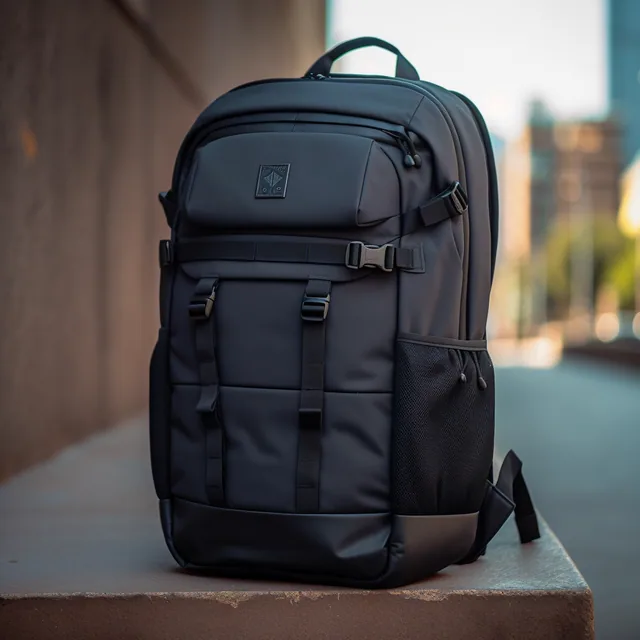
A Pantone TCX reference describes a dyed cotton target, not a 600-denier polyester face with a matte finish. Fibre takes dye differently, and finish changes perceived depth by several percent, so a reference approved on card stock routinely drifts once applied to synthetic face fabric. The workable method is to nominate the reference as a direction and then approve physical lab dips on every component that will ship: shell, lining, webbing, zip tape, binding tape, thread and any printed trim. Each gets its own signed standard. Card references remain useful for communicating direction internally, they simply cannot serve as the acceptance document for a woven synthetic.
Lighting conditions decide whether those approvals hold up. Standard practice evaluates submissions under two specified sources, commonly daylight simulation near 6500 K and a retail fluorescent close to 3000 K, because retail environments across UK high streets vary widely. Anything approved under one lamp should be rechecked under the second before signature. There is a scheduling benefit too: dipping all components in parallel rather than sequentially usually fits inside the standard 6-10 working day sample window, whereas sequential approvals can add three weeks to the critical path. Submit every component in one envelope too, so the complete palette is judged as a single composition rather than piecemeal.
Tolerance Numbers and the Metamerism Trap
Once a physical standard exists, tolerance is arithmetic. A spectrophotometer returns colour difference as ΔECMC, and most practical soft-goods specifications accept 1.0 to 1.5 for adjacent panels, with anything approaching 2.0 becoming visible to a customer placing two pieces side by side. Recording the figure matters more than the figure itself, because it turns late-stage disagreement into inspection rather than debate. Ask suppliers to instrument-read every bulk dye lot against the signed standard and keep the readings with the purchase order file. Those readings also settle disputes quickly, because both sides can refer to numbers rather than describing what they believed they saw.
Metamerism is the failure mode readings alone do not catch. Two materials can match under one light source and separate badly under another, which is common where a nylon webbing is paired with a polyester face and a branded zip tape, since three different polymers are dyed by three different systems. The mitigation is structural: approve all components together as a set, take readings under both light sources, and set the shade standard for the smallest visible surface first, usually the binding or tape. Where doubt remains, dyed-to-match rather than dyed-to-number avoids the problem entirely. Paying for one extra dip round costs a fraction of re-cutting finished goods, so specify it whenever three polymers meet in one visible panel.
| Control measure | Recommended target | Where it is neglected |
|---|---|---|
| Colour difference to signed standard | ΔECMC 1.0 to 1.5, ISO grey scale 4-5 | Second ship years later with no retained standard |
| Approval lighting | Two specified sources, typically 6500 K and 3000 K | Showroom-only approvals that drift under retail light |
| Component matching | All panels read and approved as one set | Webbing dyed later from a card reference |
| Bulk verification | Instrument reading retained per dye lot | Visual check at goods-in by untrained staff |

The Fastness Grades That Prevent Returns
Colourfastness testing converts complaints into specification. Rubbing (ISO 105-X12) catches dye that transfers onto a shirt collar or a car seat; washing (ISO 105-C06) catches migration between panels of contrasting colour; light (ISO 105-B02) predicts how quickly a shade pales on a sunny commute or a shop window. A fourth is often forgotten and matters most for straps: perspiration fastness, which governs dye transfer from soaked webbing onto light clothing during a warm commute. Requiring all four at nomination rather than after bulk arrives keeps exceptions visible and costed instead of quietly absorbed months later by someone else. Where a compromise is unavoidable, agree it in writing with the mill before bulk dyeing begins rather than afterwards.
Grade 4 is the working target on all four for any daily-carry product, with grade 3-4 acceptable only for wet rubbing on deep saturated shades, where some transfer is unavoidable for chemical reasons. Acknowledged exceptions should be documented at nomination so nobody discovers them after a season of returns. Light fastness deserves particular care for pale green, clay and mid-blue shades destined for outdoor displays or cycle-commute ranges, since ultraviolet exposure combined with ISO 105-B02 grade-3 results predict visible fading within one British summer season. Fluorescent retail lighting adds a second exposure route that few programmes plan for, particularly for display windows facing south.
Require grade 4 to rubbing, washing, perspiration and light for daily-carry bags. Accept grade 3-4 for wet rubbing on deep saturated shades only, and record the exception in writing at nomination rather than after launch.
Where the 2027 Palette Is Heading
Three families dominate current direction for bags aimed at UK buyers. Mineral and geological shades, including slate blue, graphite, oxidised copper and warm iron oxides, read as durable and hide abrasion dust well. Earth pigment tones such as clay, olive drab and deep ochre continue to migrate from outdoor apparel into commuter ranges, helped by the fact that mid-tone browns and greens conceal both city grime and road spray considerably better than black does. They also photograph reliably under mixed artificial light, and expect at least two seasons of relevance from this family rather than a single one. That longevity is what makes the family worth development cost in a category that otherwise churns every season.
A second movement is away from saturated synthetic brights. Colourways that once anchored entry-level ranges are now mainly used as trims, linings and zip tape, where a flash of acid yellow inside a muted body reads as considered rather than loud. Off-white and bone are the notable risk in this group: they look excellent in photography and poor after three weeks of contact with train floors and kerb splash, so specify them with a laminated base and a soil-release finish, or restrict them to linings where expectations are lower. Trims then carry the accent instead: a single bright puller or binding gives the flash without committing an entire face to it.
- Mineral family: slate, graphite, oxidised copper, warm iron oxide.
- Earth pigment family: clay, olive drab, deep ochre, terracotta accents.
- Deep aquatic accents: petrol teal and ink navy replacing primary brights.
- Bone and off-white used with caution, ideally on linings rather than faces.
Core Versus Seasonal: The 60-40 Logic
A workable colour range behaves like a portfolio. Roughly 60% of planned volume sits in carryover shades that appear every season and are ordered with confidence, while 40% goes to seasonal offers that create interest and markdown risk in equal measure. Black, graphite and one dependable navy usually form the carryover base for menswear bags, and those three should never be re-dipped as though they were new decisions; they should be re-ordered against a signed standard retained by both parties. Treat any variation request on a core shade as an exception needing written authorisation, since most begin as a small quantity adjustment and end as a second standard.
Core shades also carry a technical advantage: repeated lots let the mill learn the recipe, so variance falls over time and mid-tone neutrals are easier to hold within tolerance than one-off brights. Seasonal shades have no such history and should therefore be specified at the top end of tolerance. Review performance on a fixed schedule rather than informally, using sell-through at eight and sixteen weeks. Drop any seasonal shade that has not cleared 60% of its buy by sixteen weeks, since holding it another season rarely changes the outcome. Record those thresholds before launch, because reviews conducted after the fact tend to find reasons for keeping absolutely everything.
What an Extra Colourway Really Commits
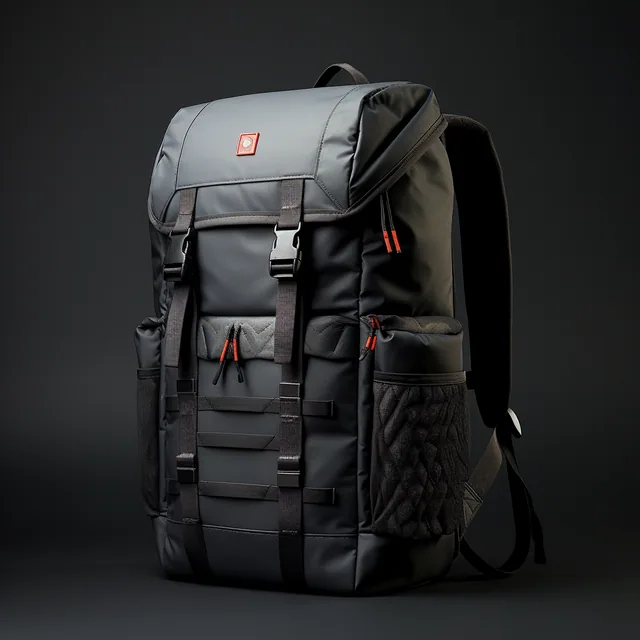
Order thresholds translate directly into working capital. Each additional shade is another order commitment of 500 pcs per style and colourway, so a four-colour range tied to one body represents 2,000 pieces plus the associated packaging and trim variation. Before that sits the mill side: dye houses impose their own minimums per colour, commonly 300 to 1,000 metres, and below them the buyer pays a surcharge spread across the order, typically adding twenty-five to sixty pence per unit for small lots. Trims then multiply the effect, since webbing, zip tape and binding each carry their own minimum per colour with identical arithmetic attached.
There are hidden calendar costs too. Another colourway means more lab dips, another set of approvals, more trim inventory and usually one further sample round, pushing out the already-tight 6-10 working day window and extending it toward the 12-15 working day figure reserved for complex constructions. The practical test is simple: if a fourth shade does not have a committed retail placement or a pre-order attached, it should wait until the second season and enter as a replacement rather than an addition. Growth then happens through evidence rather than enthusiasm, which keeps working capital tied to shades that have already demonstrated demand over a full season.
Dye Chemistry, Compliance and the Recycled Base
Colourants sit inside chemical compliance, not outside it. UK REACH requires substances placed on the market to be registered, and restricted substances guidance published via GOV.UK sets out how the regime applies to imported articles. Practically, that means azo colorants capable of releasing listed aromatic amines must be out of specification, restricted amine testing should repeat annually per fabric family, and the responsible declaration should travel with each lot rather than being requested at shipping. Suppliers generally hold this data routinely; the failure is almost always procedural rather than technical, and therefore entirely preventable with a standing request. Request it at purchase order issue and the filing becomes automatic rather than archaeological each season.
Recycled substrates add a further twist. Post-consumer polyethylene terephthalate feedstock has a naturally grey cast, so very pale shades are hard to achieve without extra clearing steps, and batch-to-batch base variation of one to two ΔECMC units is common even within a single supplier. Buyers planning pale greens, bone or sand on recycled faces should budget one additional dip round and accept slightly wider tolerance, or alternatively specify a recycled base only on mid to dark shades where the underlying cast is invisible. Mid-tone mineral shades absorb cast variation almost invisibly, and accepting that trade-off early avoids discovering it later during inspection.
Post-consumer polyester carries a grey cast and typically varies one to two ΔECMC units between lots. Keep very pale colourways on virgin faces, or agree a wider tolerance and one extra dip round at nomination.
Approving Shade, Then Inspecting It in Bulk
Written standing samples are the difference between a controlled programme and a long correspondence. Retain two sealed sets per component for every approved colourway, one with the buyer and one with the supplier, replace them every eighteen months as they drift, and reference them explicitly on each purchase order. Without them there is nothing to measure against when a dispute arises, and disputes about shade almost always arise in the second or third year, once the original approver has left. Specify replacement intervals in the supplier manual, and mark each set with the date plus style reference so nobody argues about which version governs.
At inspection stage, shade should be treated as a defined defect class rather than an opinion. Agree the tolerance in writing, count off-shade units against it under ISO 2859-1 at AQL 2.5, and specify that panels within one assembled unit must match each other regardless of lot results. That last clause catches the common failure where every component passes individually but the assembled bag reads wrong, which is precisely how the issue reaches a customer. Inspectors work far better with a written tolerance than a visual impression, so include the tolerance figure in every inspection booking and convert the most subjective check in the building into a count.
Frequently Asked Questions
How do I stop backpack colourways drifting between repeat orders?
Nominate one signed physical standard per component, retain two sealed sets renewed every eighteen months, and require instrument readings in ΔECMC against that standard for every bulk dye lot. Agree a tolerance of 1.0 to 1.5 units in writing and reference the standing sample on each purchase order so an old shade can be reordered without a new approval round.
What colour tolerance should I specify for backpack fabric?
Specify ΔECMC 1.0 to 1.5 against the signed standard for adjacent panels, which corresponds to roughly grey scale 4-5 under ISO 105-A02. Anything approaching 2.0 becomes visible when a customer places two pieces together. Check readings under two light sources because single-source approval hides metamerism between polyester faces and nylon webbing. Record the figure in the purchase order so inspectors measure rather than judge when goods arrive.
Why does the webbing not match the body fabric on my bags?
Different polymers absorb dye differently, so one Pantone reference behaves three different ways across polyester face, nylon webbing and branded zip tape. This is metamerism. Approve every component together as a set rather than sequentially, read all pieces under two light sources, and dye panels to match each other instead of matching a card number. Set the standard on the smallest visible trim first, because that surface determines what the eye ultimately reads.
Which colour fastness tests matter most for backpacks?
Four: rubbing (ISO 105-X12) prevents dye transfer onto shirts and car seats; washing (ISO 105-C06) prevents migration between contrasting panels; light (ISO 105-B02) predicts fading in shop windows and on sunny commutes; perspiration governs transfer from soaked straps onto clothing. Grade 4 should be the floor for all four on daily-carry products. Perspiration testing is skipped most often and generates the most awkward returns when it is left out.
Are light-coloured backpacks a bad idea for the UK market?
Very pale faces such as bone and off-white photograph beautifully and age badly, because contact with train floors, dust films and kerb splash shows quickly. If you specify them, require a laminated base, a soil-release finish and a light fastness grade of 4 or better, or restrict them to linings where customer expectations are more forgiving. Mid-tone mineral shades give the same look in photography with considerably better long-term ageing behaviour.
How many colourways should a backpack style launch with?
Two carryover shades plus one seasonal shade covers most demand. Each colourway carries its own 500 pcs per style and colourway commitment, so a four-colour range on one body is 2,000 pieces before variation. Drop any seasonal shade that has not cleared 60% of its buy within sixteen weeks rather than repeating it out of sentiment. A written drop rule prevents weak shades surviving another season purely out of habit or sentiment.
Does using recycled fabric limit my colour choices?
Yes, mainly at the pale end. Post-consumer polyester carries a grey cast and commonly varies one to two ΔECMC units between lots, so very pale greens, sand and bone are difficult to hold. Keep those shades on virgin faces or agree a wider tolerance with one extra dip round at nomination; mid to dark shades hide the cast entirely. Book one additional dip round for pale shades so the schedule absorbs variance instead of the timeline doing so.
How long does a lab dip take and does it affect the sample schedule?
Dipping usually runs alongside rather than after sampling, so parallel submission fits inside the standard 6-10 working day window. Sequential component approvals are what extend schedules, typically pushing development toward the 12-15 working day figure reserved for complex builds. Submit all components at once and judge them as one set to avoid that slip. Submitting components together keeps approvals aligned and avoids sequential confirmation entirely.
What extra cost does a small dye lot add per unit?
Dye houses impose minimums per colour, commonly 300 to 1,000 metres, and short lots attract a surcharge that typically adds twenty-five to sixty pence per unit once spread across the order. There are also extra trims, additional packaging variants and usually one more approval round, all of which should be costed before a fourth colourway is authorised. Ask for the mill minimum in writing before approving the shade rather than after costing the whole range.
How should shade be handled during pre-shipment inspection?
Treat shade as a defined defect class with an agreed numeric tolerance, then count off-shade units at AQL 2.5 under ISO 2859-1 sampling plans. Require at minimum that panels within one assembled bag match each other, even where each lot passed individually, because customers see the assembled product rather than separate components. Requiring intra-unit matching catches failures that pass lot-by-lot checks yet look wrong once assembled.
Which colours are safest for carryover lines each season?
Black, graphite and a dependable navy form the carryover base for most menswear bag ranges and should never be re-dipped as fresh decisions. Beyond that, mid-tone mineral and earth pigment shades hold up best because they conceal abrasion dust and urban grime. Reserve brights for linings, tapes and zip pulls where they read deliberate rather than dated. Retain signed physical standards for each core shade, renewed roughly every eighteen months as they drift.
Build a Palette You Can Re-Order in Two Years
A colourway is only worth having if it can be re-ordered accurately long after the original approval. That means signed physical standards, recorded ΔECMC tolerances, retained standing samples renewed regularly, and fastness reports filed with the purchase order rather than in an email thread.
Development support covers reference nomination, lab dip coordination, metamerism review, fastness test scheduling and inspection to AQL 2.5. Minimum order quantity is 500 pcs per style and colourway, with sample rounds in 6-10 working days, 12-15 for complex builds, and production scheduled across 35-50 days quoted FOB Xiamen on T/T 30/70 terms.
Email: service@junyuanbags.com
WhatsApp: +86 177 5002 0688