Cabin Size vs 40L Travel Pack: Which One You Should Actually Buy
Buy cabin-size if you fly more than four return trips a year on a low-cost carrier and can travel within 34 litres; buy 40 litres if your trips run five nights or more, you travel rarely, or you move between rail and air. The decisive numbers are bag depth against the sizer and roughly £25-£45 per economy segment in avoided fees.
Most comparisons stop at a size chart. This one starts from the arithmetic: what a 40-litre pack measures in millimetres, how much of its stated volume you can genuinely fill, what it costs to fly it, and how quickly those costs overtake the price difference between the two bags. Wherever an airline rule appears, treat it as indicative and check the carrier's own page before booking, because allowances change frequently.
The Trade You Are Actually Making
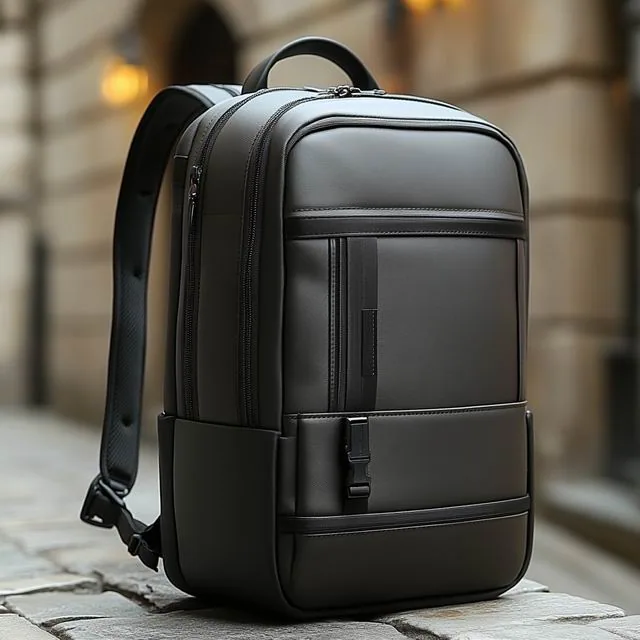
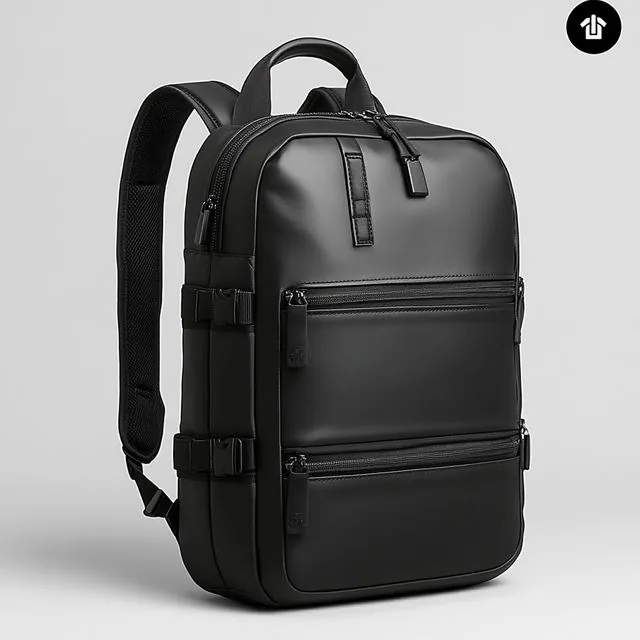
The choice is not between two sizes of the same object. A cabin-size travel pack is shaped around a box: roughly 450 x 360 x 200 mm, or whatever the tightest carrier you fly insists upon, which forces a short, wide and shallow construction. A 40-litre travel pack is shaped around a load: taller and deeper, closer to 520 x 340 x 230 mm, which carries far better on your back and packs far more easily. Everything else follows from that difference in shape. Every argument about fees, packing and comfort follows directly from that pair of shapes rather than from the litre numbers. Once you see the two shapes side by side, most of the marketing language stops mattering.
- Cabin-size wins on: fees avoided, boarding speed, and working as a day bag at the destination.
- Forty litres wins on: volume per pound spent, carrying comfort, and trips longer than four nights.
- Cabin-size loses on: usable space when the bag is shallow, and harness quality at that width.
- Forty litres loses on: sizer compliance, overhead bin availability late in boarding, and fee exposure.
There is a third answer that most buyers arrive at eventually, and it is usually the correct one. Owning a compliant cabin backpack in the 28-34 litre range plus a small packable day bag beats owning either extreme, because the low-cost carriers' free allowance is per personal item rather than per traveller's total luggage. That combination costs little more than one premium bag and removes the compromise in almost every realistic trip, which is why it is the recommendation most frequent flyers converge on. The compromise most buyers eventually accept is the smaller bag, because it costs less to be wrong with. If you must be wrong about one of them, be wrong with the bag that costs less to replace.
What Cabin Size Means in Practice
UK travellers are dealing with three overlapping regimes rather than one standard. Full-service carriers typically allow a cabin bag around 560 x 450 x 250 mm plus a smaller personal item. Low-cost carriers allow a small personal bag free, often 400 x 250 x 200 mm or 450 x 360 x 200 mm, and charge for anything larger. Some no-frills fares now permit nothing larger than the small bag at all, which is where the 40-litre option becomes expensive rather than merely inconvenient. Always confirm limits on the gov.uk hand luggage rules page for liquids and on the carrier's own site for dimensions. Nobody boards expecting an argument, which is precisely why the argument is expensive when it happens.
| Allowance type | Typical external limit | Typical mass cap | Cost |
|---|---|---|---|
| Free personal item | 400 x 250 x 200 mm | None stated | Included |
| Small cabin bag | 450 x 360 x 200 mm | 10-15 kg | Usually included |
| Large cabin bag | 560 x 450 x 250 mm | up to 23 kg | Fee or fare dependent |
| Checked bag | Varies by fare | 20-23 kg | Roughly £25-£45 per leg |
The trap in that table is the second row. Bags marketed as "cabin approved" are usually built to the 450 x 360 x 200 or 550 x 400 x 200 limit, which means they are genuinely compliant on some carriers and genuinely oversized on others. A bag compliant with the larger full-service allowance will be rejected at a low-cost gate, and it will usually be rejected after you have already walked the length of the terminal, because smaller carriers have been enforcing sizer checks at the boarding queue rather than at check-in. Being 200 mm deep rather than 220 mm is the whole difference between walking on and opening your wallet.
Why a 40 Litre Pack Rarely Fits a Sizer
Do the arithmetic once and the problem becomes obvious. Multiply 400 by 250 by 200 mm and you get 20 litres of geometric space, which is why personal-item bags top out around 20-25 litres once you allow for tapering corners and fabric thickness. Multiply 450 by 360 by 200 and you get about 32 litres, so a compliant small cabin bag realistically holds 28-34 litres. A true 40-litre pack needs something like 520 x 340 x 230 mm, and that 230 mm of depth is 30 mm more than almost any low-cost sizer accepts. No amount of clever packing makes a 230 mm deep bag fit a 200 mm frame, whatever the marketing says.
Every additional centimetre of bag depth costs roughly 1.5 litres of usable volume and buys you a rejection at the gate. Depth is the dimension that low-cost sizers police hardest, not height.
Volume figures compound the confusion because they are not measured consistently. Some brands quote the geometric product of external dimensions, which overstates real capacity by 15-25 per cent; others quote a fill test, usually with small pellets, which understates usable space for clothing. In practice a pack sold as 40 litres behaves like 32-36 litres once you account for lining, padding, tapered corners and the voids clothing creates, which means the honest gap between a good cabin bag and a 40-litre pack is nearer six litres than ten. Knowing which method a brand uses makes comparing two packs a considerably more honest exercise. Knowing which method each brand uses makes comparing two packs an honest exercise at last.
The Cost-Per-Trip Arithmetic
Fees decide this question for anyone flying regularly. Take a return trip on a low-cost carrier: adding a large cabin bag may cost £10-£30 per leg depending on route and season, and checking a 20 kg bag typically runs £25-£45 per leg. Across four return trips a year that is £200-£440 if the bag will not go in the cabin free, against a price difference between a good cabin pack and a good 40-litre pack of perhaps £40-£80. The cabin bag pays for itself inside a single year of modest travel. Paying once for a compliant bag therefore beats paying per leg indefinitely, however attractive the larger pack looks.
| Trips per year | Cabin-size total cost | 40 L with fees | Winner |
|---|---|---|---|
| 2 return trips | £90 bag only | £90 + £80-£180 | 40 L |
| 4 return trips | £90 bag only | £90 + £160-£360 | Cabin size |
| 8 return trips | £90 bag only | £90 + £320-£720 | Cabin size |
| Mixed rail and air | £90 bag only | Rail carries it free | 40 L |
That table assumes the 40-litre bag cannot be used as the free personal item, which is true on every low-cost carrier whose sizer sits at 200 mm depth. Where it does not hold is full-service travel: a carrier allowing 560 x 450 x 250 mm at 23 kg takes a 40-litre pack happily, and then the larger bag wins on comfort and packing ease with no fee downside at all. The break-even point is therefore not a fixed number of trips, but a fixed number of low-cost trips. Count low-cost segments rather than total flights and the answer usually becomes obvious within a minute. Count low-cost segments rather than total flights and the answer appears within a minute.
Weight Limits: 10 kg Against 23 kg
Buyers fixate on dimensions and forget mass, which is the cheaper thing to get wrong because excess charges are levied by the kilogram. A 40-litre pack filled with ordinary travel kit - clothes for a week, wash bag, shoes, laptop, chargers - lands somewhere between 8 kg and 13 kg. A 28-34 litre cabin bag packed hard lands at 6-9 kg. Where the allowance is 10 kg for a large cabin bag and 23 kg on full-service carriers, that difference determines whether you are comfortable or paying. Knowing your packed weight before leaving home is what prevents that difference becoming an unexpected bill. Knowing your packed weight before leaving is what turns that gap into context rather than a bill.
- Empty weight matters: a 40 L bag at 1.5 kg leaves less payload than the same bag at 1.0 kg.
- Denim and boots are the load: two pairs of jeans add roughly 1.4 kg before anything else.
- Chargers and laptops add fast: a laptop and two bricks is 1.8-2.2 kg on its own.
- Weigh before leaving home: excess fees are typically levied per kilogram per leg.
- The liquids rule applies to both sizes equally and is set out in the UK liquids restrictions.
There is a useful discipline here that pays regardless of which size you buy. Weigh the packed bag on bathroom scales before every trip and write the number down; most people discover they travel about 1.5-2.5 kg heavier than they assumed, largely because of duplicate electronics and "just in case" clothing. Cutting that is easier than any product decision, and it is the difference between a comfortable walk to the gate and a repack on the airport floor. Doing it once costs ninety seconds, and doing it every trip removes excess baggage charges from your life permanently. Ninety seconds with bathroom scales removes excess baggage charges from your travelling life permanently.
Choosing by Trip Length and Frequency
Set the two variables honestly and the answer usually resolves itself. Trip length sets the volume floor: two nights is viable in 25-30 litres, four nights needs 30-36 litres, and a week and beyond starts asking for 40 litres unless you accept doing laundry midway. Frequency sets how much you are willing to pay for convenience: a person taking one long trip a year should optimise for comfort on the back, while a person taking a dozen short trips should optimise for never discussing their bag with anyone. Answering those two honestly usually ends the debate faster than any product review you will read this year.
- Weekend city breaks, six or more times a year: cabin size, 28-34 litres.
- Two- to four-night business trips: cabin size, since you also need it to look presentable.
- Five nights and longer, three or fewer times a year: 40 litres.
- Bulky kit - boots, climbing gear, ski layers: 40 litres, and check the bag in deliberately.
- Unpredictable mix of both: one cabin pack plus a packable 15-20 litre day bag.
The awkward middle case deserves a note, because it is common: three or four trips a year, each of ten days or more. Neither answer is clearly wrong, and the tie-breaker is usually transport at the far end. If the destination involves trains with steep staircases, buses without luggage holds or accommodation without lifts, the smaller bag wins on ergonomics even though it costs more effort to pack. If it involves a car from the airport, take the 40 litres. Where both options remain open, choose the one you would be happy to be wrong with, then buy well. Where both remain open, buy the one you would least mind being wrong about, then buy it well.
Rail, Coach and Ferry Change the Maths
Britain is unusual in how much of its travel mix is not aviation, and that matters here. Rail operators generally do not impose a bag sizer, so a 40-litre pack travels from Manchester to Inverness at no cost and no fuss, and it often fits the overhead rack better than a wide shallow cabin bag does. Coaches typically allow a hold bag of around 20 kg, again with no dimension gate. Ferries are more generous still. Outside the airport, the larger bag usually wins. UK operators broadly price by weight rather than by frame dimension, which changes the balance of the argument entirely. Allowances are framed as weight rather than dimension, which entirely changes which bag suits you.
Two complications apply. First, European rail has stricter rules than UK domestic in some cases, and knowing your entitlements helps when things go wrong, which is where rail passenger rights become relevant for cross-border journeys. Second, mixed itineraries punish the wrong bag badly: a 40-litre pack is perfect from Edinburgh down to London by train and then punishingly expensive the moment a last-minute Brussels flight enters the plan. If your year genuinely mixes both, buy the smaller bag and rent space elsewhere. Renting checked space deliberately beats discovering the charge at the departure gate without exception. Booking that space in advance always beats discovering the charge alongside the departure boards.
What Actually Fits: 34 Litres Against 40
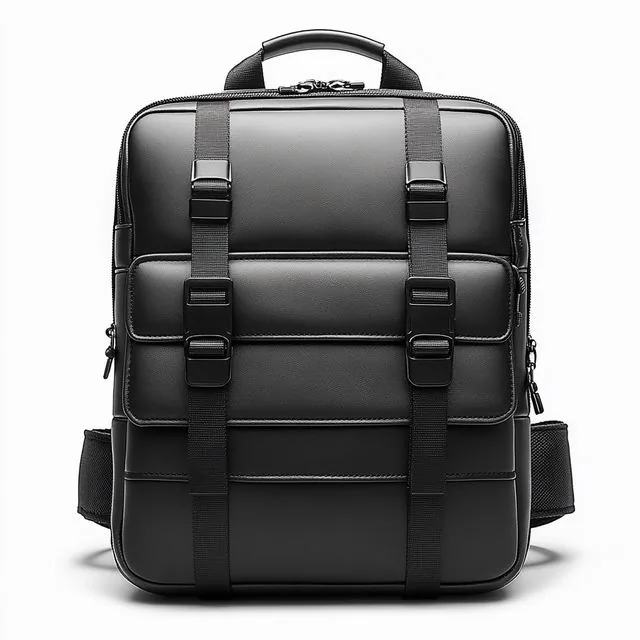
Volume differences of six litres sound small and are not. In practice, six usable litres is two pairs of trousers, or one pair of shoes plus a wash bag, or roughly one additional day of clothing without laundry. A 34-litre bag takes five days of careful packing for most men: three shirts, two trousers, a mid-layer, underwear for five days, a wash bag, a laptop and one pair of shoes, with everything rolled and compressed. A 40-litre bag takes seven to nine days of the same packing. Six usable litres is therefore the difference between one bag and two, and between one trip and two habits.
- Roll rather than fold: typically 15-20 per cent more usable space in the same compartment.
- Use two compression cubes, one for clothing and one for electronics and cables.
- Wear the bulky layer on the plane: a mid-layer saves 1.5-2.0 litres of bag space.
- Keep shoes in a separate shoe compartment or they cost you clean clothing space.
- Accept one laundry cycle mid-trip: it halves the clothing you need to carry.
It is also worth noting what both bags share. Neither handles a formal suit well, neither takes a full-size tripod comfortably, and neither is the right answer for a family of four rather than an individual traveller. If your load genuinely needs 50 litres for more than half your trips, both options on this page are compromises and the honest advice is to check a bag deliberately, book the hold allowance in advance, and buy a duffel rather than a backpack. For genuinely large loads, checking a bag in advance costs less than pretending both answers fit every trip. Deliberately checking a bag costs less than forcing both solutions onto every trip you take.
Wear, Warranty and How Long Each Lasts
Cabin bags live harder lives than their owners expect. They are shoved into overhead bins, wedged under seats, jammed into boot racks on trains and compressed by other people's luggage, and their zips are worked far more often because everything must go through security trays. The high-wear points are the top grab handle, the base corners and the main zip, in that order. A bag that survives three years of weekly use is doing well, regardless of price. Cabin bags also get compressed into bins repeatedly, which degrades padding and creases structured panels over time. Repeated compression into overhead bins also flattens padding and creases structured panels over time.
- Base corners: look for reinforcement rather than a single layer of face fabric.
- Main zip: number 8 coil or better; number 5 is the most common failure point.
- Grab handles: boxed stitching rather than a straight return stitch.
- Warranty wording: stitching and zips named specifically, not materials alone.
- Check whether the airline or your insurer covers wheeled-bag damage before relying on it, and note that EU air passenger rights set out carrier liability for checked and mishandled items.
Forty-litre packs generally last longer per trip because they are built to carry load rather than to fit a box, with better harnesses and heavier base fabrics. However, they also get checked in more often, which is a rougher environment than any overhead bin, and anything handled by a baggage system accumulates damage quickly. If you buy the larger bag intending to check it regularly, spend the extra on a reinforced base and accept that cosmetic wear begins after roughly ten flights. Budget for cosmetic wear, since being checked regularly is harder on any bag than any overhead bin. Budget for cosmetic wear, since checked handling is harder on any bag than any overhead bin.
The Verdict and the Spec to Buy To
Buy cabin-size, in the 28-34 litre band with external dimensions no greater than 450 x 360 x 200 mm, if you take more than four low-cost return trips a year or your trips run four nights or fewer. Buy 40 litres if you travel three times a year or less, your trips run longer than five nights, you travel largely by rail and coach, or you carry bulky equipment. If neither description fits cleanly, buy a 30-litre cabin pack and a packable day bag rather than agonising further. Buying late and deciding quickly still beats buying twice, which is what most people end up doing instead.
For anyone specifying a travel range rather than a single bag, the same decision appears in the tech pack as two SKUs rather than one. Programmes coordinated for QUANZHOU JUNYUAN BAGS start at a minimum of 500 pcs per style and colourway, with sampling in 6-10 working days for standard builds and 12-15 working days where the pack uses a moulded harness or bonded waterproof seams. Lead times sit at 35-50 days with lots inspected against AQL 2.5 under ISO 2859-1, quoted FOB Xiamen on T/T 30/70 terms. In business since 2014, the operation spans 4,950 square metres of SGS-verified production floor space staffed by 137 colleagues over seven production lines.
Frequently Asked Questions
Is a 40 litre backpack allowed as cabin luggage?
Not on most low-cost carriers. Forty litres usually means external dimensions around 520 x 340 x 230 mm, and the 230 mm depth exceeds sizers set at 200 mm. Full-service carriers allowing 560 x 450 x 250 mm do accept it. Check the specific airline, since allowances vary by fare type as well as by carrier. Checking the fare conditions takes two minutes and avoids a charge several times the size of the bag.
What size backpack counts as a personal item?
Usually 400 x 250 x 200 mm, giving about 20 litres of geometric space and a realistic 18-22 litres packed. Some carriers permit 450 x 360 x 200 mm as their free allowance, which yields 28-32 litres of usable volume. Anything marketed wider or deeper than those numbers risks a charge at the boarding gate rather than at check-in. Soft construction helps at the frame but remains discretion rather than entitlement when staff decide.
How many trips a year make a cabin-size bag cheaper?
Around four low-cost return trips. Check-in fees typically run £25-£45 per leg, so four return trips cost £200-£360 in charges, against a price difference of £40-£80 between a good cabin pack and a good 40-litre pack. Between one and three trips a year, the larger bag is usually the better value. Full-service travel changes the answer, since larger allowances there carry no additional charge at all.
How much does a fully packed 40 litre travel pack weigh?
Expect 8-13 kg. Clothing for a week is 3-4 kg, shoes and a wash bag another 1.5-2.5 kg, and a laptop with chargers adds 1.8-2.2 kg. That exceeds many 10 kg cabin allowances and fits comfortably inside a 23 kg full-service allowance, so weigh the bag before travelling rather than estimating it. Bathroom scales before you leave cost nothing and are more reliable than any estimate made while packing.
Do liquids rules differ between cabin bags and larger packs?
No. Restrictions apply to the liquids themselves rather than the bag, typically containers of 100 ml or less in a single transparent bag. The relevant limit is set out in the UK liquids restrictions page. Larger packs simply have more space for items that do not count, such as solid toiletries and electronics. A transparent bag kept near the opening removes delays at security regardless of which size you carry.
Should I own both a cabin bag and a larger travel pack?
For most people, yes. A 28-34 litre cabin pack plus a packable 15-20 litre day bag covers almost every trip, because low-cost carriers' free allowance is per personal item. Buying the two together often costs little more than one premium 40-litre bag and removes the compromise for both short and long journeys. Buying one premium bag is rarely cheaper than buying two correct ones for the same total spend.
Why do cabin-size bags feel smaller than their stated volume?
Because dimensions constrain shape before volume matters. A shallow 200 mm-deep bag cannot stack rolled clothing efficiently, so the usable yield of its stated litres falls sharply. Additionally, brands measure inconsistently: some quote the geometric product of external dimensions, which overstates real capacity by 15-25 per cent compared with a fill test. Ask retailers which method their figure uses before comparing two packs side by side.
Can a 40 litre pack be used as a personal item if underpacked?
No. Sizers measure the bag, not the contents, so an underpacked 40-litre bag still fails a 400 x 250 x 200 mm frame. Soft unstructured packs sometimes pass because staff accept a squashed shape at the frame, but that is discretion rather than entitlement, and relying on discretion at a boarding gate is a poor plan. Soft fabric sometimes compresses at the frame, but that is luck rather than something to plan around.
Is a 40 litre backpack comfortable to carry all day?
Generally yes, and more so than a cabin bag. Forty-litre packs are built around a load, with wider shoulder straps, load lifters and a genuine hip belt, while cabin bags are built around a box and often compromise the harness. At 9-12 kg that difference is noticeable within twenty minutes of walking. Harness geometry built for a real load beats any amount of extra padding elsewhere on the bag.
What happens if my cabin bag is slightly over the sizer?
Staff will usually ask you to check it in at the gate, where the charge is higher than pre-booked rates and can reach £60 or more on some carriers. That cost can exceed the price of the bag in a single incident, which is why buying 20-30 mm below the published limit is sensible insurance. Twenty millimetres of margin costs you nothing in packing terms and everything in avoided charges.
Does British Airways or Ryanair accept a 40 litre backpack free?
Allowances differ by fare rather than by brand alone. Full-service fares commonly include a bag around 560 x 450 x 250 mm at up to 23 kg, while basic low-cost fares may include only a 400 x 250 x 200 mm personal item. Read the fare conditions before travelling, because tickets on the same route can carry very different allowances. Comparing fares rather than airlines avoids most surprises at the boarding queue later on.
Which is better for rail and coach travel around the UK?
The 40-litre pack, comfortably. UK rail and coach operators rarely impose sizers and typically allow around 20 kg in a hold, so the larger bag travels free and often fits overhead racks better than a wide shallow cabin bag. It is also easier to carry across station staircases and along platforms. Weight allowances rather than dimension frames are what rail and coach operators actually police.
Planning a Travel Pack Range?
Cabin-compliant and volume-led packs are two different products with two different cost curves, and most ranges need both. We develop travel backpack programmes for UK and European brands from a minimum of 500 pcs per style and colourway, with sampling in 6-10 working days and bulk production in 35-50 days.
Send target dimensions, volume and retail price, and we will come back with a construction proposal and costed specification.
Email: service@junyuanbags.com
WhatsApp: +86 177 5002 0688