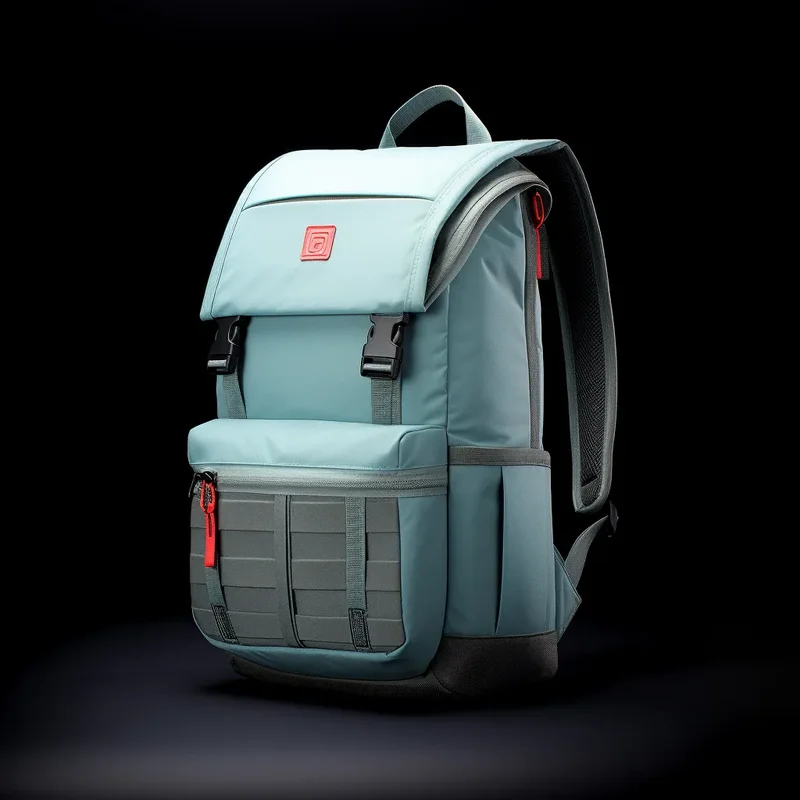
You open an online store, filter by "backpack," and the prices scroll past you like a fever dream. A canvas bag with decent reviews: $79. A well-made nylon everyday carry: $200. And then, almost mocking you from the upper reaches of the page, a leather backpack from a European fashion house staring back at you with a $2,800 price tag. The question is immediate and visceral: are luxury backpacks worth it?
This is not a trivial question. A luxury backpack represents a significant financial commitment, and the marketing around these products is designed to make even the most rational buyer feel their heart quicken. But beneath the brand names and the heritage storytelling, there is a legitimate conversation to be had about materials, construction, longevity, and the actual mathematics of ownership cost.
In this analysis, we are going to dismantle the luxury backpack pricing question from every angle. We will look at what drives the cost, what you actually get for your money, how to calculate cost-per-use over realistic timeframes, and when spending $800 or $2,000 on a backpack makes genuine financial sense versus when it is a decision you will regret by Tuesday.
Understanding the Luxury Backpack Price Spectrum
Before we can assess whether luxury backpacks justify their prices, we need to map the actual landscape. The term "luxury backpack" is applied liberally, and a $300 bag from a premium outdoor brand occupies a very different position than a $4,000 bag from an Italian fashion house. Understanding these tiers is essential for honest evaluation.
The Entry Premium Tier ($200 to $500)
This is where most people first encounter the idea of paying more for a backpack. Brands like Bellroy, Aer, Peak Design, and the higher-end lines from Herschel occupy this space. What you get at this price point is genuinely good materials and construction. You will find ballistic nylon or high-denier Cordura, quality YKK zippers, padded laptop compartments, and thoughtful organisation. The stitching is straight, the hardware does not rattle, and the bag will last five to eight years with daily use.
Is this tier "luxury"? Debatable. It is better described as "premium" or "enthusiast-grade." But it sits at the bottom edge of what most people consider when they search for luxury backpacks, and it provides our baseline for comparison.
The Mid-Luxury Tier ($500 to $1,200)
This is the territory of serious luxury brands with functional DNA. Tumi dominates this range with its ballistic nylon construction and legendary warranty. Rimowa has entered the backpack market with aluminium-accented designs. Briggs & Riley offers business-oriented bags with a lifetime guarantee. The materials upgrade noticeably here: you encounter full-grain leather trim, proprietary fabric blends, and hardware that feels substantial in your hand.
Construction quality at this tier is typically excellent. These bags are engineered to last a decade or more, and many come with repair services that extend their life almost indefinitely. The warranty coverage alone represents genuine financial value that justifies part of the premium.
The High-Luxury Tier ($1,200 to $3,000)
Now we enter the world of Montblanc, Bottega Veneta, and the lower end of what houses like Gucci and Prada offer. The materials shift dramatically: full-grain Italian leathers, hand-finished edges, solid brass or palladium hardware, and construction methods that involve hours of skilled labour per bag. You are paying for craftsmanship that cannot be scaled or automated.
At this level, brand equity becomes a significant component of the price. A Montblanc backpack costs more than a Tumi not solely because the materials are twice as expensive, but because the brand carries a different weight in professional and social contexts. Whether that brand equity is "worth it" depends entirely on what you value.
The Ultra-Luxury Tier ($3,000 and Above)
Hermes, Louis Vuitton limited editions, and bespoke makers occupy this stratosphere. At $3,000 to $10,000 and beyond, you are purchasing art-adjacent objects as much as functional bags. The materials may include exotic leathers, hand-woven textiles, or precious metal hardware. For the vast majority of buyers, this tier is about status, collecting, or pure aesthetic appreciation rather than practical value calculation.
What Actually Drives Luxury Backpack Pricing?
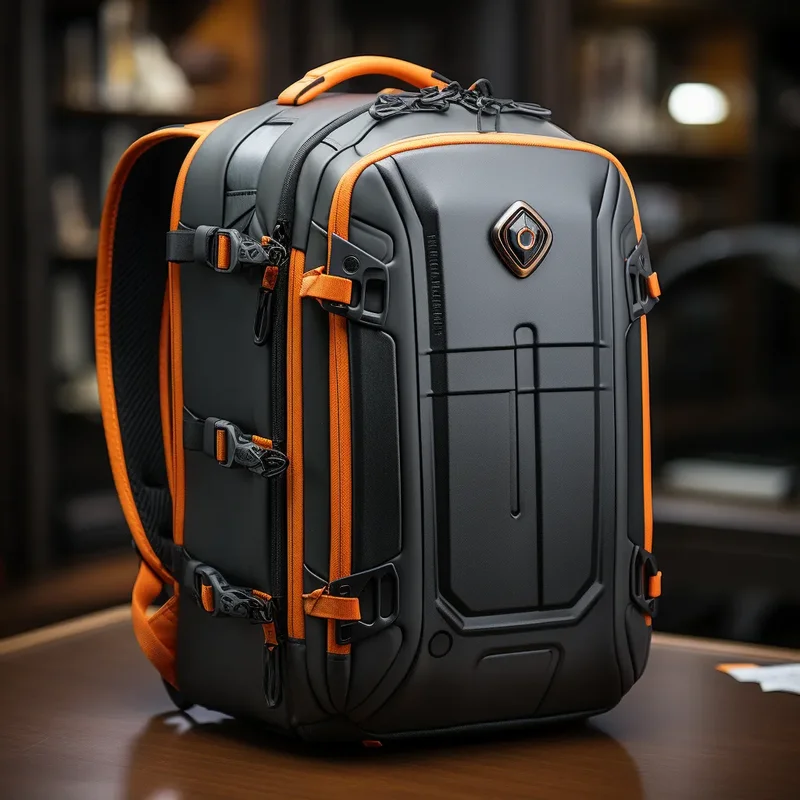
To determine whether luxury backpacks are worth it, we need to understand what you are actually paying for. The price tag is not arbitrary, but it is also not purely a reflection of material cost. Here are the components that make up the price of a luxury backpack.
Materials: The Foundation
Materials typically account for twenty to forty percent of a luxury backpack's retail price. Full-grain leather from European tanneries costs dramatically more than corrected-grain leather or synthetic alternatives. Horween leather, produced in Chicago since 1905, can cost five to ten times more than generic leather. Japanese selvedge denim, Italian Alcantara, and military-spec ballistic nylon all carry significant premiums over commodity fabrics.
But here is where the math gets interesting. The material cost difference between a $200 bag and an $800 bag might be $60 to $120. The material cost difference between an $800 bag and a $2,500 bag might be $150 to $300. The rest of the price increase comes from other factors, which we will examine next.
Craftsmanship and Labour
This is where a significant chunk of the luxury premium actually goes. A mass-produced backpack in a high-volume factory might take forty minutes to assemble. A luxury bag from a European atelier can take eight to twenty hours of skilled hand labour. European craftsmanship wages are substantially higher than mass-production labour costs, and this difference is baked directly into the retail price.
The craftsmanship difference is not merely about time. It is about skill level, quality control, and techniques that cannot be automated. Hand-stitched seams, hand-painted edges, individual piece inspection, and the accumulated expertise of artisans who have worked with luxury materials for decades all contribute to a product that is objectively superior in construction to mass-market alternatives.
Brand Value and Marketing
Let us be direct: a meaningful portion of what you pay for a luxury backpack funds the brand's image. The advertising campaigns, the flagship stores on Bond Street and Rue Saint-Honore, the celebrity endorsements, the fashion show presentations, and the heritage storytelling all cost enormous sums. These costs are distributed across every product the brand sells.
For some buyers, this is a feature, not a bug. Paying for a recognized luxury brand means carrying something that signals taste, success, or affiliation. That social signalling has real value in certain professional and social contexts. For other buyers, paying $500 of a $2,000 bag's price for the logo and the brand story feels like poor value.
Warranty and After-Sales Service
Luxury brands typically offer substantially better warranty coverage than mainstream brands. Tumi's comprehensive warranty, Briggs & Riley's Simple as That lifetime guarantee, and the repair services offered by brands like Globe-Trotting represent genuine financial value. A $60 repair that restores a $900 bag to perfect condition after five years is a fundamentally different economic proposition than replacing a $120 bag every two years.
The Cost-Per-Use Calculation: Where Luxury Often Wins
This is the analytical framework that changes how most people think about luxury backpacks. Cost-per-use is deceptively simple: divide the purchase price by the number of times you use the product. But when applied honestly over the realistic lifespan of a quality product, it produces surprising results.
The $120 Backpack Scenario
Consider a decent mainstream backpack purchased for $120. It serves you well for about two to three years of daily use before the zippers start failing, the seams show stress, or the coating on the nylon begins to peel. Over three years of daily weekday use, that is roughly 780 uses. Your cost-per-use is approximately $0.15.
But this calculation ignores replacement costs. Over a ten-year period, you will likely buy three to five bags at this quality level. Total expenditure: $360 to $600. Adjusted cost-per-use over ten years: roughly $0.10 to $0.15, because you are replacing bags that wear out.
The $800 Premium Backpack Scenario
Now consider an $800 bag from a brand like Tumi or a premium leather maker. This bag is built to last eight to fifteen years of daily use. It has replaceable parts, a strong warranty, and materials that age gracefully rather than falling apart. Over ten years of daily weekday use (2,600 uses), your cost-per-use is approximately $0.31.
That sounds more expensive. But consider this: the $800 bag will likely still be functional and presentable at the end of ten years, while the $120 bags required multiple replacements. The total cost of ownership over ten years is $800 for the premium bag versus $360 to $600 for the mainstream option. The premium bag costs more, but the gap is much smaller than the initial price difference suggested.
The $2,500 Luxury Backpack Scenario
At the $2,500 level, you are entering territory where cost-per-use calculations become highly personal. A $2,500 Montblanc leather backpack used daily over fifteen years yields a cost-per-use of about $0.64. Over twenty years (and a quality leather bag can genuinely last that long with proper care), it drops to $0.48.
Is $0.48 per use worth it? For a bag you carry every single day, that is less than the cost of a mediocre coffee. The question becomes whether the daily experience of using a beautifully crafted object, the professional impression it creates, and the satisfaction of owning something that ages gracefully justifies that modest daily cost.
The Cost-Per-Use Reality Check
If you use a backpack every weekday, that is 260 days per year. A $300 bag lasting 3 years costs $0.38 per use. A $900 bag lasting 10 years costs $0.35 per use. A $2,500 bag lasting 15 years costs $0.64 per use. The premium option is often closer in real cost than the sticker shock suggests, but ultra-luxury tiers do carry a genuine premium that only personal values can justify.
Price Tier Comparison: What You Actually Get
| Feature | Budget ($80-$200) | Premium ($200-$500) | Mid-Luxury ($500-$1,200) | High-Luxury ($1,200-$3,000) | Ultra-Luxury ($3,000+) |
|---|---|---|---|---|---|
| Primary Materials | Polyester, basic nylon | Ballistic nylon, top-grain leather | Proprietary fabrics, full-grain leather | Italian leather, Alcantara, brass | Exotic leathers, precious metals |
| Zippers | Generic | YKK standard | YKK Excella, custom | YKK Excella, Riri, Lamson | Custom, hand-fitted |
| Construction | Machine sewn, taped | Machine sewn, bar-tacked | Reinforced stitching, some hand work | Hand-finished, hand-stitched | Entirely hand-made |
| Expected Lifespan | 1-3 years | 4-7 years | 8-15 years | 15-25+ years | 25+ years / heirloom |
| Warranty | 1 year limited | 2-5 years limited | Limited lifetime or comprehensive | Lifetime with repair service | Lifetime, bespoke repair |
| Resale Value | Near zero | 20-35% of retail | 35-55% of retail | 50-70% of retail | 70-120%+ of retail |
| Cost-Per-Use (daily, 10yr) | $0.12-$0.27 | $0.11-$0.17 | $0.19-$0.46 | $0.33-$0.68 | $0.82+ |
The "Worth It" Decision Matrix
Rather than giving a blanket yes or no answer, we have developed a decision framework. Your answer to whether luxury backpacks are worth it depends on where you sit across several dimensions.
When Luxury Backpacks Are Worth the Investment
✓ You carry a backpack daily for work or commuting
✓ You work in an environment where appearance and brand perception matter
✓ You have had backpacks fail you before due to poor construction
✓ You value the tactile experience and daily pleasure of quality materials
✓ You plan to keep the bag for 8+ years
✓ The bag fits within your discretionary spending without financial strain
When Luxury Backpacks Are Not Worth the Investment
✗ You carry a backpack occasionally or in rough conditions where damage is likely
✗ You work in an environment where luxury items create awkward dynamics
✗ You tend to change bags frequently based on trends or new purchases
✗ The purchase would require financial stretching or create budget pressure
✗ You are buying primarily for the brand name rather than the product itself
✗ A $200-$400 premium backpack already meets all your functional needs
The Hidden Financial Advantages of Luxury Backpacks
Beyond the straightforward cost-per-use calculation, there are several less obvious financial considerations that favour luxury backpacks.
Resale Value
This is where luxury backpacks genuinely differentiate themselves from premium alternatives. A Tumi backpack in good condition typically retains forty to fifty-five percent of its retail value on the secondary market. Montblanc and similar brands retain fifty to seventy percent. And certain limited-edition or iconic pieces from houses like Louis Vuitton can actually appreciate in value.
Consider this: you buy a $2,000 Montblanc backpack, use it daily for five years, and then sell it for $1,000. Your actual cost of ownership over five years was not $2,000, it was $1,000. That changes the cost-per-use calculation dramatically. A $120 backpack, by contrast, has essentially zero resale value after five years of use.
The Repair Economy
Luxury brands typically offer repair services that can restore a well-used bag to near-new condition. A $100 to $200 repair every five to seven years extends the life of a $1,500 bag by a decade or more. This is not available at lower price points, where the cost of repair often approaches or exceeds the cost of replacement.
Professional Perception
While this is subjective and context-dependent, carrying a well-made luxury backpack can create tangible professional advantages. In client-facing roles, in industries where appearance signals competence, and in networking situations, the bag you carry is part of your personal presentation. If a $2,000 backpack helps you close one additional deal per year, the bag has paid for itself many times over.
When the Math Does Not Work
Honest analysis requires acknowledging when luxury backpacks are genuinely poor financial decisions. There are several scenarios where the premium simply cannot be justified.
If you work in a physically demanding environment where your bag will be thrown into truck beds, dragged across concrete, or exposed to extreme conditions, even a $2,000 bag is a liability rather than an asset. In these situations, a $150 purpose-built technical bag that can be replaced without anguish is the rational choice.
If you are the type of person who gets bored with bags every year or two and wants to try something new, luxury purchases become financially destructive. A $2,000 bag that you use for eighteen months before storing it in a closet has a cost-per-use that rivals a budget hotel room.
And if the purchase creates genuine financial stress, no cost-per-use calculation can make it worthwhile. The psychological burden of debt or budget strain far outweighs the daily pleasure of carrying a beautiful bag.
The Middle Ground: Smart Luxury Purchasing
For most people, the answer to "are luxury backpacks worth it" lies in the middle ground. Here is how to approach luxury backpack purchasing intelligently.
First, establish your realistic budget. If you can comfortably spend $800 to $1,200 without financial strain, this is the sweet spot where quality, longevity, and cost-per-use align most favourably. Brands like Tumi, Briggs & Riley, and premium leather makers offer exceptional products in this range that will serve you for a decade or more.
Second, buy from brands with strong warranty and repair programs. This is the single most important factor in long-term value. A bag that can be repaired rather than replaced transforms the economics of ownership entirely.
Third, consider pre-owned luxury. The secondary market for luxury backpacks is thriving, and you can often find bags in excellent condition for forty to sixty percent of retail. This dramatically improves the cost-per-use equation while still giving you access to premium materials and craftsmanship.
Fourth, choose timeless designs over trendy ones. A classic black leather backpack from Montblanc will look appropriate in ten years. A seasonally-coloured fashion piece may look dated in eighteen months. Choosing design longevity protects your investment.
Our Verdict: Yes, With Conditions
After extensive analysis, our position is clear: luxury backpacks are worth it for the right buyer, under the right conditions, at the right price point.
The $500 to $1,200 tier offers the strongest objective value proposition. You get dramatically better materials and construction than mainstream bags, genuine decade-plus lifespans, meaningful warranty coverage, and cost-per-use that compares favourably with repeated mainstream purchases. This tier is worth it for almost anyone who carries a backpack daily.
The $1,200 to $3,000 tier is worth it for buyers who value premium materials, craftsmanship, and brand experience, and who plan to use the bag for many years. The cost-per-use gap over the mid-luxury tier is modest when spread over daily use, and the quality difference is tangible.
The $3,000+ tier is worth it only for buyers for whom financial considerations are secondary to owning exceptional objects. This is art collecting territory, and value calculations become personal and subjective.
The key is buying honestly. Know why you want a luxury backpack, be realistic about how you will use it, and ensure the purchase fits comfortably within your financial life. Done correctly, a luxury backpack is one of the most rewarding daily-use purchases you can make.
Frequently Asked Questions
Are luxury backpacks worth it for everyday use?
Yes, if you carry a backpack daily and invest in the $500-$1,200 tier. At this price point, cost-per-use over 8-10 years is often comparable to repeatedly replacing cheaper bags. The daily experience of quality materials and construction also adds intangible value that compounds over hundreds of uses.
How long do luxury backpacks last compared to regular backpacks?
A mainstream $120 backpack typically lasts 2-3 years of daily use. A $800 premium backpack from brands like Tumi lasts 8-15 years. A $2,000+ luxury leather backpack can last 15-25+ years with proper care and occasional maintenance. The lifespan difference is 4-10x, which dramatically affects long-term cost of ownership.
Do luxury backpacks hold their resale value?
Generally yes. Tumi backpacks retain 40-55% of retail value after 5 years. Montblanc retains 50-70%. Limited editions from Louis Vuitton and Hermes can retain 70-120%+ or even appreciate. This is dramatically better than mainstream backpacks, which retain near-zero resale value after use.
What is the best price range for a luxury backpack?
The $500-$1,200 range offers the strongest objective value proposition, with brands like Tumi, Briggs & Riley, and premium leather makers. This tier delivers decade-plus lifespans, strong warranties, excellent materials, and cost-per-use that compares favourably to repeated mainstream bag purchases.
Is it worth buying a pre-owned luxury backpack?
Absolutely. The secondary market for luxury backpacks offers excellent value, with bags in great condition available at 40-60% of retail. This dramatically improves cost-per-use while still delivering premium materials, craftsmanship, and often remaining warranty coverage. It is one of the smartest approaches to luxury backpack ownership.
When is a luxury backpack NOT worth the money?
A luxury backpack is poor value when: you work in rough conditions that will damage the bag quickly, you change bags every year or two, the purchase creates financial strain, you care only about the brand name rather than the product, or a $200-$400 premium bag already meets all your needs perfectly.
What makes a luxury backpack different from a premium backpack?
Premium backpacks ($200-$500) use good materials and construction but are primarily machine-made. Luxury backpacks ($800+) incorporate hand-craftsmanship, superior materials like full-grain Italian leather, solid brass hardware, hand-finished details, comprehensive warranties, and brand heritage that together create a meaningfully different product category.
Ready to Find Your Perfect Luxury Backpack?
Explore our curated guides to the best luxury backpacks for every style, need, and budget.
View Our Top Picks for 2026