Aramid Fabric Panels for Cut-Resistant Backpacks: Placement, Numbers and Honest Limits
Aramid slash panels work, but only where the risk actually sits. On a typical 25 to 30 litre city pack, covering the front panel, both base-side gussets and the lower back curve with a para-aramid knit of roughly 200 to 320 grams per square metre uses about 0.25 to 0.35 square metres of material, adds 70 to 110 grams and costs roughly £6 to £12 per unit. Full coverage of every panel is unnecessary weight and money.
This article sets out how aramid behaves, which test numbers are worth quoting and which are marketing, where to place panel protection for genuine benefit, how to protect straps without ruining comfort, and how to stay honest about claims under British product safety expectations. It deliberately includes what aramid does not do, because most returned units result from expectations set at the point of sale rather than from material failure.
How Aramid Actually Resists a Blade
Aramid is a family of high-strength synthetic fibres in which the molecular chains are highly oriented along the fibre axis. Para-aramid grades used for cut protection develop tensile strengths around 2.5 to 3.5 gigapascals with a very low elongation at break, typically near 2 to 4 per cent, and they hold those properties up to roughly 400 degrees Celsius before charring. A knife does not slide through aramid the way it slides through woven nylon because the individual filaments are hard enough to blunt a light blade edge and strong enough to redistribute the load across neighbouring yarns before failing. The practical consequence is that cutting through takes multiple passes and real pressure.
Meta-aramid behaves differently: lower tensile strength, better heat and flame performance, and it is used for firefighter and industrial protective textiles more than for slash resistance. For bag panels, para-aramid is supplied in three useful forms. Knitted linings are soft, conformable and easy to quilt behind a shell fabric. Woven fabrics are flatter and hold their geometry but resist being cut into tight curves. Needled felts are cheap and thick, though they add bulk in a way that distorts slim silhouettes. Blends containing steel filament or ultra-high-molecular-weight polyethylene raise cut numbers further, but each adds cost and stiffness, so blends are usually reserved for the highest-risk zones rather than the whole panel.
- Para-aramid knit: roughly 200-320 g/m², drapes well, the default choice for curved panels.
- Para-aramid woven: flatter and dimensionally stable, better for zip-line reinforcement strips.
- Aramid felt: low cost and thick, but adds visible bulk under slim shell fabrics.
- Blended constructions: higher cut numbers from steel or UHMWPE content, with added cost and stiffness.
Where the Slash Risk on a Backpack Actually Sits
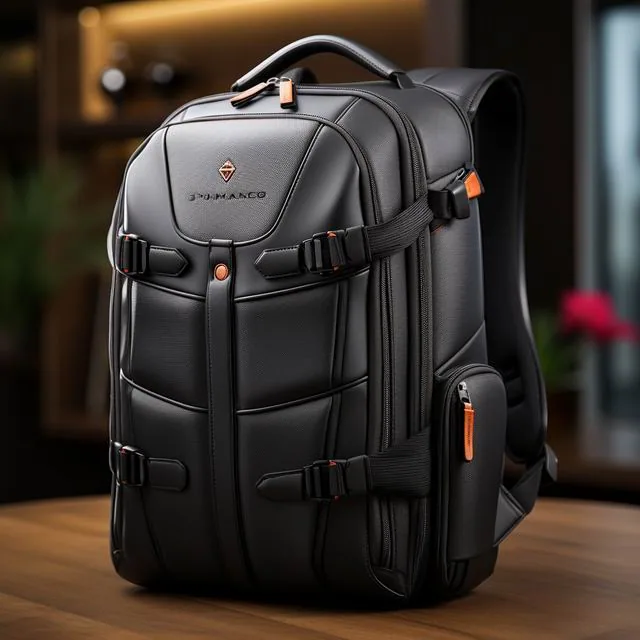
Mapping the attack surface changes the material specification completely. A bag worn on the back in a crowded carriage presents its own panel away from body awareness, so repeated quick cuts there often go unnoticed for several seconds. On Tube journeys and busy commuter rail services, the reported pattern overwhelmingly involves the base-side gussets, the lower front panel and the lower curve of the back panel, precisely the areas easiest to reach with the bag still worn. The top flap, the shoulder panels high on the back and the wipe-clean base fabric are far less frequently involved, which is why covering everything is waste rather than reassurance.
Zip lines deserve separate attention. A blade run along a closed coil chain parting does not need to defeat the shell fabric at all, since it enters at the weakest line in the construction. Reinforcing around zip lines with a narrow aramid strip 20 to 30 millimetres wide, sewn inside the zip binding, closes that route for a fraction of the cost of a full panel. Hardware matters as well, because the quickest attack needs no cutting at all: unzipping a rear-facing compartment while the bag is worn is easier, quieter and safer for the attacker than any blade. Hidden zips, lockable sliders and rear-facing layouts reduce opportunity in ways fabric cannot, and combining them with targeted panel coverage consistently produces a better outcome than maximum coverage without them.
- Priority zones: lower front panel, both base-side gussets, lower back curve.
- Secondary zones: zip lines and their surrounding binding, 20-30 mm reinforcement strips.
- Low value: upper back, top flap, shoulder harness panels, and areas already double-layered.
- Best value: combine targeted panels with rear-facing openings and lockable sliders.
Reading Cut Test Numbers Without Overclaiming
The figures quoted most often in sales copy come from glove certification. European protective glove testing divides cut resistance into levels labelled A through F, running from A at a minimum of 2 newtons of cutting force through B at 5, C at 10, D at 15, E at 22, and F at 30 newtons and above, measured by the straight-blade method set out in ISO 13997. A related American approach determines the load required to cut through over a defined travel distance, and its method is published as ASTM F1790. Both are laboratory measurements made on flat specimens under controlled load, and neither one measures what happens when that same material is curved over a packed laptop, folded at a seam, or pulled tight across a corner. Geometry changes results more than most buyers expect, so treat the number as a starting point rather than a guarantee.
That distinction matters because a backpack is not certified as personal protective equipment by these routes. Quoting an EN 388 level for a fabric sample is informative about the material, and dangerous if it is presented as a product certification the bag does not hold. The honest formulation is to state that the panel material achieved a given result under a named test method, then keep it in the technical pack and in buyer-facing specification sheets rather than on a retail hangtag implying regulatory approval. Buyers should also insist that results are repeat-measured after laundering, since finishes and yarn finishes change results noticeably after five cycles.
| Test framework | Reported as | Typical meaning | Use in purchasing |
|---|---|---|---|
| ISO 13997 | Levels A to F | Force to cut through over 20 mm travel | Compare materials on one neutral basis |
| ASTM F1790 | Load and travel distance | Blade load needed to cut the specimen | North American alternative for the same comparison |
| Abrasion cycles | Number of rubs | Durability of the panel's own surface | Check that the panel is not the weak point |
| Tensile and tear | Newtons | Structural contribution under load | Confirm stitching does not slash through |
Panel Coverage, Layering and the Weight Penalty
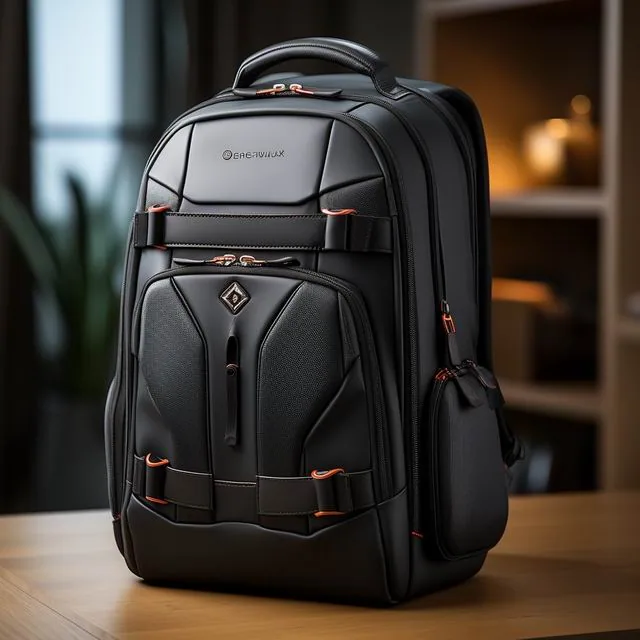
A workable default for a 25 to 30 litre city or commuter pack is a three-layer build in the priority zones: outer shell, para-aramid knit interlayer, and a lightweight lining on the inside next to the contents. The interlayer should float rather than be edge-stitched all round, so the load path through the outer shell is unaffected and the panel can move slightly under a combination load. Quilting or spot-tacking the aramid at 100 to 150 millimetre intervals prevents migration without creating a rigid composite. Total added weight landed near 70 to 110 grams in most development programmes we have run at this coverage level.
Coverage beyond roughly 40 per cent of the outer surface delivers sharply diminishing returns. Going from targeted panels to a full internal umbrella typically adds 120 to 200 grams and can add £8 to £15 per unit, while leaving attack paths open at the very places the method ignores, which are zip lines, mesh pockets and the shoulder harness. Where a brand genuinely wants maximum coverage, consider instead a suspended liner bag of aramid knit that can be lifted out: it protects contents, can be sold as an accessory at £25 to £40 retail, and it avoids distorting the silhouette of the primary product.
Straps, Webbing and Hardware Reinforcement
Slash attack does not always involve the fabric panels. A determined attempt often targets the shoulder strap, because severing one strap makes the bag unusable and forces the wearer to stop. The common countermeasure is to embed a continuous stainless steel cable of roughly 1.0 to 1.5 millimetres diameter, or a high-strength polyethylene cord, inside the strap channel so it cannot be felt through the foam but still blocks a cutting action. A second approach uses webbing woven with an ultra-high-molecular-weight polyethylene core, which resists cutting while remaining flexible enough to sit comfortably under a jacket for a full commute.
There are comfort and durability trade-offs to manage. An embedded cable stiffens the strap slightly and can create a pressure line if the strap is narrow, so keep the strap at least 45 millimetres wide where a metal core is used, and test the assembly over about 500 cycles of loaded flex to check the core does not migrate or begin to protrude. Salt contamination is another quiet failure mode: stainless cores near the sea or in winter road-grit conditions should be specified in a marine grade, or specified with an aramid core instead, to avoid rust staining through pale strap webbing within one season.
- Reinforced straps should be at least 45 mm wide so the core stays clear of the edges.
- Run roughly 500 loaded flex cycles in development to check for core migration.
- Choose marine-grade stainless or an aramid core in coastal and winter conditions.
- Pair fabric reinforcement with lockable sliders and rear-facing compartments for best results.
What Aramid Does Not Do
Being direct about limits protects the brand better than any amount of marketing language. Aramid resists slicing by a light blade; it is not stab protection. A pointed implement with a sharp tip and body weight behind it behaves very differently from a razor blade dragged across a panel, and no realistic bag build stops a determined stab attack. Aramid is also not an abrasion-proof finish: it will frizz and lose strength when it becomes the exposed surface, which is why it belongs inside a shell rather than outside it, and it offers nothing at all against pickpocketing, bag snatching or opening compartments quietly.
Ultraviolet exposure is the most overlooked weakness. Aramid fibre loses a significant share of its tensile strength after prolonged direct exposure to sunlight, showing the familiar yellowing and gradual loss of handle, so any construction that lets daylight reach the panel is shortening its life. This is a different mechanism from hydrolysis in polyesters, and it is why storage and pattern coverage matter more than grade choice. Cleaning is the second limitation: most buyers should specify spot cleaning only for these composites, since hot machine cycles and tumble drying can shrink the shell around the panel and pull the silhouette out of shape permanently.
Describe aramid as slash resistant against light cutting attacks, never as stab proof, knife proof or certified personal protective equipment unless the finished article has actually been assessed and documented as such under the relevant regime.
Unit Economics and Programme Parameters
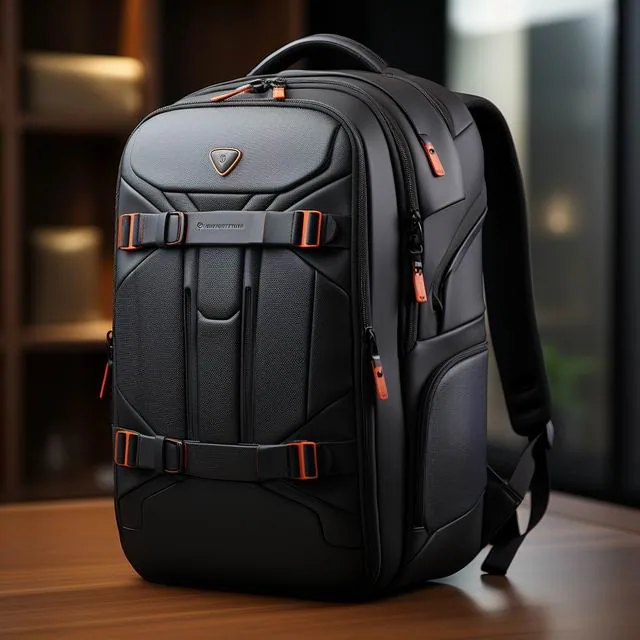
Cost behaves differently to most fabric upgrades because aramid pricing is driven by the panel rather than the shell. A para-aramid knit at roughly 200 to 320 grams per square metre typically costs appreciably more per running metre than a coated nylon shell, and 0.25 to 0.35 square metres of it lands around £6 to £12 per unit depending on grade and blend. Add a steel-cored strap construction and the increment rises further. In retail terms that usually means a £15 to £35 step in achievable selling price, which is comfortably justified on a commuter pack selling above £110 and awkward below roughly £70.
Practically, these programmes follow the same buying structure as any other build with one addition, which is that aramid prices move with resin more than with volume. Colour and construction matching are quoted on a MOQ 500 pcs per style and colourway basis, since smaller runs cannot hold aramid shade and knit consistency across successive dyelots. Sampling takes 6-10 working days where existing panel patterns are reused, extending to 12-15 working days when new strap cores, hidden zip lines or novel panel geometry are in play. Once samples and trims are approved, bulk occupies 35-50 days, shipped FOB Xiamen with T/T 30/70 payment terms and inspection against AQL 2.5 under ISO 2859-1. QUANZHOU JUNYUAN BAGS has coordinated anti-slash builds of this type since 2014.
| Build option | Added weight | Approximate added cost | Sensible retail position |
|---|---|---|---|
| Targeted panels only | 70-110 g | £6-£12 per unit | £75 and above |
| Panels plus zip-line strips | 90-140 g | £8-£15 per unit | £95 and above |
| Panels plus reinforced straps | 130-190 g | £11-£20 per unit | £110 and above |
| Full internal liner bag | 160-240 g | £14-£25 per unit | £130 and above |
Claims, Labelling and British Product Expectations
Marketing language carries real consequences in this category. If a bag is presented as protecting the wearer from injury at work, it moves towards the category of personal protective equipment, with design, documentation and conformity obligations attached that a normal luggage range does not carry. Employers purchasing such products for staff rely on that documentation, and the duties around selection, maintenance and use of protective equipment at work are summarised by the Health and Safety Executive at hse.gov.uk. Most brands sensibly stay on the general product safety side and describe the feature in terms of the material test result.
General consumer products still need to be safe, labelled accurately and backed by traceable documentation. Two habits cover most of the risk. First, keep the hangtag copy and the technical file aligned: if the claim is tested material performance, say so, name the test method and do not imply certification. Second, keep dated reports rather than generic letters, so that if a retailer or enforcement authority asks, the specific fabric batch, its test result and the date can be produced within a day. Buyers reviewing ranges should ask any supplier for exactly those documents, since absence of a batch number is the clearest sign that nothing was verified.
A Specification and Validation Plan You Can Send to a Mill
Ask for a complete panel clause rather than a material name, because the material name is precisely where vague specifications originate. The clause should fix fibre type and blend, construction and grams per square metre, the exact zones covered in square centimetres, how the panel is retained inside the build, what reinforcement goes in at zip lines, and which named test methods and thresholds the delivered article must satisfy. Whether results are expressed as levels or as load and travel distance, insist on a named standard, a stated number of specimens and a post-laundering condition, since a single figure measured once on a pristine swatch evidences marketing rather than performance.
- Fibre and construction: para-aramid knit or woven, blends stated, grams per square metre with tolerance.
- Coverage: priority zones named and quantified, not described as full protection.
- Retention: quilting interval, floating method and seam allowances defined.
- Test methods: named cut test, number of specimens, and thresholds before and after washing.
- Straps: core material, width in millimetres, and flex cycle validation.
- Care: cleaning instructions consistent with what the composite can actually survive.
Validation should be physical as well as documentary. Build at least three prototypes, load them to the rated capacity, and run controlled blade tests on a sacrificial set while recording how many passes it takes to breach each zone. Compare that against an identical baseline construction built with no panels at all, because the difference between the two is where the credibility genuinely sits and what the buying team can defend. Build the prototypes first rather than last, then write the specification around what actually happened in the test room rather than what looked convincing in a supplier presentation. Running both exercises together at development stage removes surprises later and gives the buyer something concrete to present at retail.
Frequently Asked Questions
How much aramid does a backpack actually need to be genuinely slash resistant?
Covering the lower front panel, both base-side gussets and the lower back curve typically requires 0.25 to 0.35 square metres of para-aramid knit at 200 to 320 grams per square metre. That adds roughly 70 to 110 grams and about £6 to £12 per unit. Extending coverage past 40 per cent of the shell generally adds weight without meaningfully improving resistance.
What does an EN 388 cut level actually tell me about a bag panel?
It quantifies how much force a flat blade needs to cut through the material, on a scale running from A at 2 newtons to F at 30 newtons under ISO 13997. For bags it is a useful material comparison rather than a product certification, since no backpack is certified through that route. Be careful with hangtag language: quoting level E for the panel is legitimate, while implying the completed bag is certified protective equipment invites regulatory trouble.
Is aramid the same thing as Kevlar and Dyneema?
It helps to separate three families. Aramid is the generic fibre family, of which Kevlar is one para-aramid brand, and it resists cutting through fibre hardness and very low elongation. Ultra-high-molecular-weight polyethylene, sold as Dyneema or Spectra, achieves high cut and tear numbers through extremely long molecular chains and floats rather than absorbing water. Blends of the two exist and cost rather more per metre. All of them should stay behind a shell, because none is designed to take abrasion as an exposed outer face.
Can an aramid panel stop a stab attack or a screwdriver?
No. Aramid performs well against slicing with a light blade dragged across a panel, because filaments blunt the edge and redistribute load. A pointed implement driven with body weight behind it behaves completely differently and no realistic bag build defeats it. Describe the feature as slash resistant, avoid the words stab proof entirely, and expect well-run British retailers to challenge the distinction before listing the product.
Does sunlight really degrade aramid panels inside a backpack?
Yes, if the panel is ever directly exposed. Aramid loses a meaningful share of tensile strength under prolonged ultraviolet light, showing yellowing and a gradual loss of handle. Because most constructions bury the panel behind a shell and lining, the fibre is usually protected in normal use, which is precisely why the fibre should never be allowed to become an exposed outer surface. Where any part of the panel does sit near an opening, specify both increased coverage and a lining fabric that blocks ultraviolet transmission.
How much does adding slash panels add to retail price?
Material and labour typically add £6 to £12 per unit for targeted panels, rising to roughly £11 to £20 with steel-cored straps included. Applying normal retail multiples, that translates to a £15 to £35 increase in achievable selling price. Below about £70 retail the increment becomes hard to justify, which is why these builds cluster in the £95 and above bracket.
Should the aramid panel be sewn in along all four edges?
Better not. An edge-stitched panel becomes part of the load path and can concentrate stress at its corners, which leads to distortion after heavy loading. The more common method floats the interlayer between shell and lining, spot-tacked or quilted at 100 to 150 millimetre intervals so it cannot migrate, leaving the shell to carry structural load exactly as originally designed. This approach also makes subsequent pattern revisions far simpler, since adjusting the shell no longer requires unpicking a fully bonded protective layer underneath it.
How wide should a reinforced strap be when it contains a steel cable?
Keep it at least 45 millimetres wide so the 1.0 to 1.5 millimetre core stays clear of the edges and does not create a pressure line through the foam. Validate over roughly 500 loaded flex cycles to confirm the core does not migrate or protrude, and use marine-grade stainless or an aramid core where the bag will meet coastal air or road grit.
Do reinforced straps make the backpack less comfortable?
There is some effect. A steel or polyethylene core stiffens the strap slightly, so comfort depends on width, foam density and how well the strap is shaped. In practice, keeping the core outside the highest-pressure zone and using at least 45 millimetre webbing keeps the difference barely noticeable for most wearers over a working day, though it is worth testing for several hours rather than ten minutes.
Can a slash-resistant backpack be machine washed?
Spot cleaning is the safer instruction. Hot cycles and tumble drying can shrink the shell around a floating panel, pulling the silhouette out of shape and encouraging the interlayer to bunch, while also accelerating ultraviolet and moisture damage if the pack is dried outside. Where a care label is required, specify cold hand washing, no bleach and drying away from direct sunlight.
What documents should I ask a supplier to provide before placing an order?
Request a dated test report on the specific fabric batch referencing the named cut test method, the construction and grams per square metre, coverage areas in square centimetres, and results both before and after repeated laundering. Insist on batch traceability. A generic letterhead statement without a batch number or date is not verification, and it will not survive retailer scrutiny later.
Is a zip-line reinforcement worth specifying as well as panels?
Usually yes, because the cheapest route into a bag is along a closed zip rather than through the shell. A 20 to 30 millimetre aramid strip sewn inside the zip binding closes that path for roughly £2 to £4 per unit, which is far better value than extending the main panels. Combine it with rear-facing openings and lockable sliders for the strongest result.
Developing a Slash-Resistant Build With Defensible Numbers
QUANZHOU JUNYUAN BAGS develops anti-slash constructions around measured zone mapping rather than headline material claims, so budget goes where it changes outcomes. Provide a target silhouette, capacity and retail price, and a costed panel plan follows with coverage areas, added weight, test thresholds and realistic price positioning laid out side by side.
Programmes are quoted on a MOQ 500 pcs per style and colourway basis. Sampling runs 6-10 working days for established panel patterns and 12-15 working days where new strap cores or hidden zip lines are involved, with bulk scheduled across 35-50 days. Shipments leave FOB Xiamen under T/T 30/70 terms, inspected to AQL 2.5 per ISO 2859-1 by 137 colleagues coordinating 7 production lines across 4,950 square metres of SGS-verified production floor space.
Email: service@junyuanbags.com
WhatsApp: +86 177 5002 0688