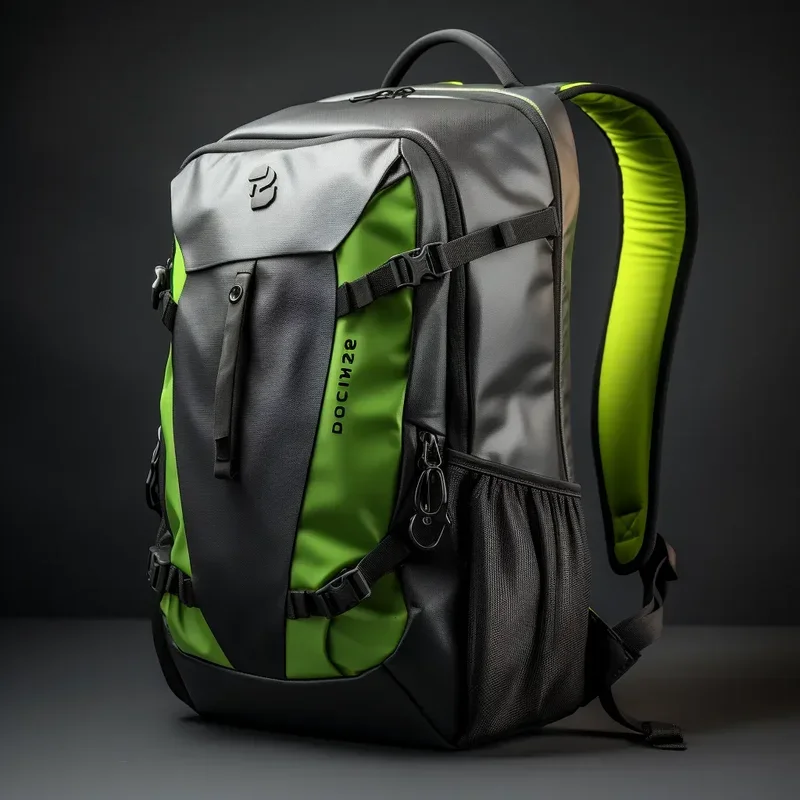
Bag slashing is one of the most alarming forms of travel theft. In a single swift motion, a thief can cut through a standard nylon or polyester backpack and access everything inside. The attack is fast, quiet, and often goes unnoticed until the damage is done. It is particularly prevalent in crowded markets, on motorbikes in Southeast Asian cities, and in tourist areas across Southern Europe.
Cut-resistant backpacks promise to defeat this attack entirely. But what materials actually stop a blade? How are they tested? And are the weight and cost trade-offs worth it? This guide goes deep into the engineering behind slash-proof backpacks to help you make an informed decision.
The Scale of the Slashing Problem
Slash theft accounts for an estimated 15-25% of all backpack thefts in high-risk tourist areas, with prevalence varying significantly by region. In Barcelona, slash theft represents a notable percentage of reported tourist bag thefts, while in Southeast Asian cities like Bangkok and Ho Chi Minh City, motorbike-borne slash thieves target backpackers walking near roads.
The standard attack is simple: a thief approaches from behind or the side and draws a sharp blade across the bag's strap or body fabric. A typical nylon backpack (210D-600D polyester) can be cut through in 1-3 seconds. The bag drops, the thief grabs it, and the entire incident takes less than five seconds. Against a cut-resistant backpack, the same attack takes 30+ seconds — long enough for the victim to notice and react.
The Four Key Materials
Material 1: Dyneema (UHMWPE)
Dyneema - Ultra-High-Molecular-Weight Polyethylene
Dyneema is widely regarded as the world's strongest fibre. Developed by DSM (now Avient), it is up to 15 times stronger than steel on a weight-for-weight basis. In backpack applications, Dyneema is typically used as a fabric layer within the bag's construction — either as a standalone fabric or woven into a composite with other materials.
The most common backpack application uses Dyneema Composite Fabric (DCF) or Dyneema-reinforced nylon blends. These provide extraordinary cut resistance while remaining relatively lightweight and flexible. A bag lined with Dyneema can resist a box cutter attack for 30-60 seconds of sustained cutting before failure.
Material 2: Spectra
Spectra - Honeywell's UHMWPE Fibre
Spectra is Honeywell's equivalent to Dyneema — another ultra-high-molecular-weight polyethylene fibre with similar performance characteristics. In backpack applications, Spectra performs almost identically to Dyneema in cut resistance testing, though subtle differences exist in flexibility, abrasion resistance, and UV stability.
Spectra is commonly found in bags manufactured by brands with US supply chains, as Honeywell is a US-based company. The material's performance in backpack applications is excellent, providing reliable slash protection across a wide range of temperatures and conditions.
Material 3: Kevlar (Aramid Fibre)
Kevlar - DuPont's Aramid Fibre
Kevlar is the most famous cut-resistant material, widely known for its use in bulletproof vests. As an aramid fibre, Kevlar offers exceptional strength-to-weight ratio and outstanding heat resistance — it does not melt until approximately 450 degrees Celsius. In backpack applications, Kevlar is typically used as a woven lining or blended into the bag's fabric.
Kevlar's advantage over UHMWPE fibres is its superior heat and abrasion resistance. Its disadvantage is UV degradation — prolonged exposure to direct sunlight weakens the fibre over time. For backpacks that spend extended periods in direct sun (beach travel, desert expeditions), Kevlar-lined bags may lose some effectiveness over 3-5 years.
Material 4: Stainless Steel Mesh
Stainless Steel Mesh Lining
Steel mesh is the most brute-force approach to slash protection. A fine stainless steel mesh is sandwiched between the bag's inner and outer fabric layers, creating a physical barrier that blades simply cannot cut through. The mesh consists of tiny interlocking steel rings or a woven steel grid.
The advantage is absolute: no blade will cut through steel mesh. The disadvantages are significant — added weight (steel is much heavier than fibre-based alternatives), reduced flexibility (the bag becomes stiffer), and potential comfort issues (the mesh can create pressure points if not properly buffered). Steel mesh is typically used in premium security-focused bags and is most common in bags designed for high-risk urban environments.
How Slash Resistance Is Tested
Understanding how these materials are tested helps you evaluate manufacturer claims:
ISO 13997 (TOMBO Test)
The international standard for fabric cut resistance. A straight blade is drawn across the material under increasing force until it cuts through. The result is expressed in Newtons — the force at which the blade penetrates. For context:
- Standard 600D polyester: 5-10N
- Dyneema-reinforced fabric: 30-50N
- Steel mesh composite: 60N+ (often exceeds the test's measurement range)
EN 388 Cut Test (Coupe Test)
Originally designed for protective gloves, this test uses a circular blade moving back and forth across the material under a fixed weight. Results are expressed as an index comparing the material's performance to a reference fabric. Level 5 (the highest) indicates the material withstood the maximum test distance without cutting through.
Real-World Testing
Most reputable anti-theft bag brands supplement laboratory testing with real-world scenarios: timed knife attacks using common tools (box cutters, utility knives, razor blades), attacks at different angles (perpendicular, diagonal, sawing motion), and testing against multi-layer constructions that replicate the actual bag build rather than single fabric samples.
Effectiveness Against Different Attack Types
Not all slash attacks are equal. Here is how cut-resistant materials perform against different techniques:
| Attack Type | Standard Nylon | Dyneema/Spectra | Kevlar | Steel Mesh |
|---|---|---|---|---|
| Quick single slash (razor) | Cuts through in 1-2s | Resisted completely | Resisted completely | Resisted completely |
| Sustained sawing (box cutter) | Cuts through in 3-5s | Resisted 30-60s | Resisted 20-45s | Resisted indefinitely |
| Pointed puncture | Pierces easily | Moderate resistance | Good resistance | Resisted completely |
| Scissor attack | Cuts through in 2-3s | Resisted 15-30s | Resisted 15-30s | Resisted completely |
| Strap cutting | Cuts through in 1-2s | Resisted if reinforced | Resisted if reinforced | Resisted completely |
The key insight is that cut-resistant materials buy time. The goal is not to create an impenetrable bag (which would be extremely heavy and rigid) but to make cutting take so long that the thief abandons the attempt. In most real-world cases, a thief who cannot cut through a bag within 5-10 seconds will move on to an easier target.
Weight Trade-Offs: The Real Numbers
Cut resistance comes at a weight cost. Here is a realistic comparison of what to expect:
| Backpack Type | Volume | Empty Weight | Cut Resistance | Weight Penalty |
|---|---|---|---|---|
| Standard daypack | 25L | 500-700g | None | — |
| Dyneema-lined anti-theft | 25L | 800-1000g | High | +200-300g |
| Steel mesh anti-theft | 25L | 1000-1300g | Maximum | +400-600g |
| Full-protection travel bag | 35L | 1200-1600g | Maximum (all panels) | +500-700g |
For most travellers, the 200-400g weight increase of a Dyneema-lined bag is acceptable — roughly equivalent to carrying an extra water bottle. The 500-700g penalty of full steel mesh protection is more significant and may cause fatigue during all-day wear. Consider which panels need protection (back panel is the highest priority, sides are medium priority, front and base are lower priority) and whether full-panel coverage is necessary for your use case.
Durability Over Time
One important question is whether cut-resistant materials maintain their protection over years of use. Here is the breakdown:
Dyneema and Spectra
Excellent long-term durability. These UHMWPE fibres are UV-stable, moisture-resistant, and do not degrade significantly under normal use conditions. Bags using these materials maintain their cut resistance for the lifetime of the bag. They can withstand repeated folding, compression, and abrasion without losing protective properties.
Kevlar
Good but not perfect durability. Kevlar degrades when exposed to ultraviolet light over extended periods. If your backpack is regularly exposed to direct sunlight (carried on sunny days, stored in bright areas), the Kevlar lining may lose some effectiveness over 3-5 years. However, inside a bag where it is shielded by the outer fabric, Kevlar maintains its properties much longer. Moisture resistance is good but not as strong as UHMWPE fibres.
Steel Mesh
Extremely durable against wear but vulnerable to corrosion. Stainless steel mesh maintains its cut resistance indefinitely under dry conditions. However, if exposed to saltwater (beach environments, coastal travel) without proper cleaning, the mesh can develop surface corrosion that weakens the structure over time. Regular rinsing with fresh water after saltwater exposure prevents this issue.
Certification Standards: What to Look For
The backpack industry lacks a unified certification standard for cut resistance, which creates confusion and makes it easy for low-quality bags to make misleading claims. Here is what to look for:
Reliable Indicators
- Named material brands: Bags that specify Dyneema, Spectra, Kevlar, or a named steel mesh manufacturer are typically more trustworthy. These are branded materials with published performance data.
- EN 388 or ISO 13997 reference: Some manufacturers publish their test results against these standards. Look for specific cut resistance scores, not just a pass/fail indication.
- Specific construction details: Reputable brands explain how the cut-resistant material is integrated (e.g., "double-layer Dyneema mesh sandwiched between 420D nylon outer and polyester inner lining").
Red Flags
- Vague terms like "anti-cut fabric" or "reinforced lining" without naming the specific material.
- Claims of "100% slash-proof" or "impossible to cut" — no material is completely indestructible under all conditions.
- No mention of testing standards or methodology.
- Suspiciously low price for claimed protection level — genuine cut-resistant materials cost significantly more than standard nylon.
Comparing Cut-Resistant Backpacks
When evaluating cut-resistant backpacks, consider these dimensions beyond just the material:
Coverage Area
Does the cut-resistant material cover the entire bag or just the back panel? Premium bags like the Pacsafe Venturesafe series use slash-proof material across all panels, straps, and the base. More affordable options may only protect the back panel and sides, which are the most commonly targeted areas. Full coverage adds weight but provides comprehensive protection.
Strap Reinforcement
A bag with slash-proof body fabric but non-reinforced straps is vulnerable at its weakest point. Thieves sometimes cut straps rather than the bag body to make it fall off. Look for bags where the straps incorporate cut-resistant fibres or steel cable reinforcement.
Zipper Integration
Cut-resistant fabric is useless if a thief can simply open the zippers. The best cut-resistant bags combine slash-proof materials with lockable, reinforced zippers that resist both forced opening and tool-assisted attacks.
Making the Decision: Is Cut Resistance Worth It?
Cut-resistant backpacks are worth the investment if:
- You travel regularly in areas with known slash theft prevalence (Southern Europe, Southeast Asia, South America)
- You carry expensive electronics (laptops, cameras, tablets) that would be devastating to lose
- You commute by bicycle or walk through crowded areas with a valuable bag
- You want comprehensive security that addresses multiple attack vectors
A standard backpack with good behaviour (awareness, positioning, cable locks) may be sufficient if:
- You travel infrequently in low-risk areas
- You do not carry high-value electronics
- You are on a tight budget and need to prioritise other travel gear
The Environmental and Sustainability Angle
An often-overlooked consideration when choosing cut-resistant backpacks is the environmental impact of the materials used. Dyneema and Spectra are polyethylene-based fibres, which means they are derived from petroleum. However, their extraordinary strength-to-weight ratio means less material is needed to achieve the same protection level, partially offsetting the environmental cost. Both DSM (Avient) and Honeywell have published sustainability reports outlining efforts to reduce the carbon footprint of these materials through more efficient manufacturing processes.
Kevlar, as an aramid fibre, has a more energy-intensive production process and is not biodegradable. However, its exceptional durability means bags using Kevlar lining have a significantly longer useful life than standard bags, reducing the overall environmental impact through reduced replacement frequency. Steel mesh, while recyclable, adds weight that increases the carbon footprint associated with shipping and transport. The most environmentally conscious choice is to invest in a high-quality cut-resistant bag that lasts many years, rather than purchasing multiple lower-quality bags that need frequent replacement.
The Future of Cut-Resistant Materials
The materials science behind cut-resistant backpacks continues to evolve rapidly. Emerging materials like graphene-infused fabrics and next-generation UHMWPE composites promise to deliver even greater cut resistance at lower weights. Several major backpack manufacturers are testing prototype fabrics that combine the flexibility of nylon with the cut resistance of steel mesh, using nanotechnology-enhanced fibres woven into standard textile structures. Within the next five years, we expect to see cut-resistant backpacks that are indistinguishable in weight and feel from standard bags while providing significantly enhanced protection. This will remove one of the main barriers to adoption — the weight penalty — and make cut-resistant backpacks the default choice rather than a premium option.
Final Assessment
Cut-resistant materials represent genuine, measurable protection against one of the most damaging forms of bag theft. Dyneema, Spectra, Kevlar, and steel mesh each offer different balances of protection, weight, and durability. For most travellers, a Dyneema or Spectra-lined bag provides the best balance of protection-to-weight, while steel mesh offers maximum protection for those who prioritise security above all else.
The honest truth: no backpack is completely slash-proof under sustained, determined attack. What these materials do is transform a two-second breach into a thirty-second battle — and that difference is what keeps your belongings safe in the real world.
Frequently Asked Questions
What materials make a backpack cut-resistant or slash-proof?
The four main materials are Dyneema (UHMWPE, 15x stronger than steel), Spectra (similar UHMWPE fibre), Kevlar (aramid fibre), and stainless steel mesh lining. Each offers different balances of cut resistance, weight, and durability.
How is slash resistance tested in backpacks?
The ISO 13997 test measures the force (in Newtons) required for a blade to cut through material. Standard nylon scores 5-10N, Dyneema-reinforced fabric scores 30-50N, and steel mesh exceeds 60N. Some brands also conduct real-world knife attack testing.
Can a cut-resistant backpack stop any knife attack?
No material is completely knife-proof. Cut-resistant materials dramatically increase the time required to breach the bag — from 2-3 seconds to 30+ seconds. The goal is deterrence through making the attack too time-consuming for the thief.
Are cut-resistant backpacks heavier than regular backpacks?
Yes, typically 200-500g heavier depending on the material and coverage. Dyneema-based bags add approximately 200-300g, while full steel mesh protection can add 400-700g to the bag's weight.
Do cut-resistant materials degrade over time?
Dyneema and Spectra maintain their properties indefinitely under normal use. Kevlar can degrade with prolonged UV exposure over 3-5 years. Steel mesh is permanent but can corrode with saltwater exposure without proper cleaning.
What certification standards exist for cut-resistant bags?
There is no single universal certification. Relevant standards include EN 388 and ISO 13997 for cut resistance testing. Look for bags that specify named materials (Dyneema, Spectra, Kevlar) rather than generic 'cut-resistant' claims.
Manufacturing Cut-Resistant Backpacks?
We produce premium backpacks with Dyneema, Spectra, and steel mesh slash-proof linings. Whether you need custom designs for your brand or bulk orders, our team delivers quality anti-theft bags at competitive prices.
Email Us WhatsApp +86 17750020688