Minimalist vs. Feature-Packed Backpacks: Key Trade-Offs Explained
The Great Backpack Debate
The backpack aisle — whether physical or virtual — presents a fundamental choice that shapes your daily carry experience for years. On one side stand the minimalist backpacks: sleek, quiet, stripped of everything that does not serve the core function of carrying your essentials. On the other stand the feature-packed bags: loaded with compartments, attachment points, specialised sleeves, and enough organisational infrastructure to run a small office from inside the main compartment.
Both approaches have passionate advocates. Minimalists argue that excess features add weight, complexity, and visual noise without meaningfully improving the carry experience. Maximalists argue that the right feature in the right compartment saves time, protects expensive equipment, and eliminates the daily frustration of digging through a single undifferentiated space.
The truth, as it often does, lies somewhere between the extremes. This article dissects the trade-offs between minimalist and feature-packed backpacks across every dimension that matters — weight, durability, organisation, aesthetics, and daily usability — so you can make an informed choice based on your actual carry needs rather than marketing claims from either camp.
Weight: Every Gram Counts
Weight is the most measurable difference between minimalist and feature-packed backpacks, and it is not subtle.
Empty Weight Comparison
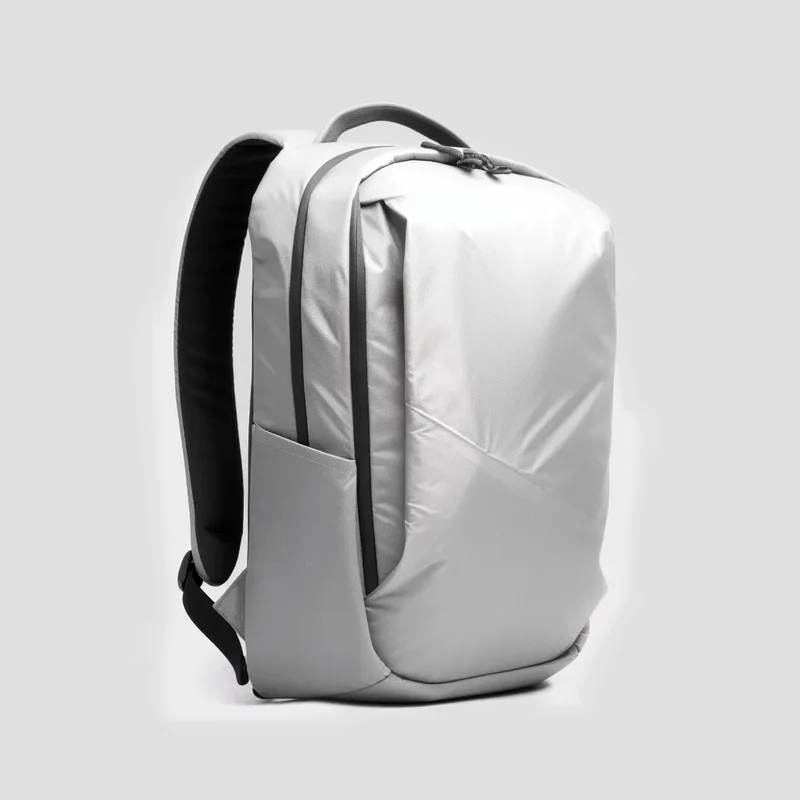
A typical minimalist backpack in the 15 to 20 litre range weighs between 500 and 800 grams empty. The same capacity in a feature-packed design typically weighs between 900 and 1,400 grams. That 400 to 600 gram difference does not sound dramatic on paper, but carry it on your back for eight hours and the difference becomes physical. Every gram of empty bag weight is weight you carry regardless of what you put inside it — it is the baseline tax on your shoulders.
The weight difference comes from several sources. Feature-packed bags use more fabric for internal dividers, more foam for additional padding, more hardware for extra zips and buckles, and more mesh for internal pockets. Each of these additions contributes grams. Multiply those grams by dozens of small additions and the cumulative weight becomes significant.
What That Weight Means in Practice
Consider a typical workday carry: laptop (1.8 kg), charger (0.3 kg), water bottle (0.5 kg filled), notebook (0.3 kg), and personal items (0.4 kg). The contents total 3.3 kg. A minimalist bag adds 0.6 kg for a total of 3.9 kg. A feature-packed bag adds 1.2 kg for a total of 4.5 kg. That 600 gram difference is the weight of a large water bottle — and it is weight that you cannot eliminate no matter how aggressively you pare down your carry.
For cycling commuters, the weight difference is especially meaningful. An extra 600 grams on your back creates measurable additional effort over a 30-minute ride and increases sweating proportionally. For users who walk long distances between transit and office, that weight accumulates over the course of a day and contributes to shoulder and neck fatigue by evening.
The Weight-Quality Correlation
It is worth noting that a well-made minimalist bag and a well-made feature-packed bag can weigh the same. Premium materials like Dyneema composite fabric and ultra-high-molecular-weight polyethylene allow minimalist bags to achieve structural integrity at very low weights. The weight advantage of minimalism is primarily a function of fewer components, not lighter components.
Durability: Simplicity as Strength
One of the strongest arguments for minimalism is structural. Every feature on a backpack — every zipper, every seam, every attachment point — is a potential point of failure. Reduce the number of features and you reduce the number of things that can break.
Zipper Failure
Zippers are the single most common failure point on backpacks. A feature-packed bag may have six to ten zippers — main compartment, secondary compartment, admin panel, side access, front pocket, and hidden pockets. Each of those zippers is a zipper that can fail. The teeth can separate. The pull tab can break. The fabric tape at the end of the zipper track can tear out. A minimalist bag with one or two zippers has dramatically fewer zipper-related failure modes.
Seam Stress
Internal dividers and pockets create additional seams that must be bar-tacked or bonded to the bag's structure. Each additional seam is a line of stitching that must hold under load. Over years of daily use, stitching can fray, especially at stress points where multiple seams intersect. A minimalist bag with a simple internal structure has fewer seams and therefore fewer potential points of structural failure.
Hardware Wear
Buckles, clips, D-rings, and magnetic closures all wear over time. Plastic buckles can crack. Metal clips can corrode. Magnetic closures can weaken. A feature-packed bag may carry a dozen or more hardware components, each one subject to the wear of daily opening and closing. A minimalist bag typically uses fewer than five hardware components, which means fewer things that need to be replaced or repaired over the bag's lifetime.
Every feature is a feature that can fail. Minimalism is not just an aesthetic choice — it is a reliability strategy.
The Material Exception
None of this durability advantage applies if the minimalist bag uses inferior materials. A minimalist bag made from thin polyester with basic zippers will fail faster than a feature-packed bag made from 1000D cordura with YKK aquaguard zippers. The durability benefit of minimalism is a reduction in failure points, not a guarantee of durability. Materials must be equivalent or superior for the simplified construction to deliver its longevity advantage.
Organisation: Two Philosophies, One Goal
Organisation is the most philosophically charged dimension of this debate, because it touches on how different people think about their belongings and their daily routines.
The Minimalist Approach: One Big Space
Minimalist backpacks typically offer one main compartment, a laptop sleeve, and perhaps a small internal pocket or two. The philosophy is that the user should organise their carry using personal systems — pouches, bags within bags, or simple spatial memory — rather than relying on the bag's built-in structure.
This approach has a significant advantage: flexibility. A single open space accommodates items of any shape and size. You can carry a laptop one day and a camera the next without fighting fixed dividers that were designed for a different set of items. The downside is that small items — pens, cables, adapters, keys — can migrate to the bottom of the bag and become difficult to find without dedicated pockets.
The Feature-Packed Approach: Everything Has a Place
Feature-packed backpacks offer dedicated compartments for laptops, tablets, phones, water bottles, pens, cables, sunglasses, and sometimes even shoes. The philosophy is that each item should have a fixed location, reducing the time spent searching and ensuring that nothing is forgotten when the bag is unpacked and repacked.
This approach excels when your carry is consistent. If you carry the same items every day, fixed compartments create muscle memory — your hand reaches for the phone pocket without conscious thought. The downside is rigidity. When you need to carry something that does not fit the intended compartment — a book that is too wide for the tablet sleeve, a jacket that does not fit in the designated clothing pocket — the bag's internal architecture becomes a constraint rather than a tool.
The Hidden Cost of Organisation
Both approaches have hidden costs. Minimalist organisation requires purchasing and organising separate pouches — adding weight, cost, and complexity outside the bag. Feature-packed organisation adds weight and cost inside the bag, along with the frustration of unused compartments that are permanently occupying space.
Head-to-Head Comparison
| Dimension | Minimalist Backpack | Feature-Packed Backpack | Winner |
|---|---|---|---|
| Empty Weight (15-20L) | 500-800g | 900-1,400g | Minimalist |
| Zipper Count | 1-3 | 6-10 | Minimalist |
| Internal Pockets | 1-3 | 8-15 | Feature-Packed |
| Flexibility | High — open space adapts to any item | Low — compartments designed for specific items | Minimalist |
| Small Item Organisation | Requires external pouches | Built-in dedicated pockets | Feature-Packed |
| Professional Appearance | Clean, understated | Technical, sporty | Minimalist |
| Weather Resistance | Depends on materials | Often includes rain covers and sealed zips | Feature-Packed |
| Price Range | £80-£250 | £100-£350 | Minimalist (value) |
| Repair Complexity | Simple — fewer components | Complex — specialised parts | Minimalist |
| Travel Versatility | Limited for multi-day trips | Handles diverse gear types | Feature-Packed |
Aesthetics and Professional Perception
How your backpack looks matters. Whether you acknowledge it or not, the bag on your back communicates something about you to colleagues, clients, and strangers. The minimalist and feature-packed aesthetics send very different signals.
The Minimalist Signal
A minimalist backpack communicates restraint, intentionality, and professional confidence. It suggests that you have thought about what you carry and have chosen quality over quantity. In corporate environments, it aligns with the quiet luxury trend that has dominated professional dress in recent years. In creative environments, it signals design literacy — an understanding that good design is about what you remove, not what you add.
The Feature-Packed Signal
A feature-packed backpack communicates capability, preparedness, and technical competence. It suggests that you are ready for any situation — that you carry the tools and protection needed to handle whatever the day presents. In technology and engineering environments, it signals that you take your equipment seriously. In outdoor-adjacent work cultures, it aligns with the values of those environments.
The Context Problem
The aesthetic advantage of minimalism becomes a disadvantage in contexts where features are expected. A minimalist bag at a corporate law firm looks appropriate; the same bag at a construction site or outdoor research facility looks under-equipped. Conversely, a feature-packed bag with attachment points and webbing looks out of place in a boardroom but perfectly natural at a field research station. The right choice depends on where you will carry the bag most often.
Who Benefits From Each Approach
Choose Minimalist If:
- Your daily carry is consistent and limited to a laptop, charger, phone, wallet, and personal items
- You work primarily in professional or creative environments where appearance matters
- You commute by bicycle or walk significant distances and weight is a priority
- You prefer to organise your belongings with your own pouches and systems
- You value clean lines and understated aesthetics over visible functionality
- You want a bag that will last longer due to fewer failure points
- You carry the same bag from office to after-work social settings
Choose Feature-Packed If:
- You carry diverse equipment — cameras, tablets, specialised tools — that benefit from dedicated compartments
- You work in environments where preparedness is valued and your bag's capabilities are assets
- Your daily carry varies significantly from day to day
- You travel frequently and need a bag that adapts to different carry scenarios
- You prefer built-in organisation over carrying separate pouches
- You carry gear that needs weather protection, shock absorption, or quick-access compartments
- You work in technology, field research, or outdoor industries where technical aesthetics are appropriate
The Rise of the Hybrid
Recognising that neither extreme serves every user, several brands have developed hybrid backpacks that combine the minimalist exterior with selective internal features. These bags represent a pragmatic compromise that is increasingly popular among men who want the best of both approaches.
How Hybrids Work
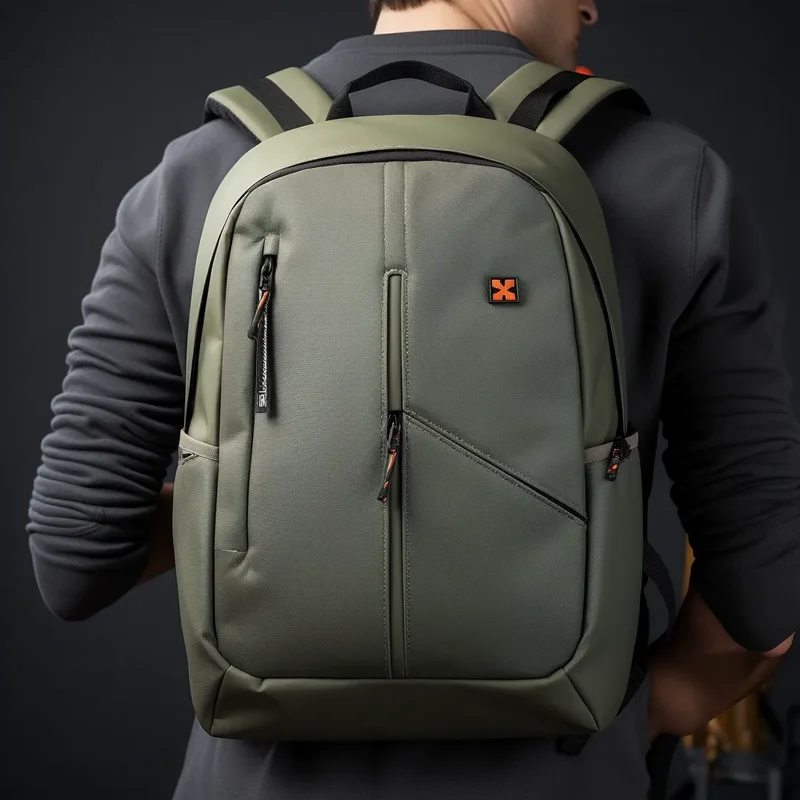
A hybrid backpack maintains a clean exterior — no external attachment points, no visible mesh pockets, no contrasting technical panels. The outside looks like a minimalist bag. But inside, hidden behind a zippered admin panel, you will find a dedicated phone pocket, a pen holder, a cable organiser, and perhaps a key clip. These internal features add only 100 to 200 grams and are invisible from the outside, preserving the professional aesthetic while providing the organisation that many users need.
Examples of the Hybrid Approach
Bellroy's backpack line exemplifies this approach. The Bellroy Classic Backpack features a suspended laptop sleeve, a hidden front admin pocket with organiser slots, and magnetic water bottle pockets that fold flat when not in use. From the outside, it is a clean, minimalist bag. Inside, it offers enough organisation for most daily carry needs without requiring separate pouches.
Aer's City Pack Pro takes a similar approach with a full admin panel that folds open to reveal a comprehensive organiser — including pen loops, card slots, and mesh pockets — all hidden behind a clean front panel when closed. The bag looks minimal; it functions like a technical pack.
When Hybrids Are the Right Choice
Hybrid backpacks are ideal for users who find pure minimalism too sparse but pure maximalism too cluttered. If you want a laptop sleeve and a few organiser pockets but do not need external attachment points or dedicated camera compartments, the hybrid approach delivers the sweet spot between the two philosophies.
Making Your Decision
The choice between minimalist and feature-packed is not a permanent identity. It is a decision based on your current life, your current carry, and your current environments. And like all good decisions, it should be revisited when those conditions change.
The Carry Audit
Before choosing, conduct a thorough audit of your daily carry. For one week, carry every item you normally use and note which items you reach for most frequently, which items you carry "just in case" but rarely use, and which items you wish you had but did not. This audit reveals your actual needs rather than your aspirational needs — and it is the foundation for choosing between minimalism and features.
The Environment Audit
Equally important is auditing the environments where you will carry the bag. If 80 percent of your carry happens in professional settings, lean toward minimalism. If 80 percent happens in technical or outdoor environments, lean toward features. If your environments are split roughly equally, the hybrid approach is your best option.
The Budget Question
Both approaches can be expensive or affordable, but the value equation differs. With minimalist bags, you are paying for material quality and design precision — the simplicity demands excellent materials because there is nowhere to hide cheap construction. With feature-packed bags, you are paying for engineering complexity and component quality — more zippers, more fabric, more padding. A £150 minimalist bag and a £150 feature-packed bag deliver different value propositions, and neither is inherently a better deal.
The Final Framework
Ask yourself three questions:
1. What do I actually carry every day? If the answer is a laptop, a phone, and personal items, minimalism will serve you well. If the answer includes camera gear, specialised tools, or variable equipment, you need features.
2. Where do I carry it? If the answer is primarily professional or creative environments, minimalism projects the right signal. If the answer includes field work, travel, or technical settings, features provide functional value.
3. How do I like to organise? If you prefer a single open space with your own pouches, minimalism gives you that freedom. If you prefer dedicated slots that keep everything in its place, features deliver that structure.
There is no wrong answer — only the answer that is wrong for you. The backpack market in 2025 offers excellent options across the entire spectrum, and the hybrid category provides a bridge for those who cannot commit to either extreme.
The Environmental Angle
There is also an environmental dimension to this debate that deserves attention. A feature-packed bag with ten zippers, six internal mesh panels, and multiple buckle attachment points uses more raw material than a minimalist bag with one zipper and one compartment. That additional material means more manufacturing energy, more chemical processing, and ultimately more waste at end of life. While the difference per bag is small, the industry produces millions of units annually, and the cumulative environmental impact of unnecessary features is non-trivial.
Minimalist brands increasingly cite sustainability as part of their design philosophy — not just the sustainability of using recycled materials, but the more fundamental sustainability of designing products that use fewer resources from the outset. If you are a buyer who values environmental responsibility, the minimalist approach offers a genuinely lower-impact option, assuming materials are sourced responsibly.
The Learning Curve Factor
One often-overlooked difference is the learning curve each approach demands. A feature-packed bag typically comes with a user manual or at least a period of discovery — you spend the first few weeks learning where each pocket is, how the compartments interact, and which items belong in which slots. This learning period can be frustrating, but once completed, the bag becomes an extension of your routine.
A minimalist bag has no learning curve because there is almost nothing to learn. You open the main compartment and put things in. You reach in and take things out. The simplicity is immediate. However, this simplicity comes with a different adaptation requirement: you must develop your own system for organising small items within a largely undifferentiated space. For users who rely on built-in organisation, this adaptation takes time and may never feel fully natural.
The Seasonal Consideration
Seasonal changes affect which approach works better. In winter, when you are carrying a heavier jacket, gloves, a scarf, and potentially a change of shoes, a feature-packed bag with dedicated compartments for each item type offers practical advantages. The jacket has a place. The gloves have a pocket. The water bottle has a holder. In summer, when your carry shrinks to a laptop, a phone, sunglasses, and a thin layer, a minimalist bag provides everything you need without excess bulk.
Some users solve this by owning two bags — a minimalist bag for summer and spring, and a feature-packed bag for autumn and winter. This is not an unreasonable approach, but it doubles your investment and requires you to transfer items between bags seasonally. A hybrid bag that offers selective internal features within a minimalist shell may be the most practical year-round solution for users whose carry varies significantly with the seasons.
Frequently Asked Questions
What is the main difference between minimalist and feature-packed backpacks?
The main difference is design philosophy. Minimalist backpacks remove every non-essential feature to create a clean, lightweight, and versatile carry solution. Feature-packed backpacks add specialised compartments, attachment points, and organisational systems to handle every possible carry scenario. Neither approach is objectively better — the right choice depends on how you carry, what you carry, and where you carry it.
Do minimalist backpacks last as long as feature-packed ones?
Minimalist backpacks often outlast feature-packed alternatives because they have fewer failure points. Every zipper, seam, buckle, and mesh pocket is a potential weak point. However, this advantage only holds when the minimalist bag uses materials of equivalent or higher quality.
Is a feature-packed backpack worth the extra weight?
A feature-packed backpack is worth the extra weight if you regularly use its specialised features. If you carry camera gear, cycling equipment, or technical electronics that benefit from dedicated compartments, the weight penalty is justified. If you carry a laptop, charger, and personal items, that same weight adds fatigue without value.
What is a hybrid backpack?
A hybrid backpack combines a minimalist exterior with selective internal features. It looks clean from the outside but offers a laptop sleeve, hidden admin panel, and organiser pockets inside. Brands like Bellroy and Aer have pioneered this approach.
Which is more professional: minimalist or feature-packed?
A minimalist backpack is almost universally perceived as more professional in corporate and creative environments. Its clean lines and understated appearance align with business dress codes. Feature-packed backpacks remain appropriate in casual offices, tech companies, and outdoor-adjacent work cultures.
Can a minimalist backpack work for travel?
A minimalist backpack works well for short trips and as a personal item on flights, but it struggles for extended travel. Some travellers solve this by pairing a minimalist bag with packing cubes for internal organisation.
Looking for a Backpack Manufacturing Partner?
Whether you need a pure minimalist design, a fully-featured technical pack, or a hybrid that bridges both worlds, Junyuan Bags has the engineering capability and material expertise to bring your vision to life.
Email: service@junyuanbags.com
WhatsApp: +86 17750020688
We produce bags in any style, from any material, at any scale. Let us discuss your next collection.