Slim Backpacks: How Thin Is Too Thin for Daily Carry?
The Allure of Slim
There is something viscerally satisfying about a slim backpack. It sits flush against your back. It does not bump into doorframes or crowd you on public transport. When you set it down next to your chair in a meeting, it disappears rather than dominating the space. In a world where men's carry has been trending toward maximum capacity for decades, the slim backpack represents a counter-movement — a deliberate choice to carry less and look sharper while doing it.
But the appeal is not purely aesthetic. A slim backpack changes the physical experience of carrying. It shifts the centre of gravity closer to your spine, reducing the lever arm that creates shoulder and lower back fatigue. It reduces wind resistance on a bicycle commute. It makes you more agile in crowded environments. These are not trivial benefits — they are the difference between a bag you forget you are wearing and one that reminds you of its presence with every step.
Yet the pursuit of thinness has limits. Every millimetre of depth removed is a millimetre of capacity lost. Every gram of padding sacrificed for profile is a gram of protection your laptop no longer has. And at some point, a slim backpack ceases to be a design choice and becomes a practical failure — a bag that looks good but does not perform the basic function of carrying your daily essentials without constant struggle.
This article explores where that point is, how to find it, and how to choose a slim backpack that maintains the balance between profile and practicality.
Anatomy of a Slim Backpack
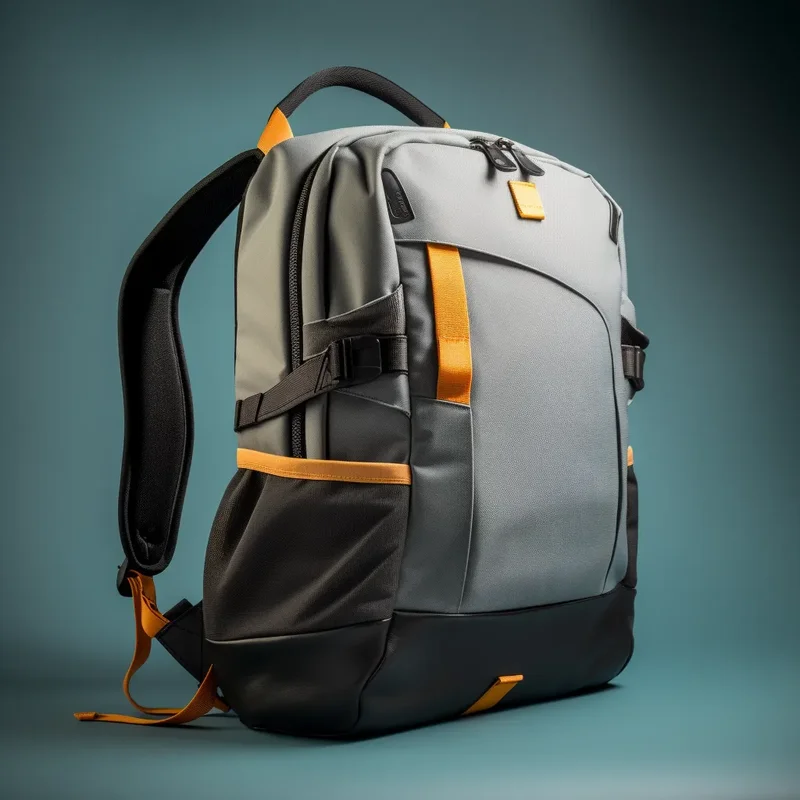
Understanding what makes a backpack "slim" requires looking at the dimensions that define its profile. Backpack measurements are typically given as height by width by depth, and it is the depth dimension — the measurement from the back panel to the front panel — that determines how slim a bag appears when worn.
Depth Categories
Backpacks can be broadly categorised by their empty depth measurement. Ultra-slim packs measure 8 centimetres or less and typically accommodate only a tablet or small laptop with minimal accessories. Slim packs measure 9 to 14 centimetres and represent the sweet spot for daily professional carry. Standard packs measure 15 to 20 centimetres and offer versatile capacity for work and light travel. Expedition packs exceed 20 centimetres and are designed for multi-day carry or technical outdoor use.
The slim category — 9 to 14 centimetres — is where the most interesting design challenges exist. This is the range where designers must make difficult choices about what to include and what to sacrifice, and where the difference between a well-designed slim pack and a poorly designed one becomes most apparent.
Width and Height Relationships
Depth is not the only dimension that matters. A bag that is 12 centimetres deep but 50 centimetres wide will still look oversized because of its horizontal footprint. The most visually slim backpacks maintain a tall, narrow proportion — typically a height-to-width ratio of approximately 1.5:1 or greater. This vertical emphasis draws the eye upward rather than outward, creating the impression of slimness even when the actual depth measurement is at the upper end of the slim range.
Some brands exploit this by designing bags that taper — wider at the bottom to accommodate a laptop, narrower at the top to reduce visual bulk. This sculpting approach allows designers to maintain total volume while reducing the perceived profile. It is an elegant solution, but it requires careful pattern engineering and limits the usable space in the upper portion of the bag.
The Thickness Threshold
At what point does slim become too slim? The answer depends on what you are carrying, but there are general thresholds where practical problems begin to emerge.
The 10-Centimetre Warning Zone
Below 10 centimetres of internal depth, you enter the zone where compromises become inevitable. A standard 15-inch laptop is approximately 2.5 centimetres thick. Add a charger (2 centimetres), a notebook (1 centimetre), a phone in a case (1 centimetre), and a thin water bottle (7 centimetres diameter), and you have already consumed the available depth. There is no room for a jacket, a lunch container, or any item that is not flat.
This is where slim crosses into impractical for most users. The bag will close — zips will fasten — but the contents will be compressed, making extraction difficult and potentially damaging items that are not designed to be squeezed. The water bottle will deform. The laptop charger cable will press against the screen. The notebook will bend.
The 12-Centimetre Sweet Spot
Twelve centimetres of internal depth provides enough room for a laptop sleeve on one side of the bag and a thin layer of soft goods on the other. You can fit a light jacket or a compact umbrella without forcing the zip. Your charger has room to sit flat rather than standing on end. This is the depth at which a slim backpack remains genuinely usable for a full day of professional carry.
Most of the best slim backpacks on the market — including the Aer City Pack, Bellroy Classic Backpack, and Tumi Alpha 3 Slim — cluster around this 11 to 13 centimetre depth range. They have found the balance point where the slim aesthetic is maintained without sacrificing functional capacity.
The 8-Centimetre Danger Zone
Below 8 centimetres, a backpack becomes a fashion accessory rather than a functional carry solution. Some ultra-slim "commuter sacks" and "tech pouches" fall into this category, and they are fine as secondary bags — the kind you carry inside a larger bag on travel days or use for a quick trip to a cafe. But as a primary daily bag, an 8-centimetre pack will force you to leave items behind every single day. The question is whether the aesthetic benefit of that thinness is worth the daily frustration of limited capacity.
Laptop Protection in Slim Designs
Laptop protection is the single most important engineering challenge in slim backpack design, and it is the area where cheap slim bags fail most dramatically.
The Protection Paradox
In a standard backpack, laptop protection comes from depth. The laptop sits in a padded sleeve surrounded by 2 to 4 centimetres of foam on each side, with additional buffer from the bag's contents on one side and the back panel on the other. When the bag is set down or dropped, the padding absorbs impact before it reaches the laptop.
In a slim backpack, that depth-based protection is not available. The laptop sits centimetres from the outside of the bag. A drop onto a hard surface transmits force directly through thin padding to the device. This is why many slim backpack owners discover — too late — that their laptop has accumulated dents and scratches that would not have occurred in a standard pack.
How Good Slim Designs Compensate
The best slim backpacks use three engineering strategies to compensate for reduced depth:
Suspended laptop sleeves hold the laptop above the bottom of the bag, preventing it from contacting the ground when the bag is set down. This simple feature dramatically reduces the most common type of laptop damage — bottom-corner impacts from setting the bag down on hard surfaces.
High-density foam replaces the thick, low-density foam used in standard packs. Materials like EVA foam and closed-cell polyethylene provide comparable impact absorption at half the thickness. The tradeoff is cost — high-density foam is significantly more expensive — but it is the only way to achieve adequate protection in a slim form factor.
Rigid back panels made from materials like ABS plastic or carbon fibre create a structural shell that distributes impact force across a wider area rather than allowing it to concentrate on a single point. This approach is borrowed from motorcycle armour design, and it is highly effective at protecting thin electronics from sharp impacts.
When evaluating a slim backpack, always check the laptop compartment construction. Press your fingers against the sleeve from outside the bag. If you can feel the laptop-shaped contents clearly, the padding is insufficient. If the materials feel rigid and unyielding, the bag is likely providing meaningful protection despite its slim profile.
Capacity vs. Profile Analysis
The relationship between capacity and profile is not linear. A 20-litre backpack is not simply twice as thick as a 10-litre backpack — the extra volume can be distributed across height, width, or depth. Understanding how designers allocate that volume helps you choose a bag that maintains the slim look you want while providing the capacity you need.
Depth-Dominant Design
Some bags achieve their stated capacity primarily through depth. A 20-litre bag that is 45 centimetres tall, 30 centimetres wide, and 15 centimetres deep will look noticeably bulkier than a 20-litre bag that is 50 centimetres tall, 32 centimetres wide, and 12 centimetres deep — even though their volumes are identical. The second design sacrifices some usability — taller items may not fit as easily — to achieve a slimmer visual profile.
Height-Dominant Design
Other bags distribute volume through height. A tall, narrow bag can carry significant volume while appearing slim from the front and back. The tradeoff is that the bag extends higher above your shoulders, which can feel top-heavy under load and may not fit under airplane seats. This approach works well for cycling commutes where aerodynamics matter but less well for public transport where overhead space is limited.
Width-Dominant Design
A few bags expand width rather than depth to increase capacity. These designs appear slim when viewed from the side but wide when viewed from behind. They work well for users who spend most of their time in motion — walking, cycling — because the slim side profile reduces the chance of bumping into things. But they look disproportionately wide in photographs and in mirror reflections, which is a consideration if visual presentation matters to you.
Capacity vs. Profile Comparison
| Category | Typical Capacity | Typical Depth | Best For | Tradeoffs |
|---|---|---|---|---|
| Ultra-Slim | 6-10L | 7-9cm | Tablet carry, cafe visits, minimalist weekends | Limited to flat items; no laptop + charger + bottle combo |
| Slim | 11-16L | 10-12cm | Daily professional carry, laptop commute | No room for gym clothes or bulkier items |
| Standard | 17-25L | 13-18cm | Versatile daily carry, day trips, light travel | Visible bulk; less professional appearance |
| Expanded | 26-35L | 19-25cm | Travel, multi-day carry, outdoor use | Sporting aesthetic; dominates space |
10L vs 15L vs 20L — Comparing Slim Profiles
These three capacity points represent the most common choices for men considering a slim backpack. Here is how they compare in real-world use.
10 Litre — The Purist's Choice
A 10-litre slim backpack is a declaration. It says you have examined every item in your daily carry and decided that only the absolute essentials deserve to come with you. In practice, a 10-litre pack holds a 13-inch laptop, a phone, a wallet, keys, and perhaps a small notebook or a compact charger. Anything more requires careful packing, and there is no room for "just in case" items like a rain jacket or a snack.
The 10-litre size works best for users with stable routines — a daily commute between home and a fixed workspace where everything you need is already available. It is also an excellent second bag for travel, serving as the personal item that fits under the seat while your larger bag goes overhead.
15 Litre — The Balanced Option
Fifteen litres is the most popular capacity in the slim backpack category, and for good reason. It provides enough room for a 15-inch laptop, charger, a compact umbrella, a 500ml water bottle, and personal items — with enough margin to accommodate a light jacket or a sandwich container when needed. The profile remains slim enough for professional environments, and the bag transitions seamlessly from office to after-work activities.
The 15-litre size is the best choice for users who want a slim backpack as their primary daily bag. It is large enough to handle the full range of weekday scenarios without looking or feeling oversized.
20 Litre — The Maximum Slim
A 20-litre bag at slim dimensions is a design challenge. To achieve that volume without exceeding 14 centimetres of depth, the bag must be taller and wider — typically around 48 by 32 centimetres. This creates a bag that is slim in profile but substantial in overall presence. It will hold a laptop, charger, gym clothes, a full-size water bottle, lunch, and personal items comfortably.
The 20-litre size works for users who need one bag that covers everything from office days to weekend errories without carrying a second bag. However, at this capacity, the slim aesthetic begins to stretch. The bag will look slim from the side but large from behind, and it may appear oversized on shorter users. It is a pragmatic choice rather than a purely aesthetic one.
Testing Methodology for Slim Packs
Choosing a slim backpack requires testing that goes beyond the brief moment you spend with it in a store. Here is a systematic approach to evaluating whether a specific slim pack will work for your daily carry.
Phase 1: The Empty Bag Assessment
Before loading the bag, evaluate its empty dimensions. Measure the depth at the widest point — not the average, but the widest, because that is what determines how far the bag extends from your body. Check the laptop sleeve depth separately. If the laptop sleeve is 1 centimetre shallower than your actual laptop, the bag is not going to close comfortably.
Phase 2: The Loaded Carry Test
Load the bag with your exact daily carry items — not hypothetical items, but the things you actually carry today. Close every zip and clasp. Now walk for ten minutes. Pay attention to three things: does the bag maintain its intended shape or does it bulge outward; can you reach your phone and wallet without removing the bag; and does the bag shift or bounce during normal walking motion.
Phase 3: The Access Test
With the bag fully loaded, attempt to access your three most-used items. If you need to remove other items to reach them, the bag's internal organisation does not support your usage pattern. This is a common failure point in slim packs — designers often provide one main compartment with a single divider, which works fine for a few flat items but becomes frustrating when you need to access something buried beneath your laptop.
Phase 4: The Compression Test
Set the loaded bag down on its back panel (as you would when setting it on the floor next to your desk) and apply pressure. Does the laptop sleeve provide a rigid barrier, or does the bag collapse inward? Set it on its front panel and check whether the external fabric presses against internal contents. These compression tests simulate real-world handling and reveal whether the bag's structure can protect your belongings during normal use.
Phase 5: The Social Test
Wear the loaded bag in your actual environments — your office, your commute, your regular restaurants and cafes. Notice whether it fits under your desk, behind your chair, or in the overhead compartment on public transport. Notice whether you feel self-conscious about its appearance. A slim backpack should enhance your confidence in professional settings — if it does not, it is not working regardless of its technical specifications.
Finding Your Verdict
The answer to "how thin is too thin?" is personal. It depends on what you carry, where you carry it, and how much you value slim aesthetics versus practical capacity. But here is a framework for making the decision.
If your daily carry is consistent and limited — a laptop, charger, phone, wallet, and keys — a 12 to 14 centimetre depth (15-litre capacity) will serve you well. This is the proven sweet spot where slim remains functional.
If your carry varies significantly day to day — some days you need gym clothes, other days you carry almost nothing — consider a bag with a compression system that allows you to expand and contract the depth. Several brands now offer this feature through zippered expansion panels or roll-top designs that add volume when needed and collapse when not.
If you find yourself consistently over-packing and fighting the zip, your bag is too slim. Do not blame yourself — blame the bag. Move up one capacity category rather than developing the habit of carrying an overstuffed bag that defeats the purpose of slim design. A slightly larger bag that you actually enjoy using will serve you better than a smaller bag that frustrates you every day.
The best slim backpack is not the thinnest one you can find. It is the thinnest one that still makes your daily carry feel effortless.
Frequently Asked Questions
What counts as a slim backpack?
A slim backpack typically has a depth of 10 to 14 centimetres when empty, compared to 18 to 25 centimetres for a standard daypack. The defining characteristic is a low-profile silhouette that sits close to the back and does not extend far from the body. Most slim backpacks fall in the 10 to 20 litre capacity range.
How thin is too thin for a backpack?
A backpack becomes impractically thin when it cannot accommodate your largest essential item without deformation. For most users, this threshold is around 8 centimetres of usable internal depth — anything thinner struggles to fit a 15-inch laptop alongside its charger, a water bottle, and daily accessories.
Do slim backpacks provide enough laptop protection?
Slim backpacks can provide excellent laptop protection through high-density foam, suspended sleeve systems, and rigid back panels. However, cheaper slim designs often cut corners on padding and leave laptops vulnerable. Always check the laptop compartment construction before purchasing.
What is the ideal capacity for a slim daily carry backpack?
For most urban professionals, 15 to 20 litres provides the optimal balance between slim profile and functional capacity. This range accommodates a laptop up to 16 inches, a charger, a thin jacket, a water bottle, and personal items without excess bulk.
Are slim backpacks comfortable for all-day wear?
Slim backpacks can be extremely comfortable for all-day wear, often more so than standard packs. Their close-to-body profile reduces leverage and bounce. However, comfort depends on strap design — look for at least 25mm-wide shoulder straps and a ventilated back panel.
How do I test if a slim backpack will work for my daily carry?
Pack the backpack with every item you carry on a typical day. Check three things: can you zip it without forcing it, does the bag maintain its shape, and can you access your most-used items without unpacking everything. If you fail any test in a store, try the next size up.
Need a Slim Backpack Manufacturing Partner?
Junyuan Bags engineers slim-profile backpacks that maintain laptop protection and daily functionality at depth measurements as low as 11cm. Our factory specialises in high-density foam integration, suspended laptop sleeves, and precision construction for slim designs.
Email: service@junyuanbags.com
WhatsApp: +86 17750020688
Share your specs and we will send samples within 15 days.